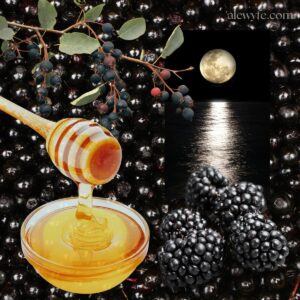
Black Night Wild Berry Melomel with Elderberries, Serviceberries, and Blackberries
This fruit mead combines wild berries and berry honey to make a deeply colored and tasty brew. Give it plenty of cellar time to age to fully appreciate this mead!
Equipment
- 2-3 gallon fermentation bucket with cover
- nylon strainer bag
- 1 gallon jug with airlock and bung
- funnel and strainer or siphon and tubing
- brewing sanitizer
Ingredients
- 4 oz dried elderberries the fresher the better
- 4 oz fresh or frozen serviceberries (substitute wild or regular blueberries)
- 2 oz fresh or frozen blackberries
- 4 oz organic raisins chopped
- 2.5 lbs blackberry honey
- 8 oz blueberry honey
- 1 tsp acid blend
- 1 campden tablet (KMS) crushed
- 1 tsp yeast nutrient
- 1 packet mead yeast wine or mead yeast of your choice
Instructions
- Assemble ingredients and sanitize fermentation equipment and utensils. Bring just under 1 gallon of water to a boil in a stainless steel or enameled stock pot.
- Bag the berries and dried fruit in a nylon fine mesh brew bag and steep in the boiled water. Add the honey to the hot water and stir with a sanitized spoon to dissolve, along with the acid blend. If using the campden tablet, add that now and let sit overnight (covered with a lid or cloth to protect from dust and fruit flies), otherwise, let sit until safely cooled to lukewarm.
- Dissolve the yeast (and pre-fermentatation/hydration additive, if using) with 8 oz of (boiled and cooled) water in your sanitized primary fermentation vessel (at least 1.5 gallons). Check the yeast packet for the recommended temperature (this varies by strain and manufacturer).
- Add the fruit bag and must from the brew pot and yeast nutrient to the yeast, cover and top up your airlock. Ferment for about 14 days on the fruit.
- After initial vigorous fermentation has ceased (this should be about 14 days, but varies with temperature) rack off the fruit into a glass carboy or jug. Keep airlock topped up and ferment to dryness (anywhere from 30 days to 3+ months).
- Bottle (corked, crown capped, or swing top sanitized bottles are fine) and age at least 6 months but ideally a year. The tannins from the elderberry will mellow with aging. If you like, you can stabilize with sorbate and backsweeten lightly before bottling.
Tried this recipe?Let us know how it was!
