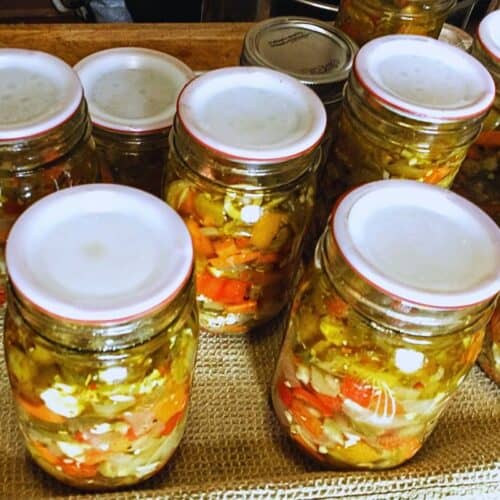
Chicago-Style Hot Giardiniera
This makes a big batch of the pickled pepper and vegetable condiment that is a beloved staple of Chicagoans. Enjoy generous scoops of this on an Italian beef sandwich or sausage, pizza, pasta salads, sandwiches, on eggs, or just eat it with a spoon out of the jar. We won't judge!This one is medium-hot. You can vary the proportion of sweet and hot peppers to make mild to extremely spicy as you like! If you are canning this, follow the recipe proportions and directions for vinegar and spices for food safety, but also note that this is not a USDA-tested recipe. Do not decrease processing times or acidic ingredients and can at your own risk! You can pressure can this instead if you prefer. This recipe should yield about 12 pints (you can also use half-pints or a combination of smaller jar sizes, but do not use quart jars if you are canning it).
Equipment
- 1 Water Bath canner or large stockpot tall enough to cover the pint jars with at least an inch of water and room to boil
- 12-24 canning jars and new lids (pint or half-pint) I use reusable Tattler lids for most of my canning but use metal if you will be giving these as gifts
- a jar rack that fits in your stockpot or canner is also helpful
Ingredients
vegetable mix:
- 4-8 oz serrano peppers, sliced with seeds you can vary the amount and proportion of serrano and jalapeno peppers within these ranges
- 2-6 oz jalapeno peppers, sliced with seeds
- 4-5 large bell peppers, seeded and diced I used a mix of colors- red, green, yellow, and orange
- 1 lb celery hearts, sliced on bias or diced
- 1 lb carrots, diced or small baton cut
- 1 head cauliflower, chopped in small florets
- 1 jumbo yellow onion, large dice
- 1 cup kosher salt (you can use canning salt but reduce volume by about half)
add after rinsing:
- 1 12 oz jar green olives with pimento whole or sliced, reserve/add brine
- 3 tbsp chopped fresh garlic
- 2 tsp fresh cracked coarse black pepper
- 2 tsp red pepper flakes
- 3 tbsp dried oregano
- ½ tsp garlic powder
giardiniera pickling brine:
- ½ cup lemon juice
- 1 cup reserved brine from olives top up with lemon juice or vinegar if not a full cup
- 3 cups red or white wine vinegar 5% acidity
- 2 cups distilled white vinegar 5% acidity (check the label, some discount stores are selling 4% and they're not interchangeable)
add with vegetables after brine simmers:
- 2 cups olive oil or a blend of olive oil and light neutral oil
add to each pint canning jar (optional):
- ⅛ tsp Pickle Crisp (calcium chloride granules) optional but adds quality. 1/8 tsp per pint jar.
Instructions
chop vegetables & salt them:
- Wash and chop the peppers, onion, celery, carrots, and cauliflower and combine in a large stainless or plastic bowl or food-safe 2-3 gallon bucket.
- Add the salt and mix well to distribute. Cover and refrigerate overnight or for at least 8 hours. The salt will draw moisture out of the veggies and is essential for crispness and safety (so the pickling brine is not diluted when the vegetables release their excess moisture).
rinse veggies:
- Drain and lightly rinse the excess salt off the veggies. Taste them- they should still be very salty (more like a caper than a dill pickle) but not unpalatable. Remember that the acid in the pickling brine you make next will balance the salt.
- Return the drained and rinsed veggies to the mixing bowl and add the olives, garlic, and seasonings. Mix well to combine.
prep canner & jars
- Prepare your canner and jars. Fill canner or stockpot with water and bring to a boil, and place a jar rack, false bottom, or heat-proof trivet in the bottom of the pot.
- Clean and sanitize your jars. Wash well with hot soapy water, rinse, and boil. It is not absolutely necessary to boil the jars before canning them but it can't hurt, so I always do, especially for a mixed pickle like this. Cleanliness is key in safe canning!
- Count out your new canning jar lids and wash them in hot, soapy water (do not boil modern canning lids!). If you are using reusable canning lids, follow manufacturer directions. Check over your lid rings to make sure they are sound (dents in the rings can cause seal failure).
Make brine & heat veggies:
- In another pot large enough to hold your entire batch of giardiniera, heat the vinegar, olive brine, and lemon juice.
- Bring the brine just up to a low simmer. Add the oil, then add the bowl of salted and rinsed veggie mix. Stir and bring the whole mixture almost back up to a simmer.
- When the giardiniera is hot all the way through (at least 190-212F), it's ready to jar. This may take some time if you are doing a big batch. Stir it often and be patient!
Fill jars and can the giardiniera.
- Using tongs, carefully remove the preheated canning jars from the water bath and place them on a sheet pan or countertop lined with a kitchen towel.
- Using a slotted spoon and canning funnel if possible, evenly distribute the hot vegetable mixture among the jars, leaving an inch of head space at the top of the jars.
- Divide the remaining liquid evenly between the jars, and use a small spatula or the handle of a wooden spoon to press down and remove any trapped air bubbles from the jars. If needed, top up with more vinegar (you can mix vinegar and hot water 1:1) to cover the vegetables with brine. Do not add more oil than indicated in the recipe.
- If you are using Pickle Crisp, add an 1/8 tsp to each pint jar now (or half that for smaller jars).
- Using a clean washcloth or paper towel, wipe the rim of the jar with distilled vinegar or vinegar and hot water to remove any oil or residue that would interfere with the jar seal.
- Put the lids and rings on, screw down fingertip-tight, and carefully put the jars in the preheated canner.
- Process in a hot water bath for 20 minutes (start the timer only after all jars are in the canner and the water returns to a rolling boil). I like to let my jars rest in the canner for an additional 5 minutes after turning off the heat. This can help prevent siphoning.
- If you need to do process your jars in batches, keep the other jars hot while the first batch is processing.
- Remove jars from the canner using canning tongs and place on a kitchen towel or wire rack to cool.
- Once jars have cooled completely (at least overnight), check seals and refrigerate any unsealed jars to use within a few weeks. Wash and label jars and store without rings in a cool, dark pantry.
Tried this recipe?Let us know how it was!
