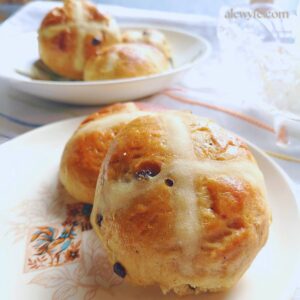
Hot Cross Buns (an Easter and springtime tradition)
This recipe makes one dozen generously sized hot cross buns, or about two dozen mini buns (a nice size for snacking or sharing). See recipe notes for more on proofing time.
Ingredients
- 4 ½ cups all purpose flour
- 1 cup whole milk
- ½ cup butter
- ½ cup white sugar
- ¾ tsp salt
- 2 tsp yeast
- 3 large eggs yolks (you can substitute two whole eggs, but your buns won't be as soft)
- ¾ cup currants (or raisins, or mixed diced dried fruit)
- 2 tbsp rum, brandy, bourbon, or orange juice (to soak the currants or raisins)
- 2 tbsp candied citrus peel or coarse marmalade
- 1 tsp ground cinnamon
- ½ tsp ground cardamom
- ½ tsp ground grains of paradise (optional, substitute dried ginger)
- ½ tsp ground allspice
- ¼ tsp ground nutmeg (freshly grated if you have it)
- ¼ tsp ground cloves
Flour paste decor
- ½ cup all purpose flour
- 3 oz water ¼ cup + 2 tbsp
- 1 tbsp sugar
Instructions
Prep the Ingredients
- Soak the currants or dried fruit in a few tablespoons of alcohol, juice, or boiling water.
- Scald the milk, gently heating it to just under a boil.
- Remove from the heat and add the butter, sugar, marmalade, and spices to the milk. Stir until the butter is melted and the sugar is dissolved. Let cool until tepid/lukewarm.
Mix and Knead the Dough
- Pour the cooled milk mixture into a large mixing bowl or the bowl of a stand mixer fitted with a dough hook.
- Proof yeast – sprinkle it over the surface of the milk mixture and let rest for a few minutes or until it has dissolved.
- Add half the flour and the egg yolks, mix, then add more flour a half cup at a time until the dough comes together. You may not need the last half cup of flour (use this for the cross flour paste if you already measured your ingredients).
- Mix & knead dough until it comes together into a soft, slightly sticky dough.
- Add the soaked currants and mix until the fruit is evenly incorporated into the dough.
First Rise (bulk rise)
- Transfer the dough to a lightly oiled or buttered bowl, cover tightly, and place in a warm place.
- To make ahead, you can let the dough rise overnight in the fridge. The rolls made from cold dough will take longer to rise, so give additional time for the next step if you are working with refrigerated dough.
- Let the dough rise for about 30 minutes or until doubled. Punch down and let rise another 15 minutes.
Shape and Proof the Buns
- Portion the dough into two to four ounce balls for mini or full size buns.
- Shape into balls, rolling the dough gently between cupped hands or on a clean surface, rolling and tucking the dough to form a smooth ball.
- Cover the baking sheet tightly with plastic wrap or an oiled cloth or beeswax wrap (leaving room for the buns to rise but keeping in the humidity, unless you have a humid proofing chamber, and let the buns rise.
- Proof until the rolls are roughly doubled, and lightly hold an indentation when pressed with a fingertip.
- While the rolls are rising, mix together the half cup of flour, sugar, and water in a small bowl to form a thick paste. You want it thick enough to cling and hold a shape briefly when piped, but not so thick that it is difficult to pipe. Add a bit more flour or water until you get a good consistency.
Decorate and Bake
- Preheat oven to 400 F.
- Gently glaze rolls with egg wash (thinned with a few spoonfuls of milk) or melted butter.
- Pipe on the flour paste cross. Alternately, you can cut slashes in the tops of the rolls with a lame (baker’s razor) or sharp knife.
- Bake until golden brown on top, about 20-25 minutes. I like to add a pan with a handful of ice cubes to the bottom of the oven right before placing the buns in the oven. The steam they generate will help the buns to rise more before the gluten in the crust hardens, and gives a softer crust.
- Let the buns cool slightly before serving.
Notes
Variation: Omit flour paste piping. Decorate cooled buns with an icing cross. Do not try to ice hot buns until they are completely cool, as the frosting will melt.
Notes on proofing the dough and buns: The proofing times will vary depending on the temperatures in your kitchen and the dough ingredients... adjust as needed. Dough will need longer to rise in cooler temperatures. Go by the volume and feel of the dough, not the times listed, or find or make a warm, humid spot for your dough and buns to rise (a warm oven or on top of radiators is ideal if you don't have a proofing box or a warm kitchen). Keep the dough and shaped buns covered so they don't dry out.
Nutrition
Calories: 362kcalCarbohydrates: 60gProtein: 7gFat: 10gSaturated Fat: 6gPolyunsaturated Fat: 1gMonounsaturated Fat: 3gTrans Fat: 0.3gCholesterol: 69mgSodium: 224mgPotassium: 173mgFiber: 2gSugar: 18gVitamin A: 341IUVitamin C: 1mgCalcium: 53mgIron: 3mg
Tried this recipe?Let us know how it was!
