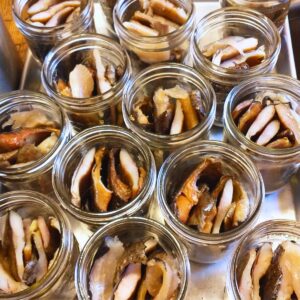
How to Can Smoked Rainbow Trout
You can use the same method to smoke and pressure-can other types of fish, especially salmon or lake trout, or even catfish, or rockfish fillets. Do not can other types of smoked seafood. Read all instructions before beginning and follow them carefully to get familiar with the process.
Equipment
- 1 Pressure canner 16 Quart liquid capacity or larger
- pint or half-pint canning jars wide-mouth is best. Do not use jars larger than one pint (500 ml for metric jars)
- Smoker pellet or cold-smoker with temperature control is best but you can use others if you can keep the smoke and temperature consistent
Ingredients
Trout Brine (double for large quantities of fish)
- 3 cups water
- ⅓ cup brown sugar can substitute honey
- 1 cup kosher salt
- 3 tbsp coriander seeds whole
- 2 large bay leaves
- 1 tbsp black peppercorns whole
- 1 sprig fresh thyme sub. 1 tsp dry thyme leaves
- 4 cups ice water
Trout
- fresh or freshly thawed trout 1½ -2½ lbs of fresh trout per half-pint or pint jar, approximately
Instructions
Clean and Brine the Fish
- Follow safe handling practices with fresh fish, cleaning your catch and getting it on ice within two hours (see above). Rinse fish inside and out with potable water to remove blood and to avoid introducing bacteria. If you are using previously frozen fish, thaw fish in the refrigerator before brining and smoking.
- Prepare your brine - mix all the ingredients except ice water in a large stockpot and bring up to a boil and stir to dissolve salt (add some of the ice water if necessary). You can strain the brine if you like before adding the fish if you didn't wrap the spices and herbs in cheesecloth, or pick the pieces off the fish as you remove them from the brine. Add the ice water and chill the brine completely before adding the fish. Keep the fish in the brine in the fridge for 20-45 minutes (less time for smaller pieces or for a less salty finished product, longer for thicker pieces of fish or a stronger seasoned smoked fish).
- Remove the fish from the brine and lay on racks or sheet pans in the fridge overnight or for at least several hours. You want the surface of the fish to dry (form a pellicle) so that the smoke will adhere and the color and consistency will be even.
- While the fish is drying in the fridge or other cold place, ready your smoker with your choice of wood. Aim for a cold smoke around 140℉ but up to 160℉.
- Lightly smoke the fish at 140-160℉ for up to 2 hours, or until a specific weighed portion has lost 10-14% of its initial weight in the smoker (weigh a portion of the fish before smoking, check the weight periodically during smoking, and divide the weight lost by the initial weight, then multiply this number by 100 to get the percentage of weight lost).
- Remove the fish from the smoker and quickly chill the fillets if you are doing this over two days, or you can immediately pack the fish in hot jars to go into the canner for processing. If you can't pack and can the fish either immediately or the next day, wrap and freeze the fish well, and thaw completely in the fridge before canning.
Canning the Smoked Fish
- Trim the fillets if needed and pack them into wide-mouth pint or half-pint jars. Leave 1" of headspace at the top of the jars. Do not use larger jars! You can use regular mouth jars, but they'll be harder to serve from and to get clean later.
- Wipe the rims of the jars with a clean, lint free cloth or paper-towel soaked in vinegar to ensure the rims are clean and free of oil or debris that would interfere with the seal.
- Put clean, new metal lids (or reusable Tattler or Weck style lids if you are comfortable using those) on each jar, and tighten the rings finger-tight. I recommend using only new, quality metal lids here (see note below before using reusable lids for smoked fish).
- Place the jars in the rack of your pressure canner and add 4 quarts of cool water to the canner. Note: this is necessary because of the extended processing time, and probably a lot more water than you usually use and the jars may float a little. This is ok.
- Check that the canner vent isn't clogged and close & seal the lid. Bring the canner up to pressure over medium heat with the vent open, and once the canner is venting a steady stream of steam, set a timer for 10 minutes.
- When the canner has vented for 10 minutes, regulate the heat if necessary and drop the weight over the vent (or close the petcock if you have an unweighted dial-gauge canner).
- Can at 10 lb up to 1000 ft, or adjust to 15 at higher altitudes with a weighted canner. Start your processing timer for 110 minutes only once the appropriate PSI has been reached (11 PSI on a dial-gauge canner, see notes for altitude adjustments for higher altitude canning), or when the weight is jiggling to indicate that the proper pressure has been reached. Watch or listen carefully, adjust heat as needed, and reset the timer to zero and restart processing time if you lose pressure below the correct processing pressure at any point.
- After the processing time is complete, turn the heat off. Once the pressure canner has cooled and returned to neutral pressure (the dial will drop to zero, and no steam escapes from the weight or petcock if jiggled) you should open the canner and remove the jars (follow your canner instructions for opening).
- Let the jars cool in a draft-free place where they can rest overnight or for up to 24 hours. Don't touch the rings until the jars have cooled and the seals are set (disregard for reusable lids and follow manufacturer instructions to tighten rings).
- Remove the rings and check the seals on the jars after they have rested at least overnight. Promptly freeze or refrigerate any jars that did not seal and use within a few days- reprocessing these jars will cause a loss in quality and might not be safe.
- Gently wash all sealed jars with soapy water, label clearly, and store in a cool, dark place. Protect jars from freezing and safely discard the contents of any jars that lose their seals in storage and sterilize jars before reuse.
Notes
A note on lids for canning smoked fish: I highly recommend using conventional metal lids for this recipe, as you will have a lot of time invested in these jars and don't want to risk a bad seal and discarding product. If the jars did not seal after initial processing, you can refrigerate or freeze the product, but if the seal is lost on the shelf in storage you MUST discard the fish safely and sanitize the jar thoroughly.
I'm very confident and usually have great results canning with reusable-style lids, but still had a higher percentage than usual of jars that either didn't seal properly or that lost seals in storage with them for this recipe. Luckily we canned with a mix of different lid styles as a test, so didn't lose many jars. That said, we will be using only quality metal lids for smoked fish for pantry storage in the future, and recommend that you do the same!
For processing at higher altitudes with a dial-gauge canner:
2001-4000 ft: 12 psi
4001-6000 ft: 13 psi
6001-8000 ft: 14 psi
8001-10000 ft: 15 psi
Tried this recipe?Let us know how it was!
