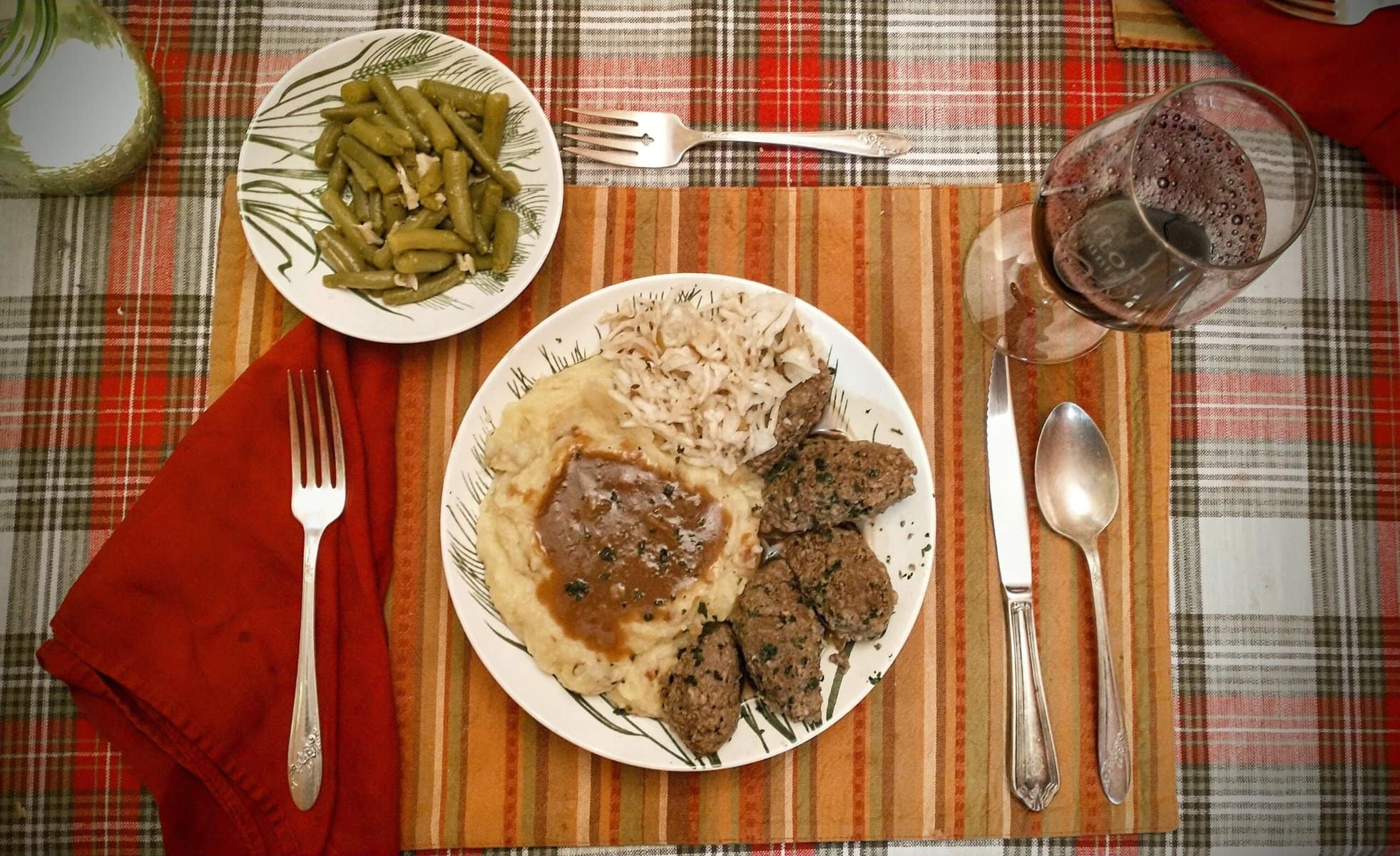
Venison Leberknödel Dumplings
This traditional recipe is a great way to enjoy an often overlooked but incredibly nutritious part of wild game. If you don't have access to venison liver, you can substitute beef, pork, or chicken livers in this recipe. After poaching, you can serve them as a side or main, or in a bowl with the poaching broth as a warming soup.
Equipment
- 1 large mixing bowl
- 1 large skillet or cast iron pan
- 1 large pot to poach dumplings
- 2 quenelle spoons or large table spoons (can use a cookie or portion scoop to make round dumplings)
Ingredients
- 16 oz venison liver (substitute pork, poultry, or beef liver) cleaned, cubed, and soaked
saute together and cool:
- 5 oz bacon chopped
- 1 tbsp butter
- ¾ cup onion minced
- 3 cloves garlic minced
- 1 tsp marjoram dry (can sub ½ tsp oregano)
- ½ tsp allspice ground
- ⅛ tsp nutmeg ground
add to pureed onion mixture and liver:
- 2 large eggs
- 1 ⅓ cup breadcrumbs dry
- 3 tbsp minced fresh parsley substitute 1 tbsp dried parsley, or chopped mild greens like spinach or chard
add to dumpling mixture just before shaping:
- 1 ¼ tsp baking powder sifted
poaching liquid:
- 2 quarts meat or vegetable stock or bone broth
Instructions
Pre-soak the Liver
- If frozen, thaw the liver in the fridge or in cool running water.
- Clean and cut the liver into 1-2" pieces, cutting away and discarding any tough membrane, blood-shot or discolored sections. Rinse well.
- Cover the liver with cold water (I use a 4 quart plastic Cambro or Tupperware container with a lid) and soak at least overnight, but ideally 24 hours in advance. Change the water a few times. You can add milk to the last soak, but this isn't necessary.
Making the Panade & Dumpling Base:
- In a medium saute pan, melt the butter and sweat the onions with a pinch of salt. When they have softened and are starting to color, add the garlic, herbs, and spices, and then the chopped raw bacon.
- Saute on low heat for another minute- just enough to soften the bacon (it will cook later when the dumplings are poached). You do not want it crispy, just starting to render the fat. Set mixture aside to cool.
- Drain and rinse the liver again, and transfer it to a food processor. Pulse a few times, then add the cooled onion, herb, and bacon mixture, and one of the eggs. Pulse and then puree until smooth.
- In a mixing bowl large enough to hold all ingredients (except baking powder), mix the other egg and breadcrumbs, then add the liver puree mixture from the food processor.
- Cover and let rest (in the fridge or a cold place) at least 30 minutes.
Shape & Poach the Liver Dumplings:
- Bring the stock (or salted water or broth) to a boil in a large pot.
- Sift the baking powder into the dumpling mixture, and fold in well to incorporate. Cook one small dumpling first in the poaching liquid to check seasoning and consistency- the mixture should hold together well.
- Adjust seasoning if necessary. If too moist, add more breadcrumbs, and if it is too dry, add more egg or a tablespoon or two of milk.
- Using a portion scoop, or two large spoons, form the mixture into meatballs or quenelles (small football shape formed by rolling the mixture in two spoons).
- Drop the dumplings into the boiling stock and simmer for about 10 minutes. They will float to the surface as they cook. If they are sinking immediately and sticking to the bottom, stir the liquid gently in a circle before dropping the dumplings in so that they float longer and they have a chance to set before sinking to the bottom of the pot.
- Gently fish out the cooked dumplings with a slotted spoon and keep them warm in a chafing dish or a warm oven while you continue to poach the rest of the dumplings.
- You can serve the dumplings immediately as a soup floating in their poaching broth, or make them in advance, remove them to a tray, cool, and then reheat them gently in hot soup to serve later.
Notes
Nutritional Information is an estimate, and may vary depending on ingredients used.
Nutrition
Calories: 273kcalCarbohydrates: 21gProtein: 18gFat: 13gSaturated Fat: 5gPolyunsaturated Fat: 2gMonounsaturated Fat: 4gTrans Fat: 0.2gCholesterol: 218mgSodium: 1332mgPotassium: 302mgFiber: 1gSugar: 4gVitamin A: 10331IUVitamin C: 4mgCalcium: 89mgIron: 4mg
Tried this recipe?Let us know how it was!
