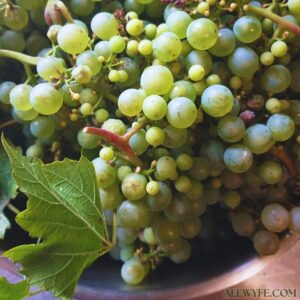
Canning White or Red Grape Juice
Learn how to make and can fresh grape juice at home- no juicer needed! This is a water-bath beginner-friendly canning recipe.
Equipment
- 1 Colander or Strainer
- 1 Fine mesh strainer or jelly bag
- New canning lids
Ingredients
- fresh grapes red, green, or a blend of varieties
- water 8 oz water per gallon of fresh fruit
- sugar or honey optional, to taste
- pectic enzyme optional, see post for usage instructions
Instructions
- Wash the grapes in cool water. Remove and discard the stems and any moldy or shriveled grapes.
- Heat grapes and a small amount of water in a large pot over gentle heat. Use about one cup of water per gallon of grapes.
- Using a thermometer to monitor temperature, heat the grapes, stirring occasionally, until the mixture is 185-190℉. Hold there for 10 minutes. Turn down the heat if it goes over or starts to boil, and turn it up if it drops below the desired range.
- Strain the heated grape and juice mixture through a colander or sieve, pressing the pulp with a sturdy spoon, ladle, or spatula to extract as much juice as possible.
- Strain the juice again through cheesecloth, a jelly bag, nutmilk bag, or fine mesh chinoise strainer to remove small sediment. (*you can skip this step until after step 4 to only strain it once, but it will be slower)
- Chill the juice and refrigerate for 12-24 hours to precipitate tartaric acid crystals and more sediment.
- Strain (again, or for the first time) as in step 3 to remove sediment and tart crystals from your juice.
- Heat juice up to 185-190 deg F and low-temp pasteurize it there for at least 5 minutes.
- Immediately pack the juice into hot jars to can (see canning instructions), or chill and refrigerate or freeze the juice to use fresh.
Canning Instructions
- Pour into clean canning jars (using a canning funnel if you like). Wipe the rims of the jars and then top with fresh lids and tighten the canning jar rings finger tight.
- Place the jars in your boiling water bath canner and make sure they are covered with at least an inch of boiling water over the tops of the jars. Place the lid on the canner and listen until it is vigorously boiling again. Once the pot is boiling, start your processing timer.
- Process the jars at a full boil for 15 minutes for either pints or quarts. After the processing timer goes off, turn off the heat and set a timer for 5 minutes.
- After 5 minutes, using jar tongs or a canning rack remove the jars from the canner and place on a folded kitchen towel or metal grid cooling rack. Do not place hot jars on a cold counter (especially stone, concrete, or metal) or they may crack and break from thermal shock! I always use a sheet pan lined with a folded kitchen towel just to be safe.
- Leave jars undisturbed to cool completely before checking for seals... I usually leave them overnight and check them in the morning. Wait at least 6-8 hours and no more than 24 before checking them, so that you can safely reprocess or refrigerate any jars that didn't seal. If you reprocess, use a new lid and don't put cold jars into a hot canner.
- Wash or rinse the outside of the jars and remove the metal rings (they may be sticky, as some juice escapes during processing- this is normal and fine) before labeling and storing them in a cool, dark pantry or cupboard. Best used the first year, though it will remain safe to consume for much longer as long as the seal is intact (with some possible loss of color or quality).
Tried this recipe?Let us know how it was!
