COOK: How to Make Tofu and Soy Milk at Home
Did you know that you can make your own homemade soymilk? And even homemade tofu? Yep, and it’s so easy, I wanted to teleport myself back to the vegetarian years when I bought the stuff all the time and kick my (even *more* broke than now) college behind. There are gadgets you can buy that will make it for you (Soyajoy, etc.) but you don’t need an expensive and space-consuming unitasker machine if you have some basic kitchen tools.
You’ll need a large pot, a blender, strainer, and your brain? It’s a lot like how you don’t need a “yogurt maker” to make homemade yogurt if you have mason jars and a large pot of warm water. It’s always a good and frugal idea to think about how to use what you have to do what you want to do before you throw money at the problem. Remember, people have been doing these things for thousands of years with much worse tools and facilities than most of us have in our kitchens already!
You’ll need dried soybeans, which can be bought at health food stores, bulk stores, online, or possibly at your local grocery story. We were able to buy a 50# bag of organic beans grown by local farmers from a nearby mill. It was $34.50 here from Ted’s Organic Grains in DeKalb (2012 prices). We were able to carpool with a friend who was also buying chicken feed and grains for baking.
It’s pretty awesome to stock up on all your staples in bulk once and rejoice in lower grocery bills the rest of the year! Make sure that you’re getting cleaned food-grade soybeans, especially if your beans aren’t organic… you don’t want to eat any that have been treated for planting! This isn’t an issue if you’re shopping at the grocery store, obviously, but can be if you’re buying in bulk from a mill.
Alright, let’s make some tofu! Here’s how easy it is… first, we’re going to make homemade soymilk. You are not going to believe how simple this is.
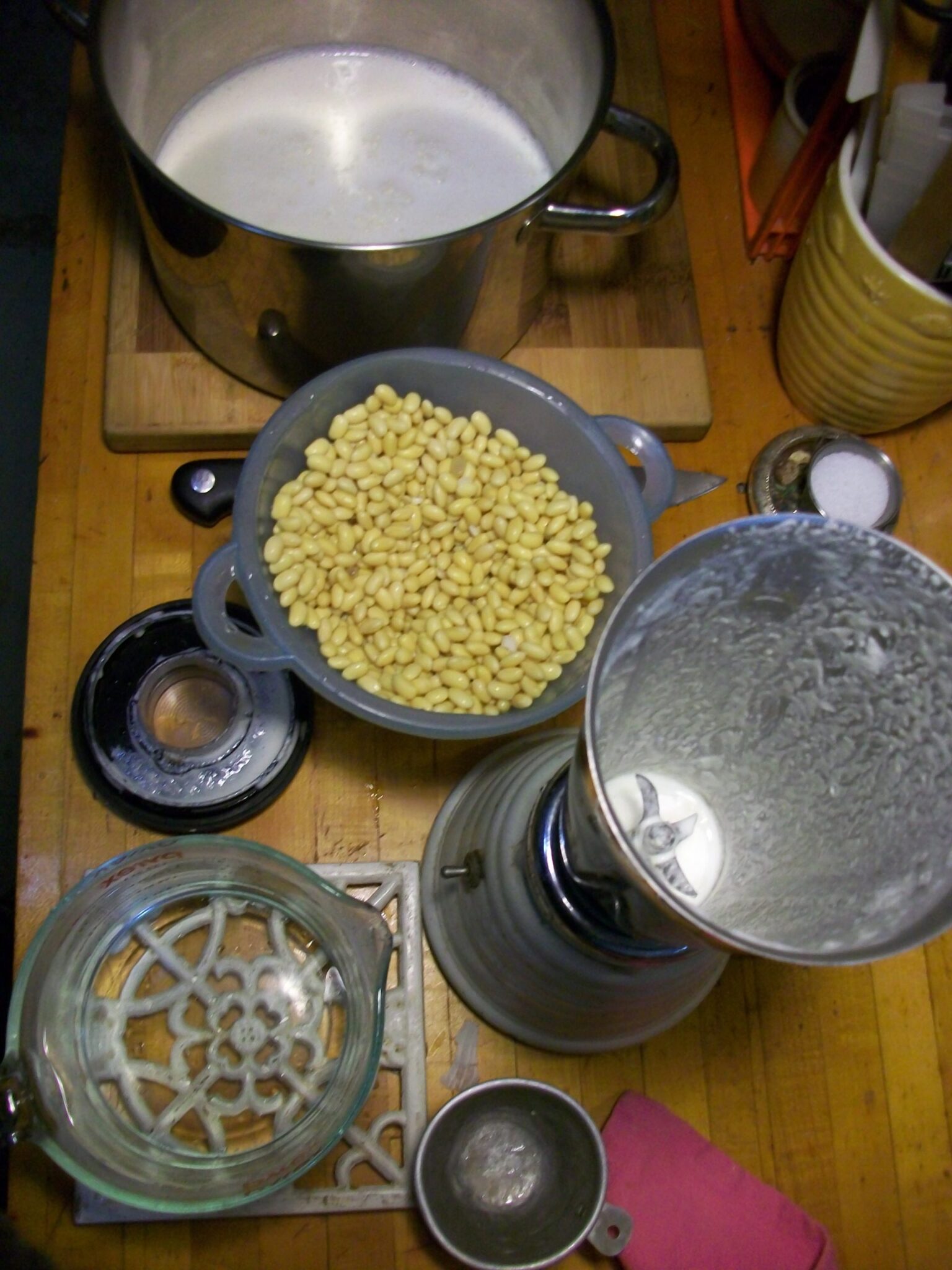
How to Make Homemade Soymilk
- Soak a cup or so of soybeans overnight in about 4 cups of water.
- Then throw ’em in the blender with another cup or two of water and get them as smooth as you can.
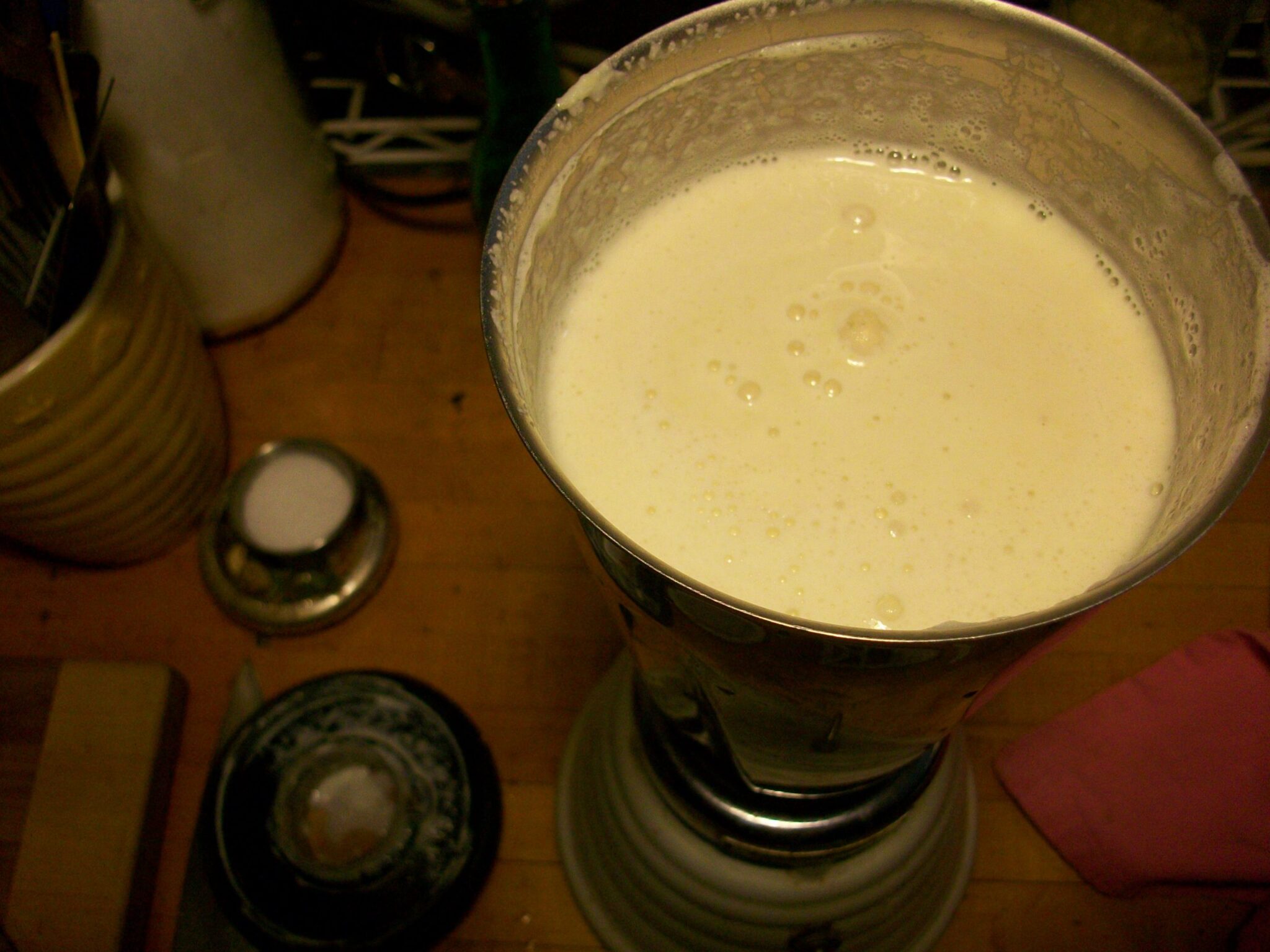
- Add in another 4 cups of water and put the whole mess in a pot.
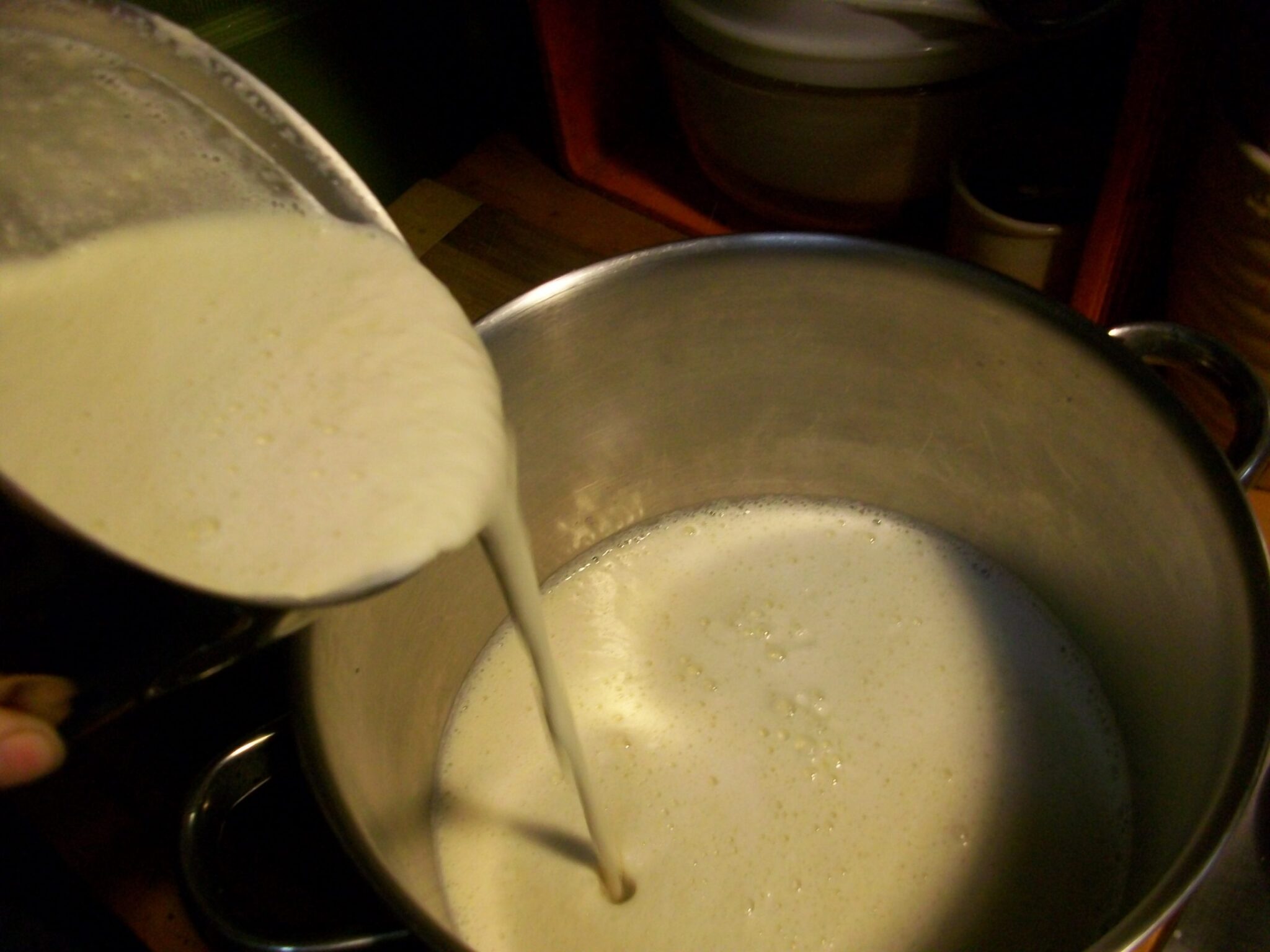
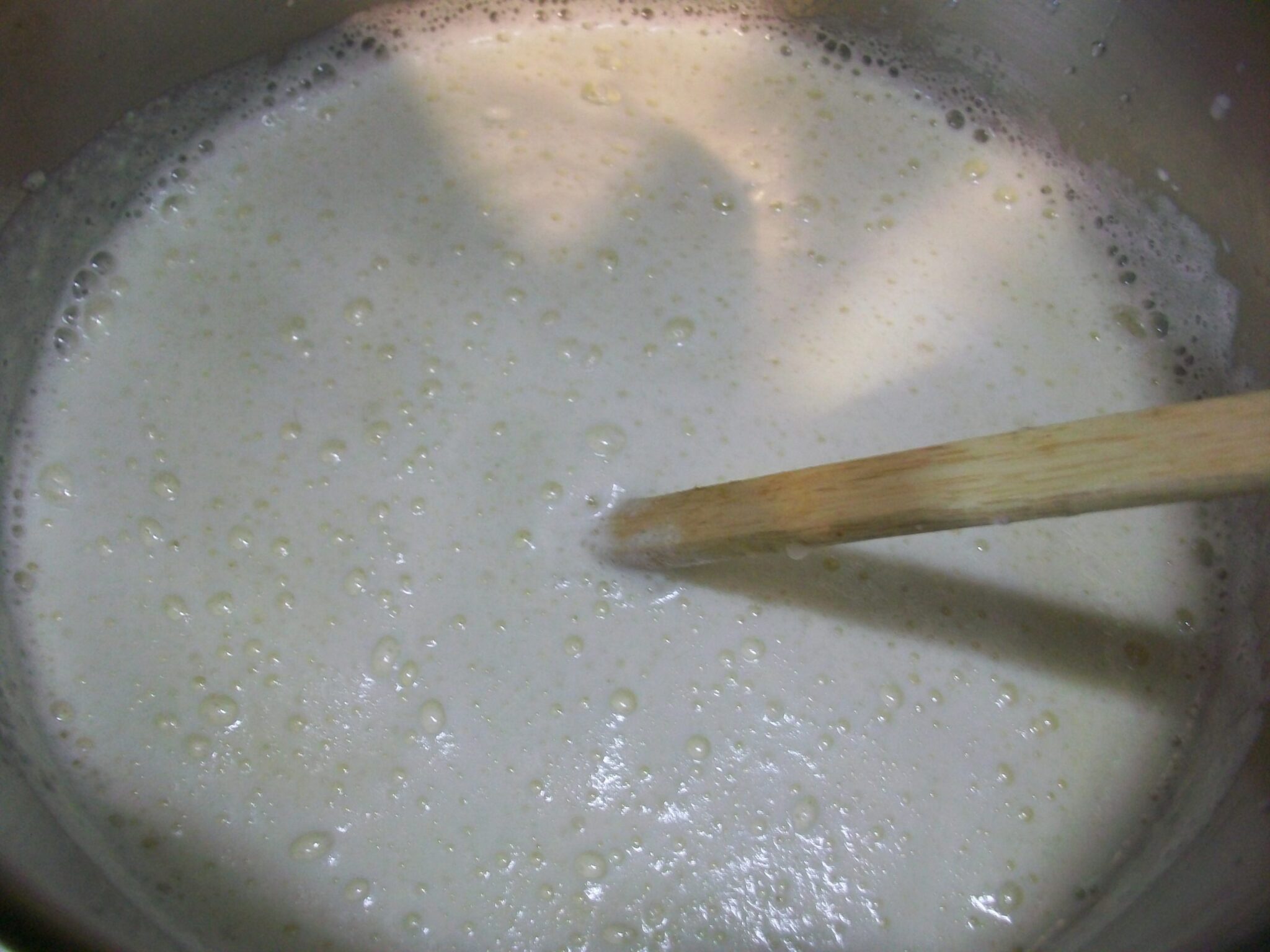
- Stir and bring it up to a boil. Watch it carefully and stir frequently.
- It will foam up like crazy at one point, don’t make a mess and let it boil over and scorch all over the stove… (ask me how I know).
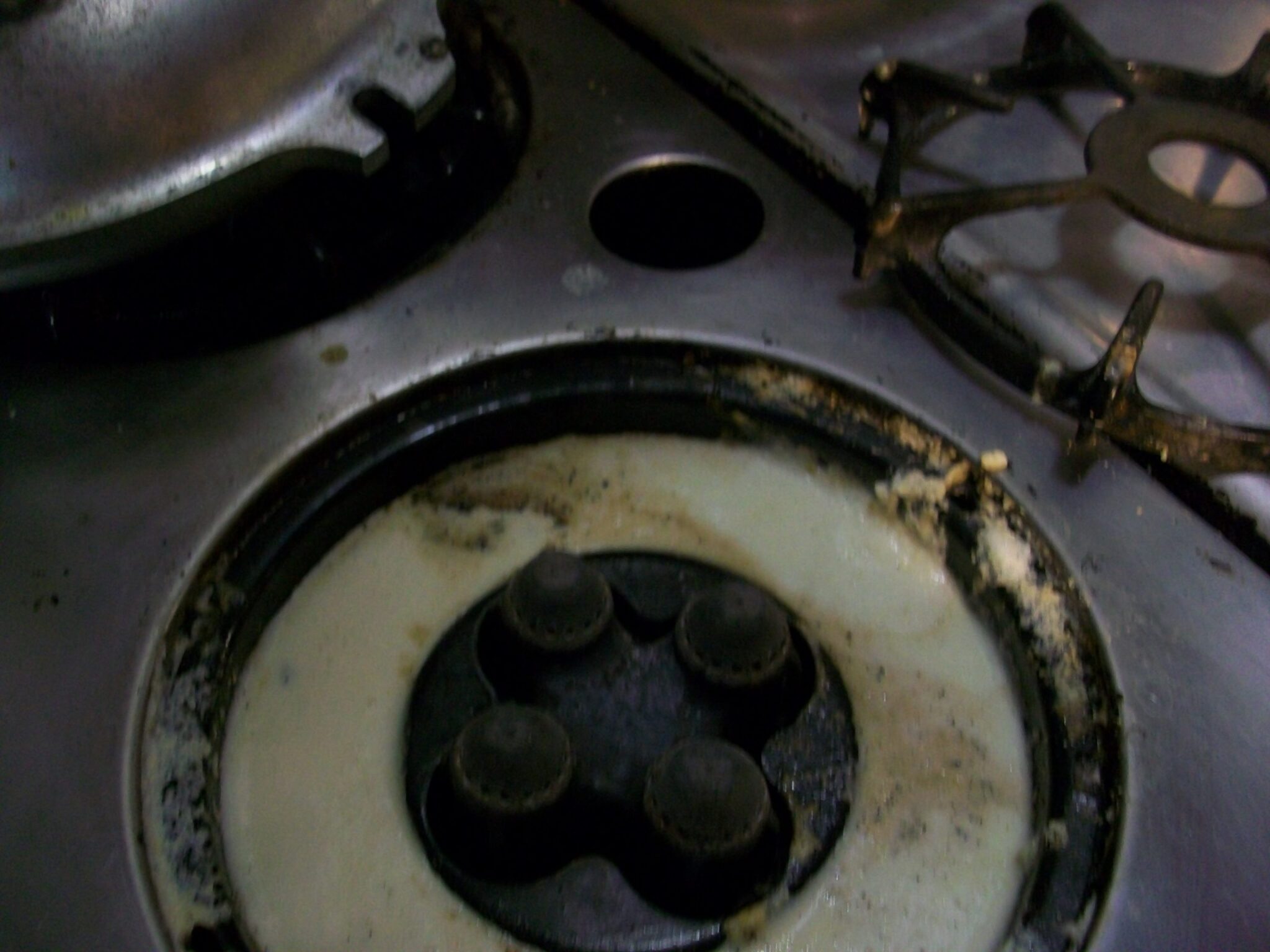
- Seriously, don’t stop stirring or walk away until the foam goes down… this doesn’t take long.
- Sing yourself a little soy song while you’re at it, or something.
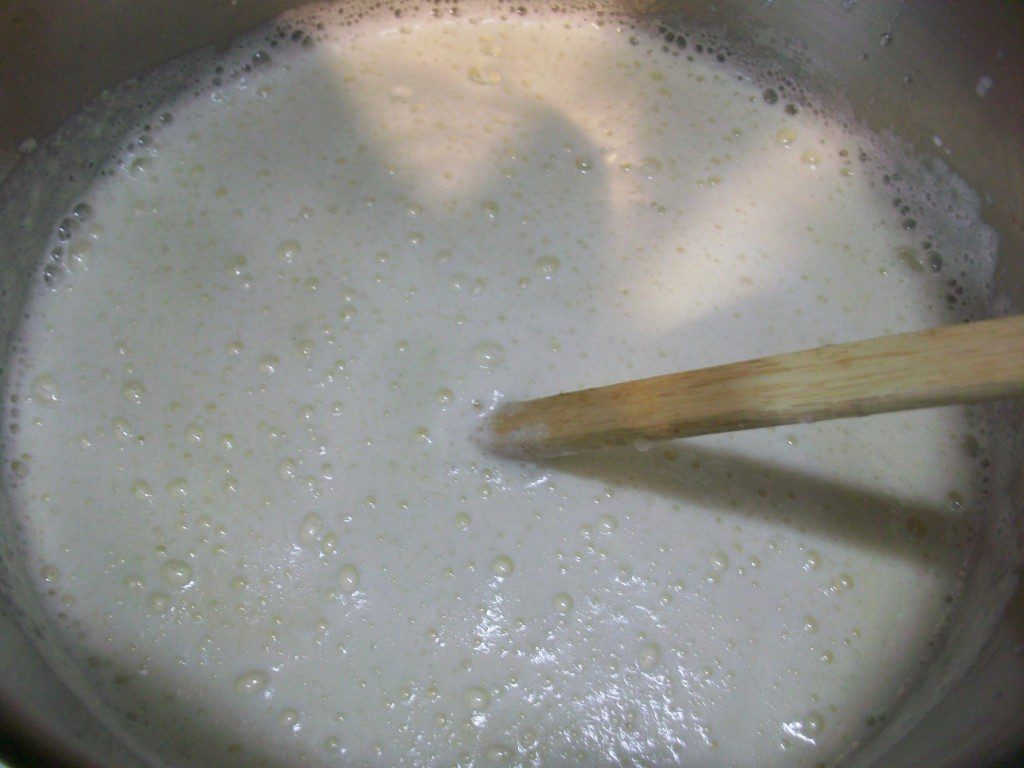
- Simmer the soy puree for 10-15 minutes, stirring regularly so that it doesn’t scorch.
- This heat-treatment de-activates the trypsin inhibitors in soy that make it impossible to digest the protein otherwise (or so says the Rodale Home Food Systems book on my shelf that like me, came out in 1981). Both of us are often still good sources of useful information, haha.
- Strain the cooked soy puree through a fine mesh strainer and/or cheesecloth (or a clean pillowcase? use whatever you’ve got… coarse fabric or doubled cheesecloth in a strainer is probably best).
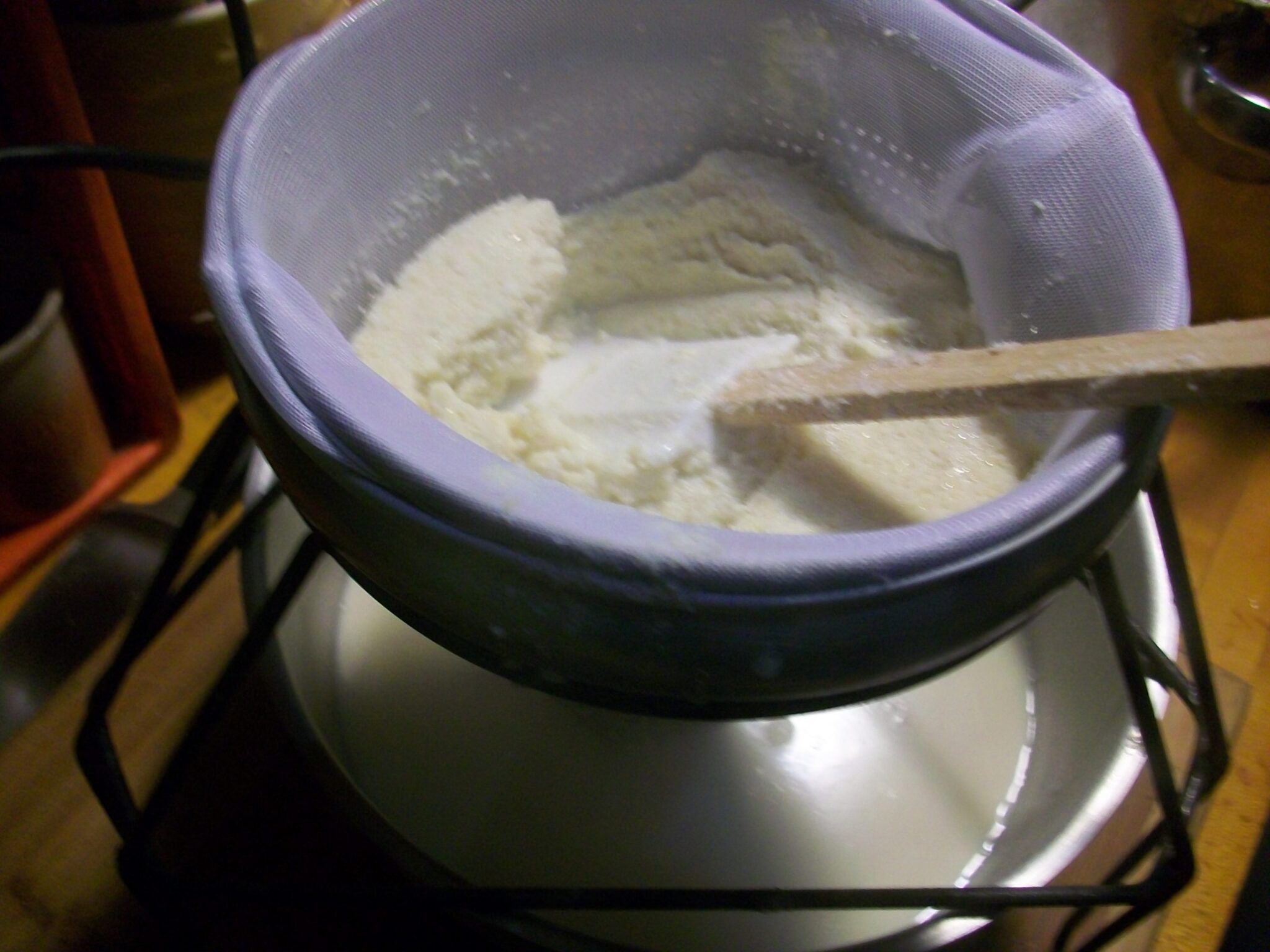
- Press out all the drops of your homemade soymilk with a spatula or the back of a ladle.
- Rinse the soy pulp a bit by pouring more water through and strain again. This will give you a thinner soymilk but a better extraction get out the last of the goodies. This is especially helpful if you’re making tofu with the soymilk and don’t care about the texture of the milk
- If you’re not making tofu, separate and reserve the “first pressings” of your soymilk for drinking and the later “second pressing” of thinner soymilk for cooking.
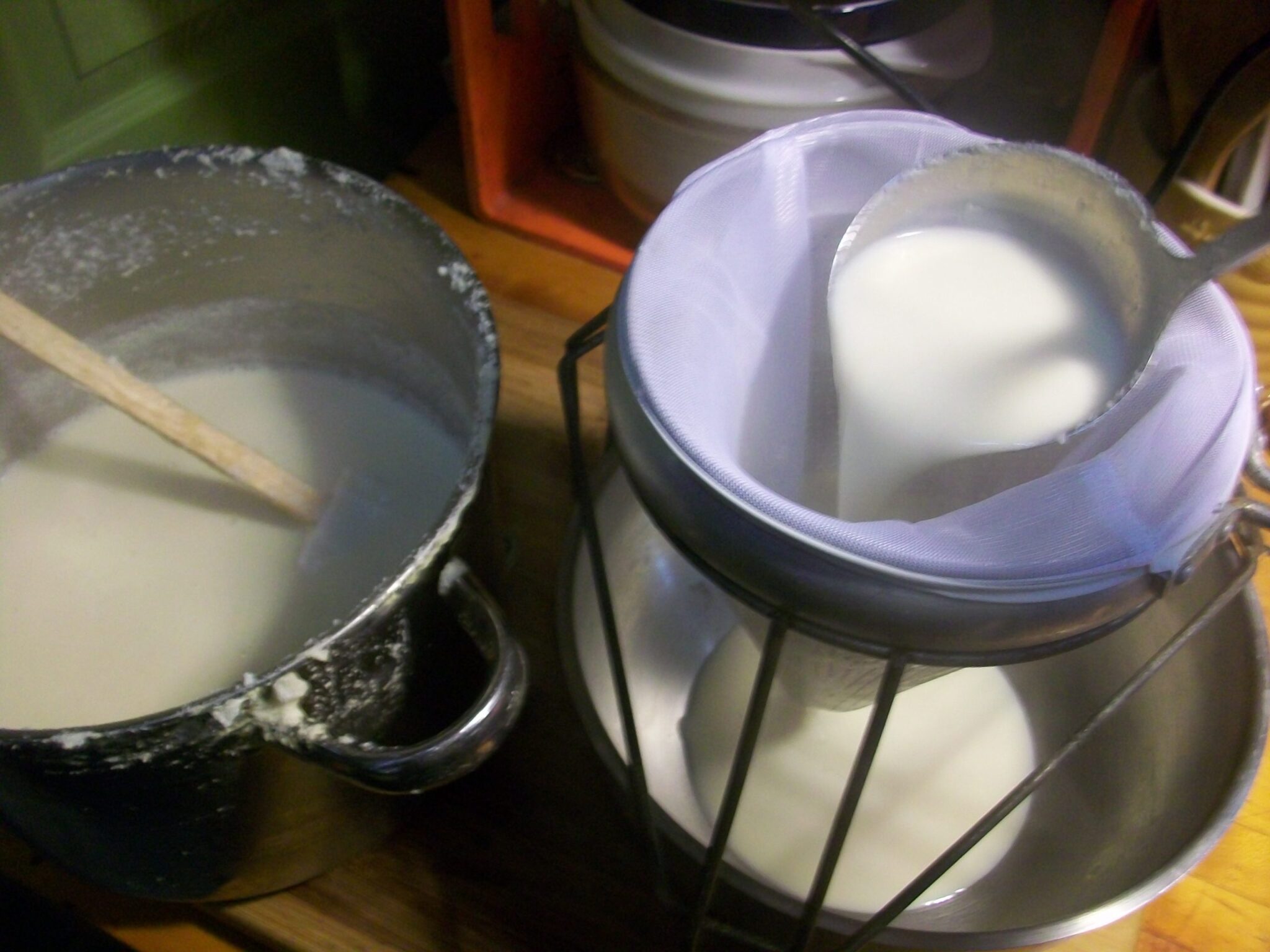
There you go! You just made soymilk, for pennies a serving! You can add vanilla, honey, sugar, cocoa powder, Tang (I don’t know why you would, but you could I guess) or anything else that strikes your fancy or just drink it straight.
Now if I only liked soy in my coffee, I’d be set for quarterly grocery runs. I’m still hooked on the dairy wagon for now as long as I require that caffeine IV drip of joe… there’s nothing quite as good as real half and half or cream in hot coffee. We’ve all got our vices, hey? Actually, I’m fine with powdered milk in my coffee in a pinch, but the fellow draws the line there. Fair enough.
What is Okara?
The bean pulp that’s left after you strain out the soy milk is called okara. You can season it and use it as a meat replacer or stretcher (the same Rodale book has a surprisingly yummy recipe for “soysage” that I’ll write up and share next time I make it).
If you are not a fan of the flavor or texture of okara, or you just have more than you can use? You can compost it, or feed it to your chickens! Our chickens LOVE it. Okara is very perishable though, so you want to refrigerate or freeze it until you’re ready to use it. If you’re going to compost it, make sure to mix in lots of “browns” or it will make your compost smell TERRIBLE though!
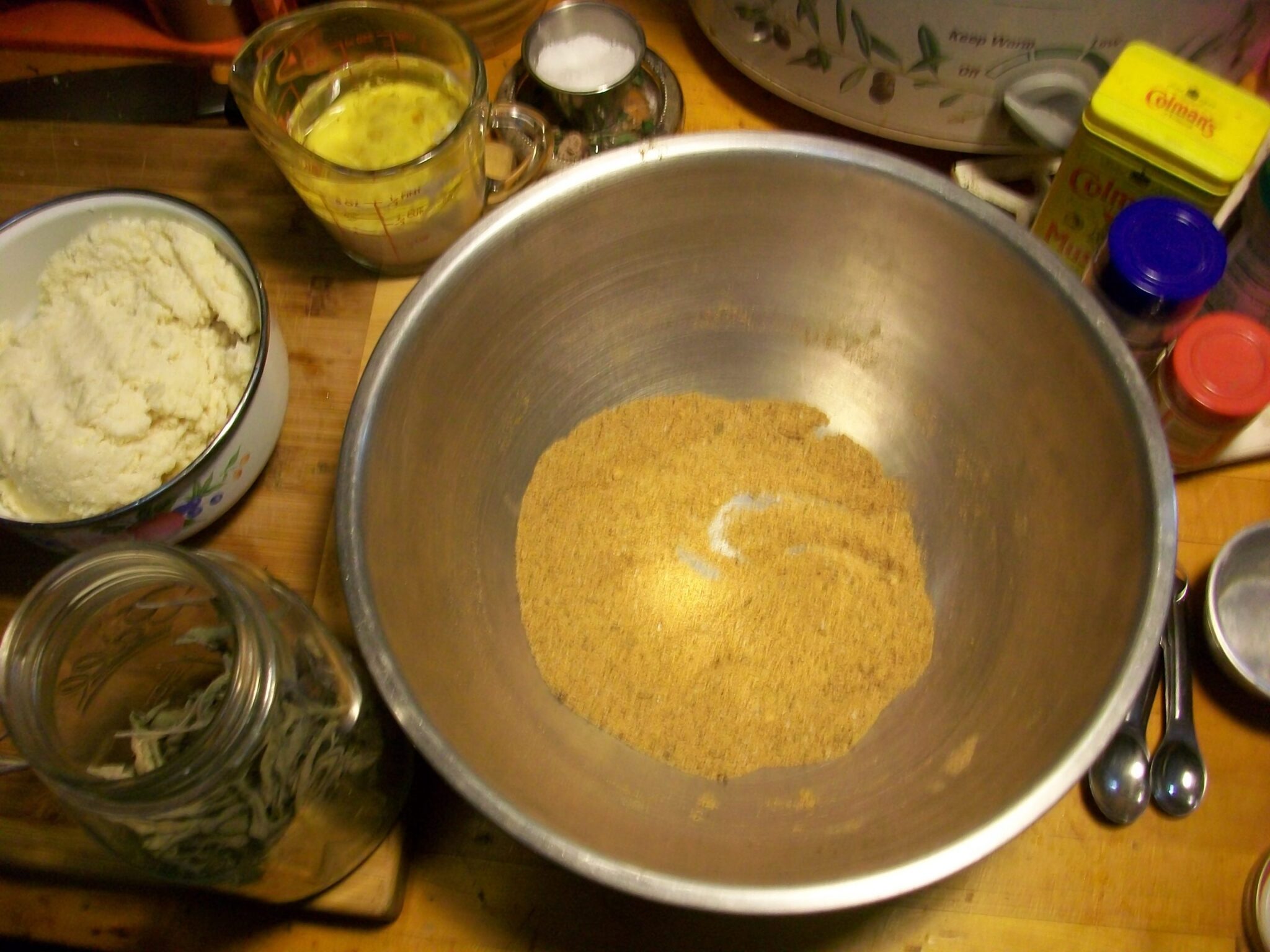
Here’s the mise en place for my okara soysage, aka “cheatloaf”, which is surprisingly tasty! This recipe is also from that vintage Rodale book… I’ll write it up at some point and share it with y’all!
Use Your Homemade Soymilk to Make Tofu
What will really blow you away is how easy it is to make tofu at this point… and how similar it is to making a simple fresh cheese like ricotta or paneer, if you’ve ever done that. But don’t worry if you haven’t, it’s not rocket science and you can probably still eat your mistakes if it doesn’t come out perfectly on your first try!
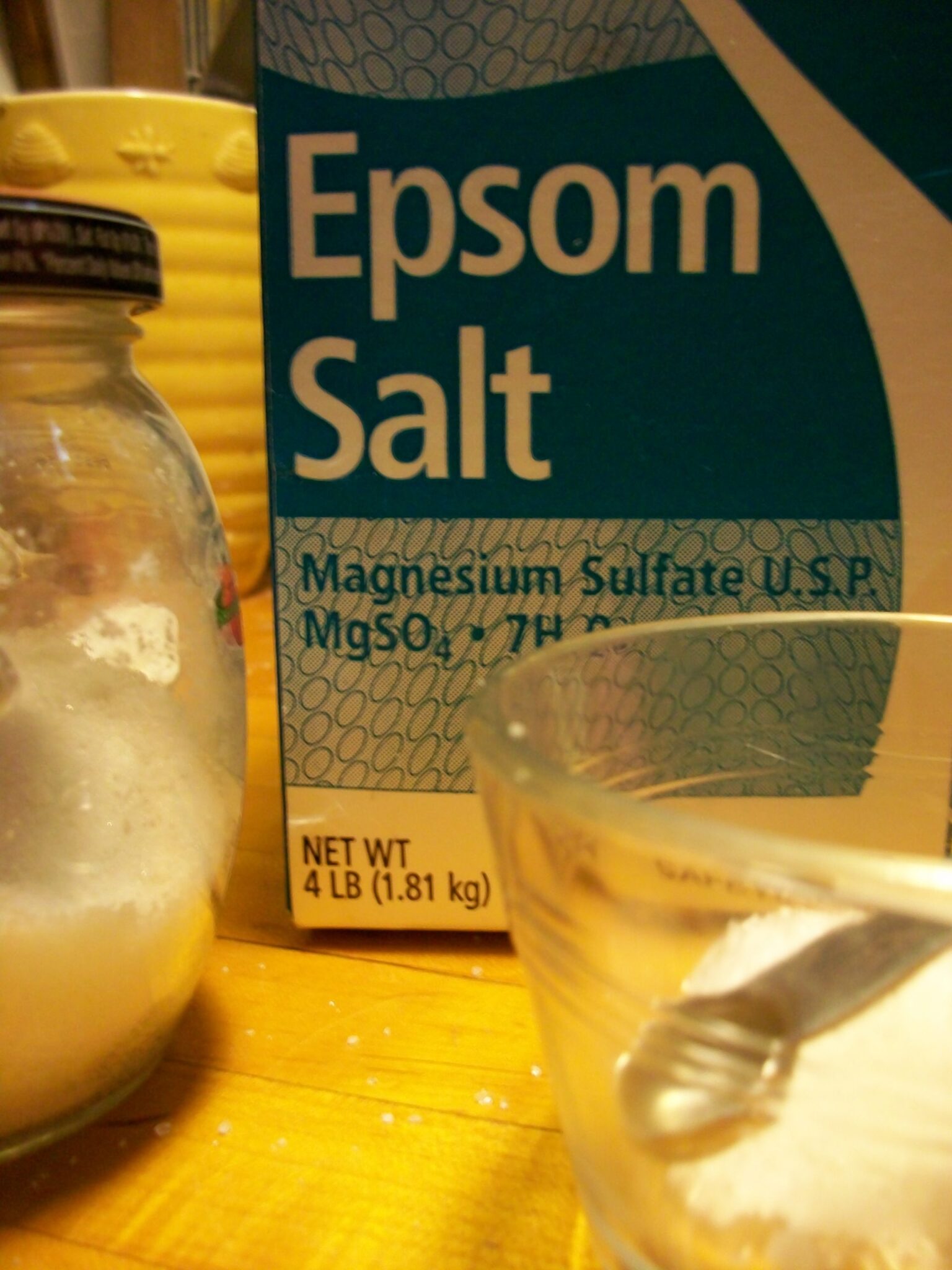
- Mix up a cup of water and 1 1/4 t. epsom salts (or nigari or calcium sulfate if you have those… I don’t, but the epsom salts work just fine).
- This is your coagulant mixture, and will separated your heated soymilk into “soy curds” and “soy whey”. Just like cheese!
- Bring the soymilk back up to a boil, stirring and watching so that it doesn’t scorch or boil over.
- Add the coagulant mixture one third at a time, letting the pot boil again and stirring gently between each addition.
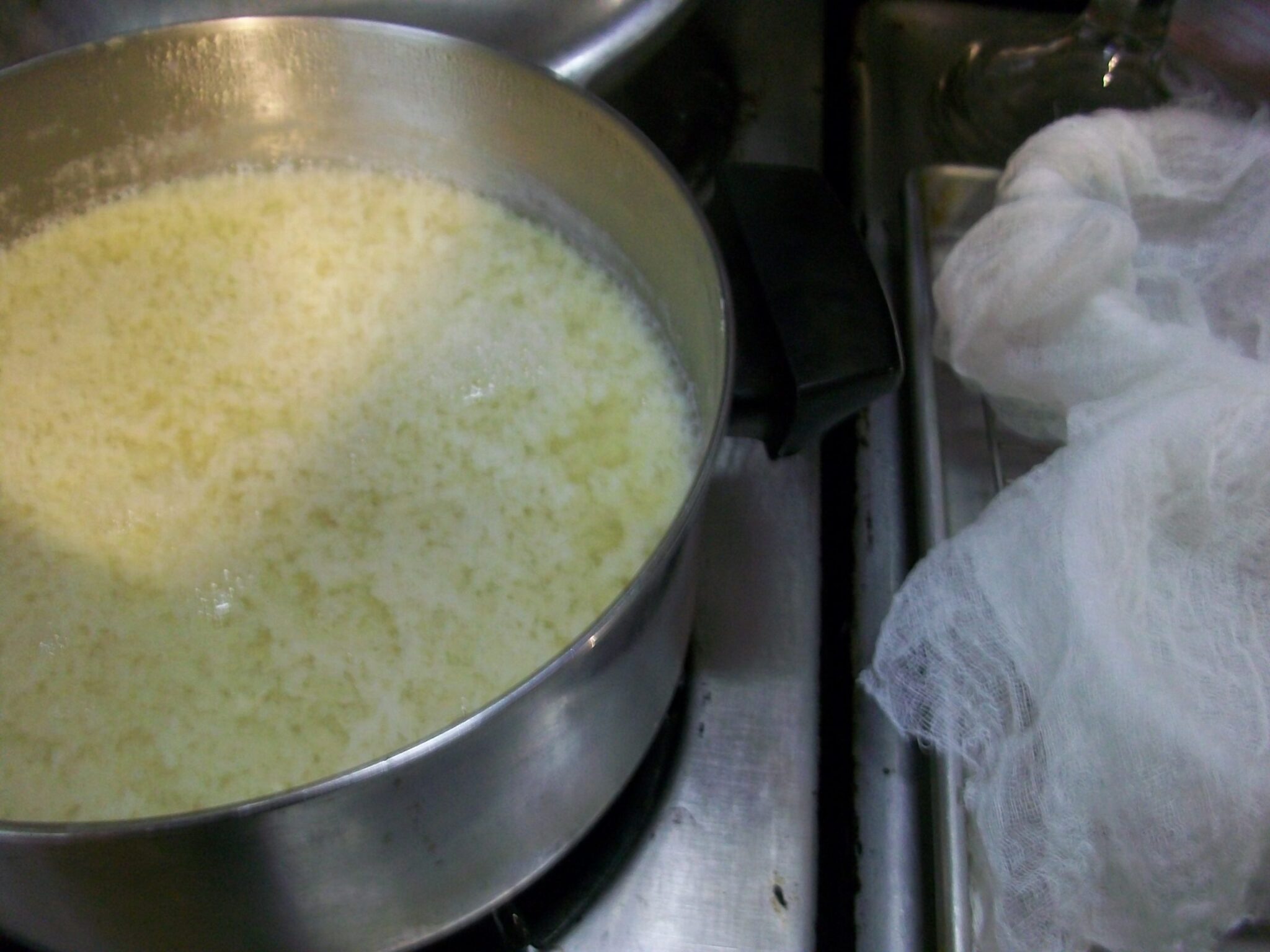
- Kill the heat and let sit for a few minutes, and you should get soy curds and whey!
- Back to the singing of your soy song while you wait… “little miss moffet, sat on a toffet, eating her bean curds, oh hey!” Or something like that.
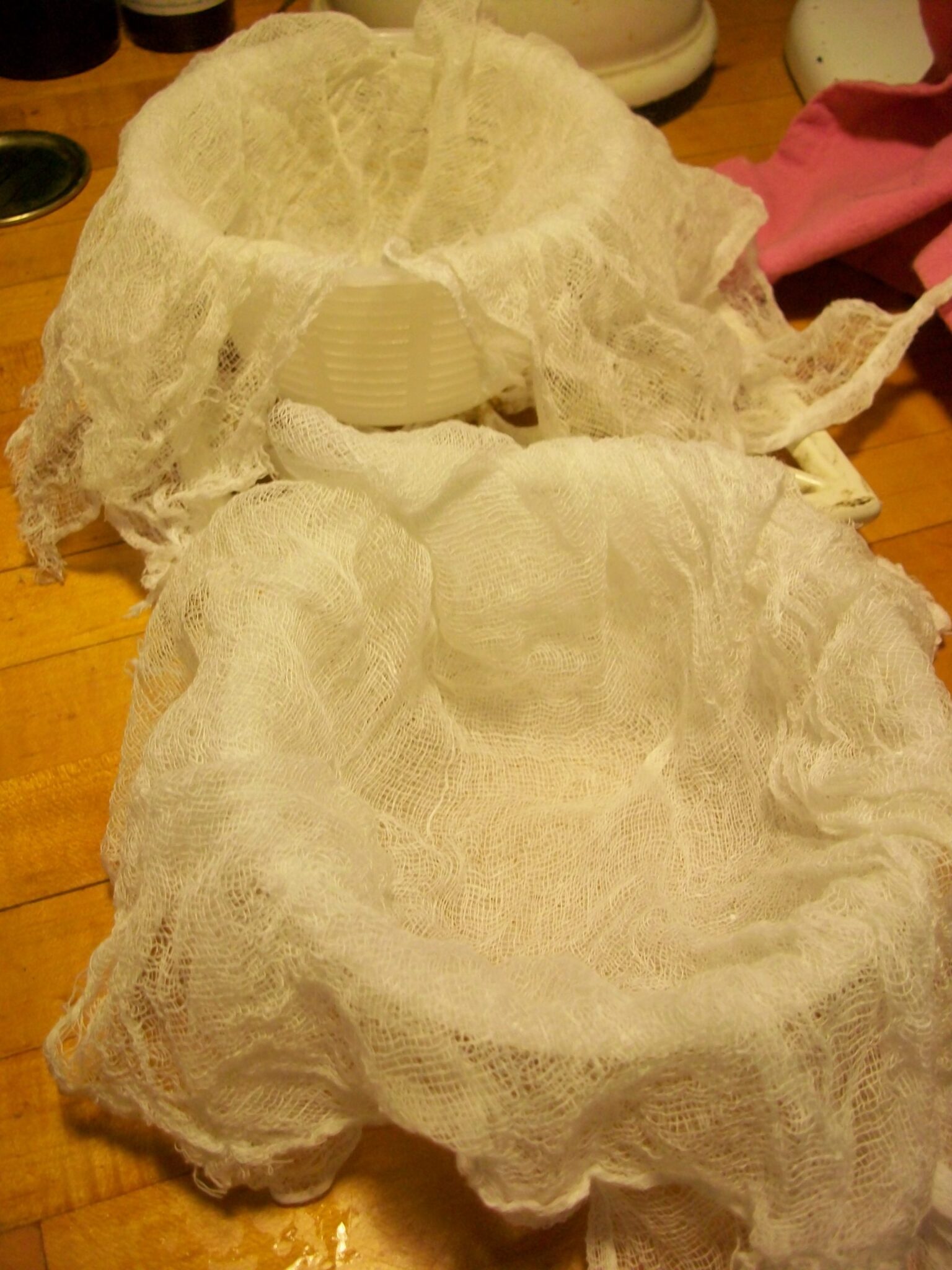
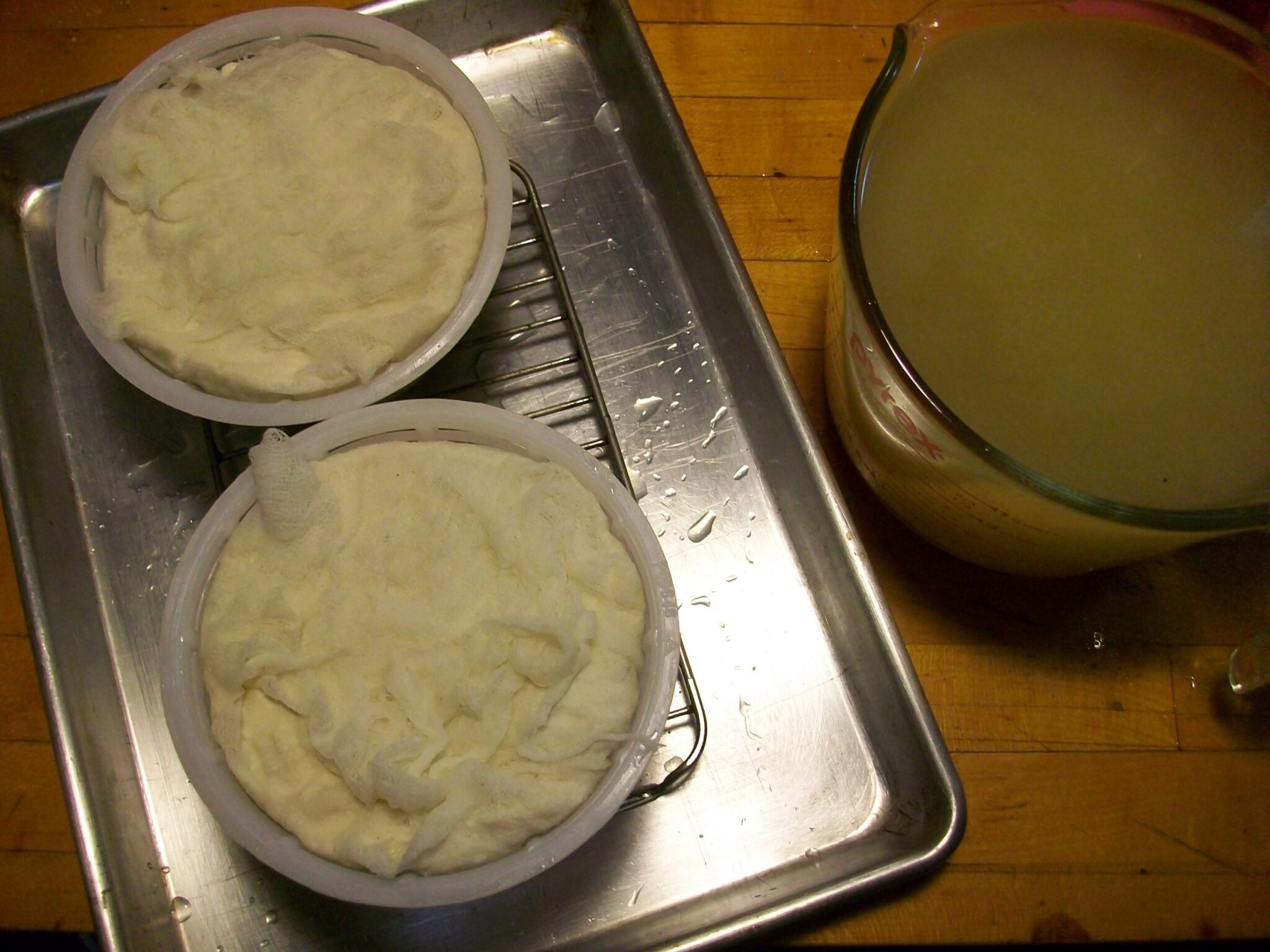
- Ladle the bean curd into a mold. Your mold can be anything food safe and porous. I like to line the molds with cheesecloth or muslin to catch all of the fine particles.
- A small strainer works fine again if you don’t have tofu or cheese molds. I have a couple plastic cheese molds that I saved from some store bought panela cheese that had ridiculously sturdy “disposable” molds as packaging.
- You can also make your own improvised molds by cutting or drilling holes in plastic containers.
- I ladle the curd into the molds over the pot and let drain for a few seconds, and then place them on a wire rack over a baking tray with a lip.
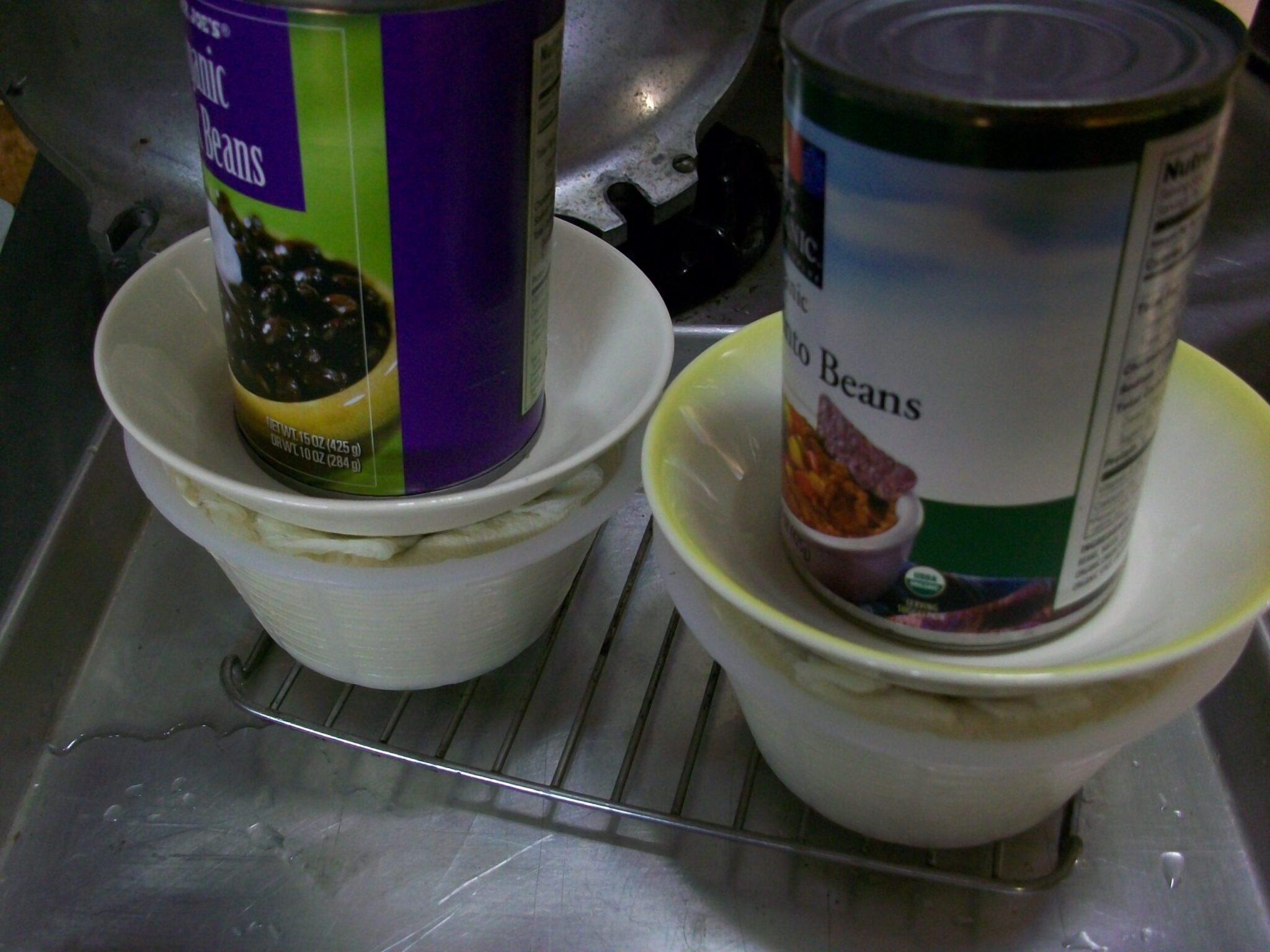
- Press the bean curd with a weight on top if you want firmer curds.
- You can improvise a press with a small bowl or saucer and canned goods, or jars of water to add a little bit of weight.
- Or, you can buy specialized presses and molds if you’re fancy (and especially if you make a LOT of tofu).
Use the soy whey in your next soup stock or bread. Making your own homemade tofu is sooo cheap, it’s almost free, plus you get other useful products for your kitchen, tiny farm, or garden. Soy milk, okara (bean pulp), tofu, and soy whey… all from the same little soy bean and your kitchen. Mind blown!
In other home dairy news from the neighborhood… another one of our neighbors just got goats! So in addition to the visiting goats at the park (who commute in from the ‘burbs), we also have a trio of permanent resident Nigoras (Angora and Nigerian Dwarf crosses). Olga and her daughter, and little Walter, the future stud-muffin who for now is getting pushed around by the ladies are living on our block.
So there is homemade goat milk soap in the future… and our neighbor agreed to teach me to weld in exchange for soap-making lessons. How cool is that! I love our little street (most of the time)!