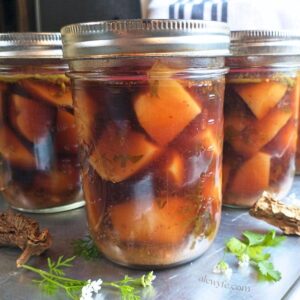
Seasoned Chipotle Potatoes (Raw-Pack Pressure-Canning Recipe)
This easy raw-pack pressure canning recipe makes spiced ready-to-serve canned potatoes. It's adapted from a published & tested recipe by Ball. For simplicity, the quantities given are per quart jar, but you need to do at least two quarts at a time for safe processing. Do not can single jar batches of this recipe. You can also use pint jars (the quantities below will fill two pints). If you can pints, you need to process least four pints per batch for food safety.
Equipment
- canning jars, rings, and new lids
- Jar tongs & canning funnel
Ingredients
Ingredients Per Quart or Two Pint Jar(s):
- 1 ¼ lb Yukon gold, red-skinned, or other waxy potatoes 20 oz per quart jar, 10 oz per pint
- 1 cup chicken, meat, or vegetable broth (or water & bouillon) 8-10 oz (you can use plain water but broth is better)
- 1 tsp kosher, canning, or sea salt
- 1 tsp ground dried chipotle pepper
- 1 tsp dried garlic powder (Ball recipe has 2 tsp of garlic and no cumin or coriander)
- 1 tsp ground cumin or coriander (optional, not in Ball recipe, substitute more garlic powder instead for original recipe)
- ¼ cup fresh cilantro (washed & chopped)
Instructions
Prep the potatoes:
- Wash and scrub the potatoes, discarding any that have mold or rot. Weigh out the potatoes. You'll need one and a quarter pounds of waxy potatoes (20 oz) per quart jar (or 10 oz per pint). You need to process a minimum of two quart jars (or four pint jars) at a time to ensure your pressure canner reaches safe canning temperatures.
- Peel the potatoes and place them in a pot of cold water to prevent them from browning and wash off the excess starch. I like to start the later steps now (prepping the canner, broth, and seasoning) so that they're ready when the potatoes are drained.
- Once you have them all peeled, drain and rinse the potatoes. Slice the potatoes into large 2-3" sections (halved or quartered). Small potatoes (less than 2" diameter) may be left whole.
Prep the pressure canner & jars
- Wash and preheat your jars, and get your lids and rings ready. Check for dents and make sure they're clean.
- Fill your pressure canner with the recommended amount of water (check your canner manual, but at least several inches) and preheat it.
Prep the broth and seasonings:
- Heat vegetable or chicken stock to a boil. You can also use bouillon powder or concentrate, or even water. You'll need about a cup of stock or broth per quart jar... the exact amount will depend on the shape and size of your potatoes, but I find that about 8-10 liquid ounces of stock per quart is enough (just over a cup), and roughly half that amount for a pint jar.
- If you are working with whole chipotle peppers, remove the stems and seeds, tear the peppers into small pieces, and then grind the peppers into a powder in a blender or spice grinder. You can skip this step if you bought chipotle pepper powder.
- Multiply the dry seasoning quantities by the number of jars you'll be processing (refer to the total weight). Measure out the dried chipotle and spices, along with the kosher or canning salt into a small bowl. Mix the dry seasonings well to combine.
- Drain the peeled, sectioned potatoes, place in a large mixing bowl. Sprinkle with the dried seasonings and the chopped cilantro and toss or stir until they're evenly distributed.
Prep the jars:
- Working quickly, fill your jars (dividing the potatoes evenly between the number of jars indicated by the initial weight). Do not pack more potatoes into the jars than indicated, and leave room for an inch of head space at the top.
- Check the weight of the jars as you work (20 oz of potatoes in a quart, 10 oz in a pint). Less is okay, more is not.
- Top up the jars with the hot broth, dividing it evenly between the jars. If you run out, you can heat more broth or bouillon, or top up the jars with boiling water, leaving one inch headspace. Don't leave the jars partially filled, or any potatoes above the liquid may discolor, and the heat will not penetrate the jars evenly.
- Wipe the rims of the jars (a bit of vinegar on a soft cloth or paper towel works great for this) and top with new canning lids. Tighten the rings finger-tight (or follow manufacturer directions for reusable lids).
Pressure-can the potatoes:
- Place the filled jars in the canner and close the lid. Leave the weight off or pressure relief valve open, and heat the canner over medium-high heat until the canner is steadily venting steam. Set a timer to vent steam for ten minutes.
- Place a 10 lb weight on the canner vent (or close the valve). Process at 10 lbs of pressure on a weighted canner, or 11 lbs for a dial gauge (adjust for altitude).
- Start the processing timer only after the canner weight is jiggling or the dial reads the appropriate pressure. If the canner drops below the indicated pressure at any time during processing, reset the timer to zero.
- Process quart jars for 40 minutes, or pint jars for 35 minutes. If you have both pints and quarts in your canner, process the whole batch for 40 minutes.
- Turn off the heat after the processing time is up. Let the canner rest undisturbed until the pressure returns to zero- do not remove the weight early to vent the steam faster. This can cause siphoning and seal failure in your jars!
- Once the pressure releases, wait another five minutes. Carefully open the lid of the canner (away from you, to direct the steam away from your face).
- Using jar tongs or a jar lifter rack, remove the jars and place them on a towel or cooling rack. Don't place hot jars directly on a cold surface or they may crack.
- Leave undisturbed overnight or for at least 8-12 hours when the jars are fully cooled before checking for seals. Any jars that didn't properly seal can be refrigerated and used within a week, or reprocessed with new lids within 24 hours of canning.
- Remove rings, wash jars with warm soapy water, label, and store.
Notes
If the canner depressurizes or drops below the target at any time during processing, reset the timer to zero and process for the full amount of time again.
Storage Instructions:
- Label the jars (with the recipe name or ingredients, and the processing date) and store in a cool, dark place with the rings off.
- For best quality, flavor, and nutritional value, enjoy home-canned goods like these seasoned chipotle potatoes within 12-18 months, although they will be safe to eat for longer than that as long as the seals are intact.
- Discard any jars that lose their seals in storage, smell off, are bubbling, or hiss when opened. Use older jars first, or any that have less liquid in the jars. Potatoes above the liquid line may darken slightly but should still be safe to eat.
Tried this recipe?Let us know how it was!
