
BREWING: Black Night Wild Berry Melomel with Elderberries, Serviceberries, and Blackberries
- A Simple Wild Berry Mead Recipe
- How to Brew Black Night Wild Berry Mead
- Black Night Wild Berry Melomel with Elderberries, Serviceberries, and Blackberries
- More of Our Brewing Recipes Here!

A Simple Wild Berry Mead Recipe
This easy one gallon mead recipe uses elderberries, blackberries, and either serviceberries or wild blueberries to make a complex homebrew. You can brew it with freshly foraged berries in the peak of summer, or use frozen fruit (or even dried elderberries) to make a batch whenever you have time. Start a batch of this homemade mead this summer, and enjoy it during the darkest nights of winter.
We’re working on filling up our cellar with homemade beer, wine, and meads. Next recipe up in the brew queue is an elderberry, serviceberry, and blackberry mead (from dried and frozen berries) so that makes this, uh, medicinal, right? Elderberries are often made into herbal tea and syrups for their possibly immune-boosting abilities, but also, they’re deeply flavored and make delicious and robust fruit wines and meads. If you don’t have access to serviceberries, you can use fresh or frozen blueberries instead.
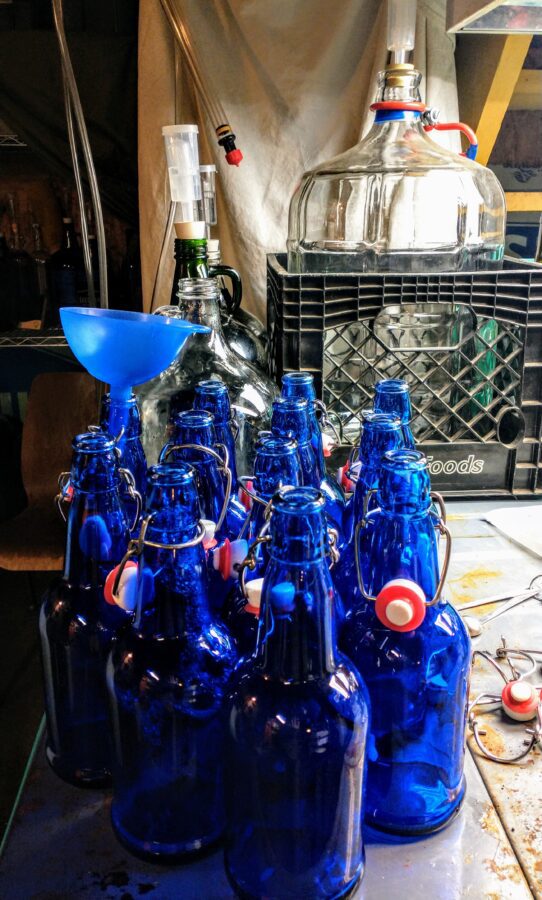
This wild berry mead won’t be aged and ready for a year or so, so better get it started and hope by then we can just enjoy it for the flavor and not the immune-boosting-bioflavonoids. You can certainly drink it sooner than that, but it does improve with proper aging. Although with the way things are going these days… we’ll be on COVID-19 v. 16.53 or something else by then? Anyway, whatever ick might be going around or not, it’s tasty and uses easily foraged ingredients, and is as delicious and as nutritious as a booze can be.
Note, IANAD (I am not a doctor and this is of course not medical advice, but it is Dr. Feelgood Approved). This drink may or may not be actual medicine, but this wild berry mead is good for what ails you (at least, if “what ails you” is the want of a good mead recipe)!
We could certainly do without our evening beer or wine at home, but life is nicer with it, especially in these stressful times. And once you have the equipment and the know-how, the ingredients are usually cheaper than buying your favorite tipple by a whole lot. Both honey and your finished mead store well in your pantry, why not stock up!
How to Brew Black Night Wild Berry Mead
day one- prep & brew mead:
- Assemble ingredients and sanitize fermentation equipment and utensils.
- Bring just under 1 gallon of water to a boil in a stainless steel or enameled stock pot with a lid.
- Bag the fresh or frozen berries and dried fruit in a fine nylon mesh brew bag and steep in the boiled water.
- Add the honey to the hot water and stir with a sanitized spoon to dissolve, along with the acid blend.
- If you’re using a campden tablet, add that now and let sit overnight (covered with a lid or cloth to protect from dust and fruit flies), otherwise, let sit until safely cooled to lukewarm.
day two- pitch yeast:
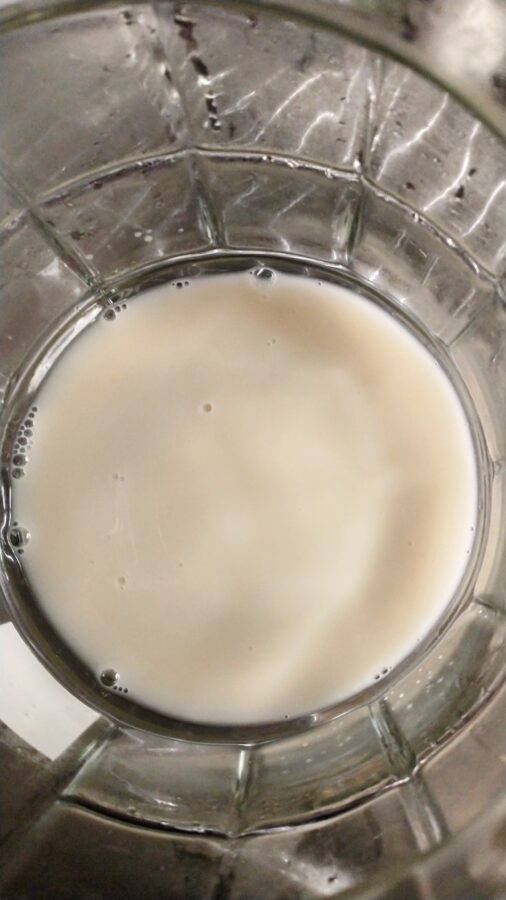
- Dissolve the yeast (and pre-fermentatation/hydration additive, if using) with 8 oz of (boiled and cooled) water in your sanitized primary fermentation vessel (at least 1.5 gallons).
- Check the yeast packet for the recommended temperature (this varies by strain and manufacturer).
- Add the cooled honey and berry mixture to the yeast, close up the fermenter, and top with an airlock.
- Ferment your mead for about 14 days with the fruit.
day 10-14- rack mead off fruit:
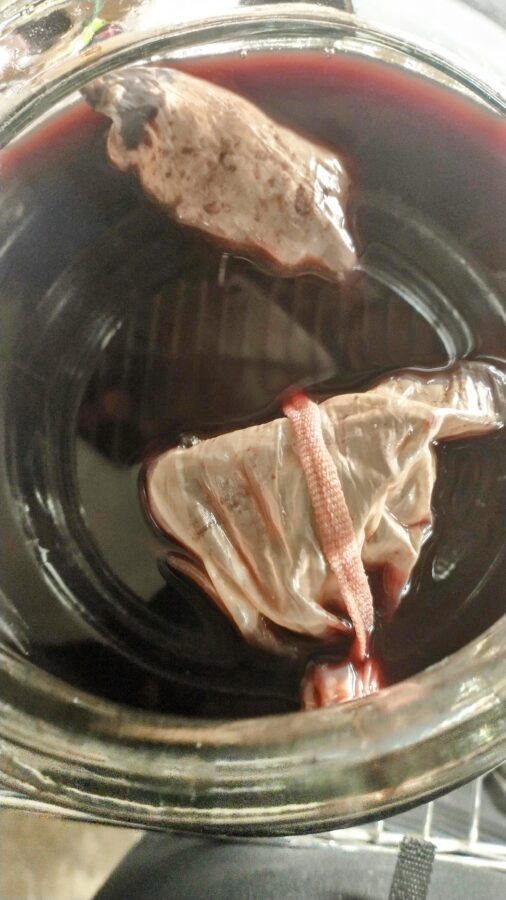
- After initial vigorous fermentation has ceased (this should be about 14 days, but varies with temperature) rack off the fruit into a glass carboy or jug.
- Keep the airlock topped up and ferment to dryness (anywhere from 30 days to 3+ months).

age & bottle:
- Bottle your wild berry mead (corked, crown capped, or swing top sanitized bottles are fine) and age somewhere cool and dark for at least 6 months but ideally a year.
- The tannins from the elderberry will mellow with aging and the flavor will soften and improve.
- If you like, you can stabilize with potassium sorbate and backsweeten lightly before bottling. I prefer my meads on the drier side, but if you want a sweet mead, make sure you use a stabilizer or your bottles may explode!
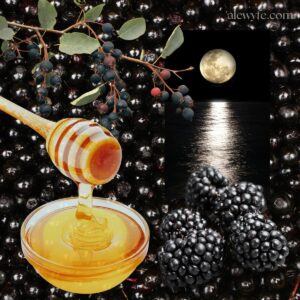
Black Night Wild Berry Melomel with Elderberries, Serviceberries, and Blackberries
Equipment
- 2-3 gallon fermentation bucket with cover
- nylon strainer bag
- 1 gallon jug with airlock and bung
- funnel and strainer or siphon and tubing
- brewing sanitizer
Ingredients
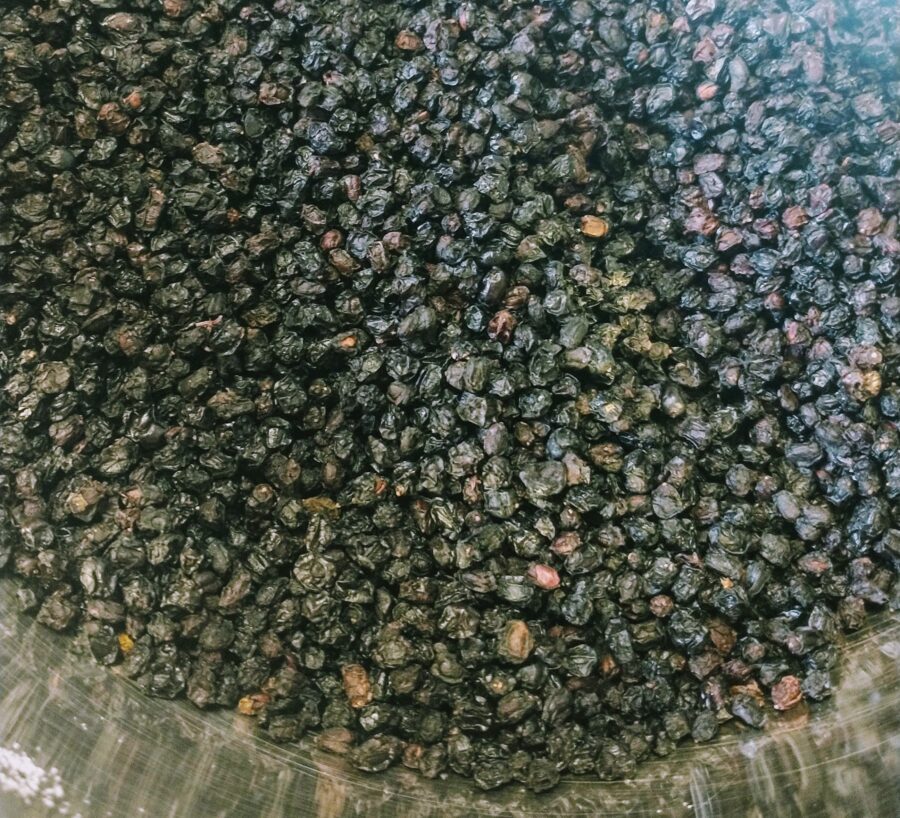
- 4 oz dried elderberries the fresher the better
- 4 oz fresh or frozen serviceberries (substitute wild or regular blueberries)
- 2 oz fresh or frozen blackberries
- 4 oz organic raisins chopped
- 2.5 lbs blackberry honey
- 8 oz blueberry honey
- 1 tsp acid blend
- 1 campden tablet (KMS) crushed
- 1 tsp yeast nutrient
- 1 packet mead yeast wine or mead yeast of your choice
Instructions
- Assemble ingredients and sanitize fermentation equipment and utensils. Bring just under 1 gallon of water to a boil in a stainless steel or enameled stock pot.
- Bag the berries and dried fruit in a nylon fine mesh brew bag and steep in the boiled water. Add the honey to the hot water and stir with a sanitized spoon to dissolve, along with the acid blend. If using the campden tablet, add that now and let sit overnight (covered with a lid or cloth to protect from dust and fruit flies), otherwise, let sit until safely cooled to lukewarm.
- Dissolve the yeast (and pre-fermentatation/hydration additive, if using) with 8 oz of (boiled and cooled) water in your sanitized primary fermentation vessel (at least 1.5 gallons). Check the yeast packet for the recommended temperature (this varies by strain and manufacturer).
- Add the fruit bag and must from the brew pot and yeast nutrient to the yeast, cover and top up your airlock. Ferment for about 14 days on the fruit.
- After initial vigorous fermentation has ceased (this should be about 14 days, but varies with temperature) rack off the fruit into a glass carboy or jug. Keep airlock topped up and ferment to dryness (anywhere from 30 days to 3+ months).
- Bottle (corked, crown capped, or swing top sanitized bottles are fine) and age at least 6 months but ideally a year. The tannins from the elderberry will mellow with aging. If you like, you can stabilize with sorbate and backsweeten lightly before bottling.