
DRINK: How to Make Elderflower Liqueur (Homemade St-Germain)
- Elderflower Liqueur Ingredients
- Kitchen Equipment Needed
- How to Make Homemade St-Germain Elderflower Liqueur
- Storage & Serving Ideas
- Homemade Elderflower Liqueur (St-Germain Copycat Recipe)
This simple elderflower liqueur recipe is a faintly sweet floral infusion that tastes like early summer distilled into a fragrant liquid amber beverage. It’s subtle and warm, with notes of sun-baked freshly mown hay, sweet clover, lemon, stone fruit, and honeysuckle. If you could pour a bright summer’s day breeze into a cocktail glass, this is what it would taste like.
This is a homemade version of St-Germain, the French liqueur made in late spring from carefully harvested elderflowers (Sambucus nigra) grown in the Alps. The delicate flowers are transported by bicycle from the fields to be processed – you know I love that little detail. You should pick your elderflowers whenever they’re at their best in your region, and handle them carefully post-harvest, whether or not you own a bicycle.
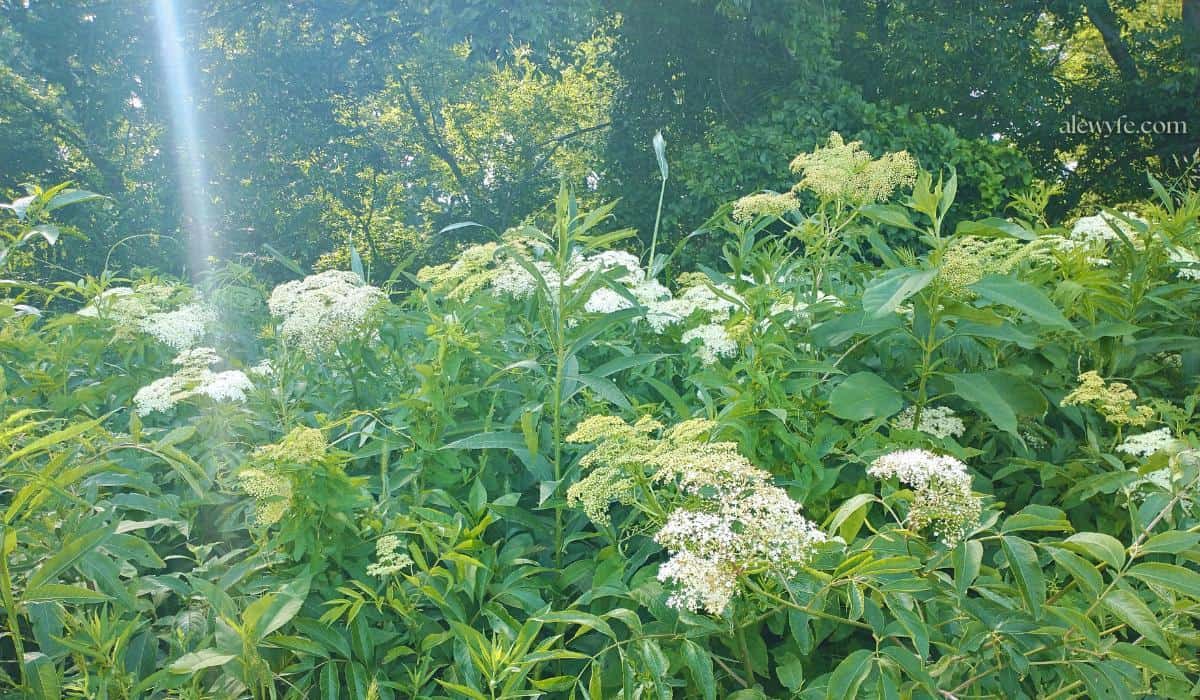
I make a batch of this liqueur each June from wild American elderflowers (Sambucus nigra var. canadensis) grown on our friends’ farm in Missouri where we all gather for an annual group camping trip, crawfish boil, and beach party on the sandy bank of the creek below where we camp. It’s a sweet reminder for the rest of the year of the good times and good friends that we only see once or twice a year now, which adds a poignancy to this bottle of precious syrupy sunshine in a glass.
Use this homemade liqueur in tall summer spritzer drinks, or in champagne or sparkling wine cocktails. Pour a splash over chipped ice in a Collins glass before topping up with club soda and a lemon slice. Add a shot of gin or vodka before topping up with sparkling water for a stronger drink, or just the liqueur for a lighter refreshing beverage on a hot summer day.
Elderflower Liqueur Ingredients

Neutral Alcohol:
Use a clear, neutrally flavored alcohol to infuse with your freshly picked elderflowers. I use vodka, of a decent quality. I usually use Kirkland’s American vodka in my infusions and tinctures. You could also use the lower proof Everclear, grappa, or unaged brandy, if you have those.
Commercial St-Germain is 40 proof at bottling, but when you add the simple syrup after straining, it will dilute the alcohol somewhat, as will the flowers themselves. The alcohol is a solvent, and will extract not just the aroma and color from the flowers, but also some of the water present in the plant. I use 80 proof vodka as a good compromise between extraction potential and final alcohol level.
If you have a proof and tralle hydrometer, you can add filtered water or use a less concentrated simple syrup to get closer to the exact proof of the commercial version, but I err on the side of caution so that I don’t risk spoilage or fermentation (especially after all that hard work).
Your finished homemade liqueur may be higher proof than the commercial stuff, so adjust your cocktail recipes accordingly if needed. This higher percentage of alcohol will also act as a preservative so that your liqueur lasts longer though, so it’s not necessarily a bad thing!
Fresh Elderflowers:
The best time of day to pick your flowers is early in the morning, just after the dew evaporates but before the hot sun bakes them. This will preserve more of the delicate flower aroma, but it’s more important to pick them when you will be able to immediately process the flowers.
We’ll talk more about the elderflowers themselves in a minute… don’t skip reading the first step, as their quality is important if you want to make a good elderflower liqueur!
Sugar:
You’ll be adding this at the end. I prefer to make a heavy simple syrup, and adding just enough to lightly sweeten the liqueur without making it cloying. I heat two parts sugar with one part water in a small saucepan, and just bring it up to a boil, stirring until all of the sugar has dissolved. Do not boil the syrup longer than a minute or two, or you will be making caramel. Delicious, but not what we want here!
Do not add too much simple syrup… if you lower the alcohol percentage too much the mixture can ferment or spoil. This is why I prefer to make a heavy simple syrup, so that there is less water to dilute the final product. You can store any leftover syrup in a clean bottle or jar in the fridge for up to a few months (especially if you add a pinch of citric acid as a preservative).
One cup of strong 2:1 simple syrup plus three cups 80 proof strained infused vodka equals 60 proof liqueur.
If you want a lower proof sweeter elderflower liqueur, two cups strong simple syrup plus three cups 80 proof vodka equals 48 proof liqueur (this doesn’t account for any water absorbed from the floral infusion, but should be a decent safety margin so that your liqueur doesn’t ferment).
For 100 proof alcohols, add an extra ounce of syrup (9 oz instead of 8) to three cups of infused alcohol to make the finished liqueur, or to taste.
Lemon:
This is optional, but I find a hint of lemon adds a balanced acidity to the heady floral notes of this simple liqueur. Some recipes recommend infusing thin slices of lemon with the elderflowers, which is an option if you’d like to try that. It definitely looks pretty in the jar, and you’ll get some of the essential oils from the peel, but also bitterness from the pith. This can balance the sweetness, but if you overdo it, will overpower this delicate flower liqueur.
I prefer to add a tablespoon (or three) of freshly squeezed lemon juice to the mixture after straining out the flowers and before the final straining through coffee filters. This way I can adjust it to taste, and make sure that the lemon flavor only just brightens the elderflower liqueur without overpowering it.
You can also add a bit of food grade citric acid as a natural preservative, and to increase the acid profile without affecting the flavor. Start with a teaspoon or two, and again, less is more.
Kitchen Equipment Needed
Large Glass Jar with Lid:
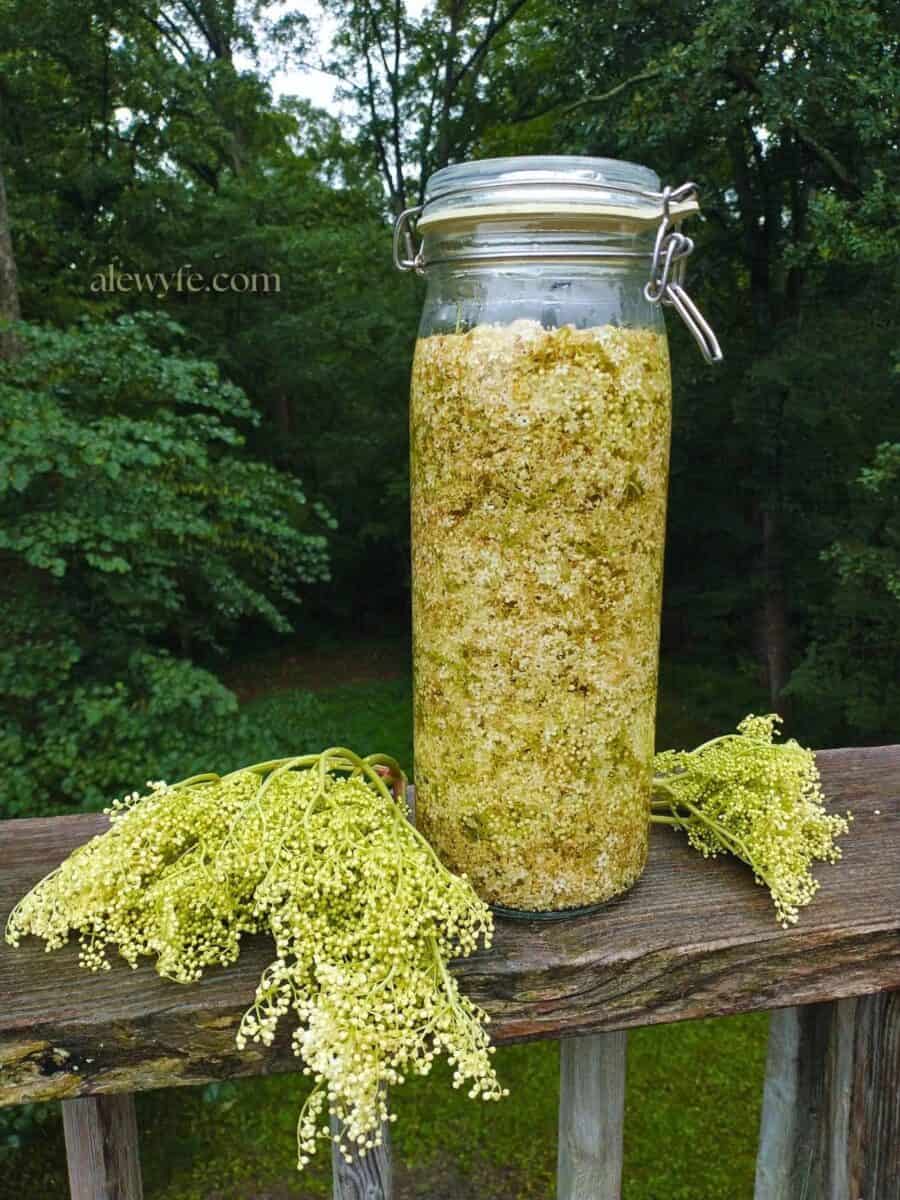
A half gallon mason jar or large wire-bail topped jar with a rubber gasket. You can use any wide mouthed glass jar that is airtight. The jar I’m using in these photos is the 2.1 quart KORKEN jar from Ikea, which are great for preserving projects and dry storage. They’re also super affordable (Not an affiliate link for that one, I’m just a big fan). You can also divide your batch between two quart jars if you don’t have a larger jar.
Strainer & filters or cheesecloth:
You’ll need to strain the spent flowers from the infused alcohol once their essence is extracted. I use first a coarse conical strainer (for making jelly) and then a finer wire mesh chinois, before a final pass through coffee filters to get rid of the fine sediment and leave the finished liqueur sparkling bright.
How to Make Homemade St-Germain Elderflower Liqueur
step one:
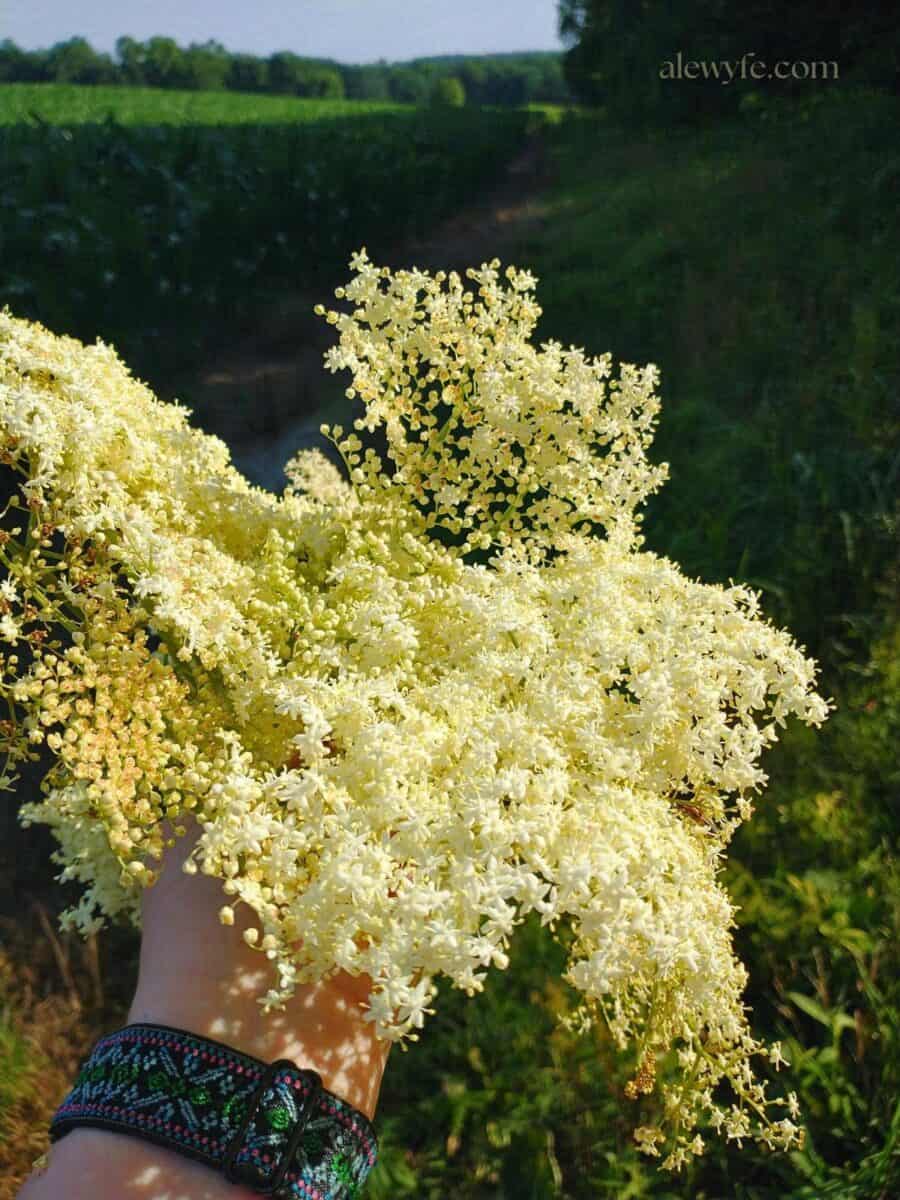
- Pick fresh elderflower inflorescences when the flowers are mostly beginning to open, and before they begin to turn brown around the edges. The ones in the photo below are almost too open, but if you pick them too soon the flowers in the center won’t have opened yet.
- Go for flower clusters with a good percentage of the flower petals being open into the star-shaped floret. The browning ones will give your liqueur an oxidized off flavor and too dark color, but the hard round unopened buds have very little aroma and flavor. You can separate these out somewhat in the next step though.
- You may be able to snap the flower bracts off cleanly, but it’s a good idea to carry a sharp folding knife, pair of kitchen scissors or pruning shears so that you can remove the flowers without damaging the plant.
- Don’t take too many from any one plant or place- remember to leave plenty for an elderberry harvest later, or for the birds and wildlife that depend on them!
step two:
- You want to handle the flowers gently and process them as soon as possible to capture the best aroma. I like to use a canvas grocery bag, as it breathes and cushions the flowers from bruising.
- If you can’t immediately process them, keep the flowers in a cool dark place, preferably the refrigerator, for up to a day. Don’t wait too long or the quality of your liqueur will degrade along with the flowers.
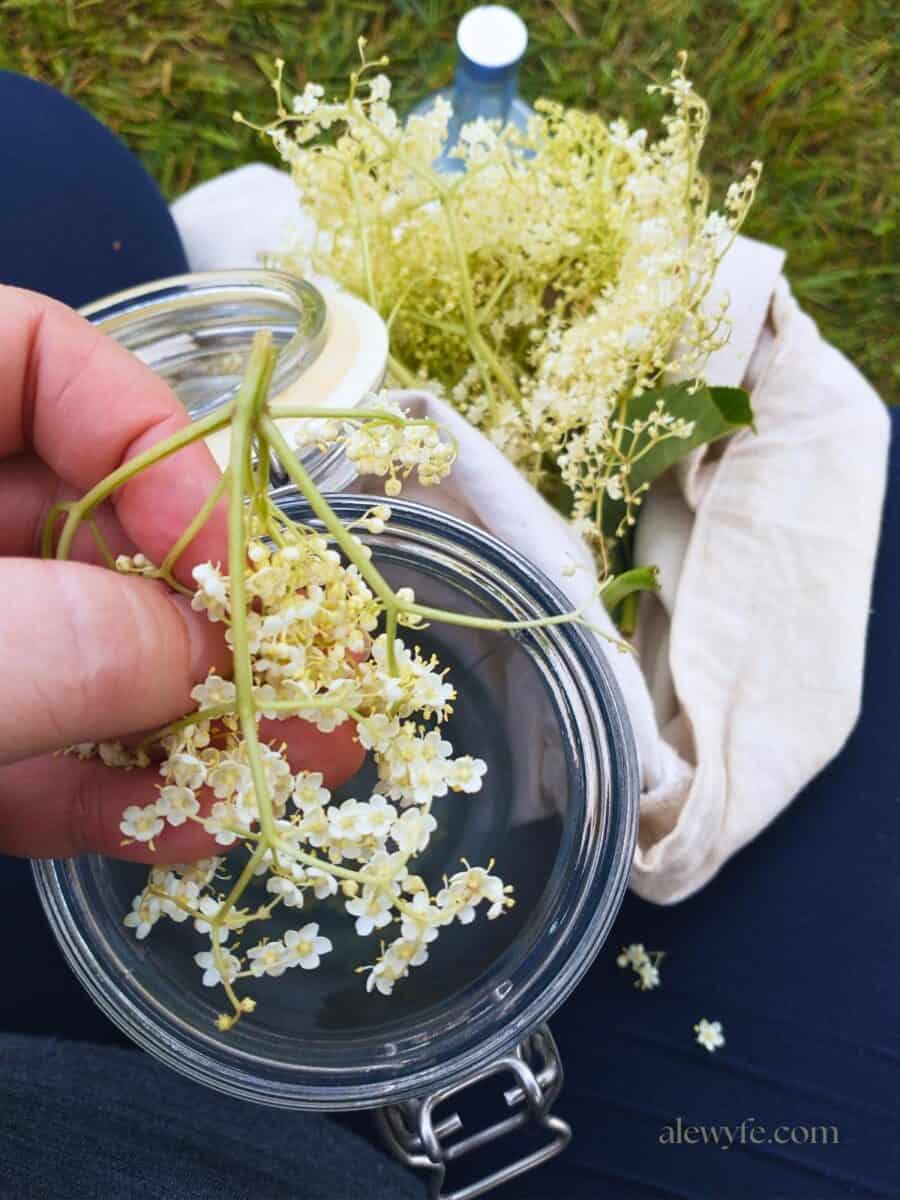
- Pick over the flowers, checking carefully for insects. Carefully rake just the flower tips into a bowl or wide-mouthed jar. Minimize including the attached flower stalks (pedicels). Make sure there are no elder leaves or larger stems in the mixture, as they are higher in toxic cyanogenic glycosides than the flowers and also will give an unpleasant vegetal taste to your infusion.
- Some people recommend using the tines of a fork or a berry rake to separate the petals. I just use my fingertips. Sliding gently pinched fingertips along the flower cluster will pull or brush off most of the opened petals into your bowl or jar.
step three:
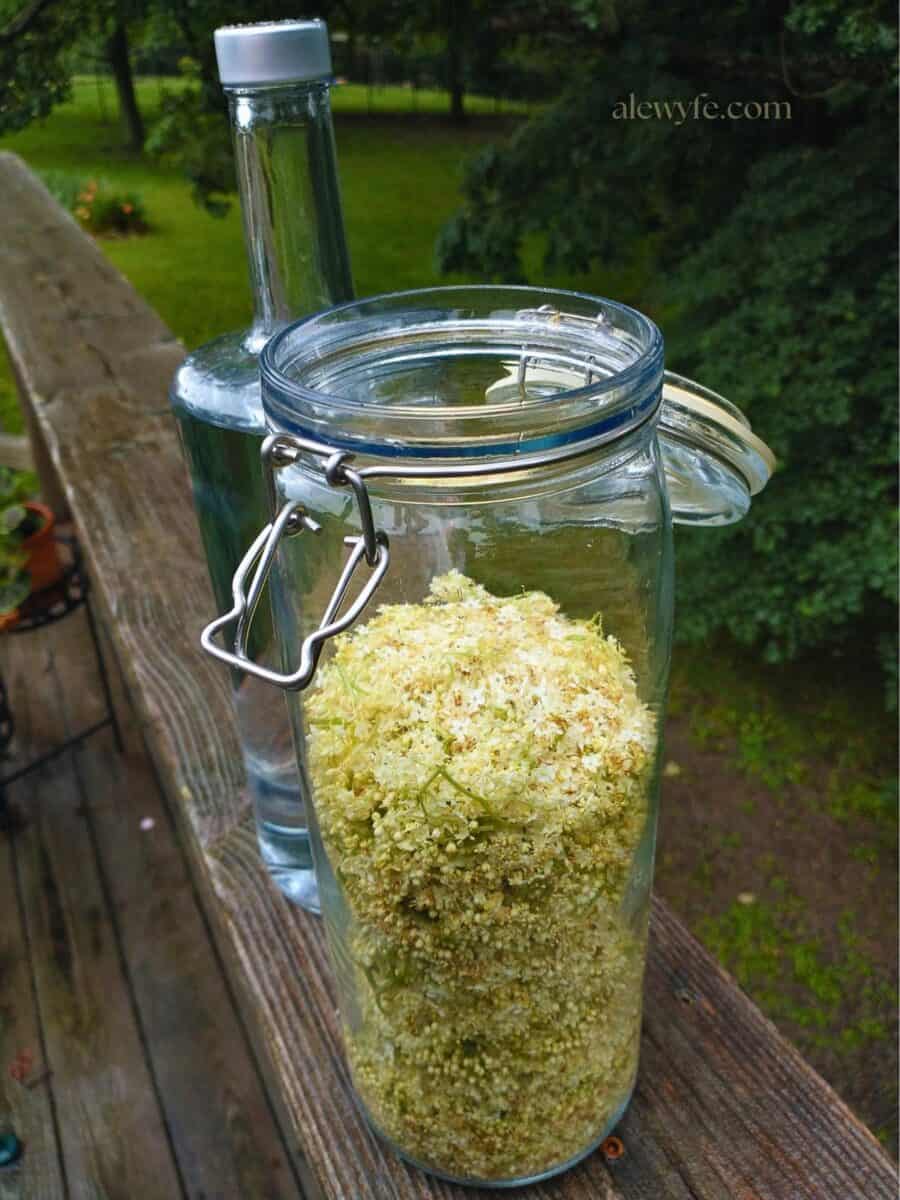
- Cover the flower petals with the alcohol, and invert the jar a few times gently to mix.
- Let the mixture infuse for two to three weeks, gently inverting the jar occasionally so that the top layer doesn’t dry out or discolor.
- Keep the jar somewhere out of direct sunlight at room temperature while it infuses.
- Taste small samples to decide when to strain your liqueur. I usually let mine steep for a few weeks, but no more than a month. If you steep it too long, you may pick up increasing levels of bitterness. Too short, and you lose some of the aroma and color from the flowers.
- Since it’s a natural product, the time needed for each batch may vary. This is where the artful part comes in. Use your nose and taste buds, and when it tastes nice and has an attractive golden hue, strain it!
step four:
- Strain the mixture carefully through a fine mesh strainer or cheesecloth-lined colander. If you want extra clarity in your elderflower liqueur, strain it again through a coffee filter or wine filter.
- Mix in simple syrup and lemon juice to taste (see Ingredients section above for guidelines on volumes for desired finished alcohol proof).

Storage & Serving Ideas
Store in a cool, dark place. The flavor is best if kept for no longer than a year, which is a good reminder to savor this year’s batch and to make the next before it is gone. It’s a potable wheel of the year, of sorts.
Use your homemade elderflower liqueur in any St-Germain cocktail. I like it in a tall glass with crushed ice, a shot of vodka, a lemon slice, and sparkling water. It’s also refreshing added to a chilled glass of champagne, prosecco, or other dry sparkling white wine.
Important caveat: Like all alcoholic beverages, this one is best consumed in moderation. While the products of various Elder plants have been used and enjoyed for a very long time, there have been rare reported cases of toxicity from overconsumption of elderflower teas or tinctures, or more commonly, from consuming uncooked berries from these plants.
Like any foraged food, make sure you have an accurate plant ID, as there are other umbelliferous white flowers that are VERY toxic… make sure you are picking elderflowers! Consult a reputable field guide and preferably an expert if you aren’t sure.

Homemade Elderflower Liqueur (St-Germain Copycat Recipe)
Equipment
- large mason jar or other glass jar with tight-fitting lid half-gallon jar or quart is a good batch size
- strainer or wire mesh sieve
- fine cheesecloth, butter muslin, or coffee filters
Ingredients
Infusion Ingredients
- 2 quarts Elderflower blossoms, freshly picked flower petals only. loosely pack the jar to measure.
- 1.75 L vodka, grappa, Everclear, unaged brandy, or other neutral spirit
At Bottling
- 2 cups strong simple syrup (or to taste, see notes) 2:1 sugar to water syrup, see below for instructions
- 2 tbsp lemon juice (or to taste) optional, or food grade citric acid
Instructions
- Pick fresh elderflower bracts when the flowers are mostly beginning to open, and before they begin to turn brown around the edges. It's best to gather them early in the morning if you can, just after the dew dries. The second best time is immediately before you'll be making your liqueur, as they're very perishable.
- Pick over the flowers, checking carefully for insects. Carefully rake just the flower tips into a bowl or wide-mouthed jar. Minimize including the attached flower stems, and make sure there are no elder leaves in the mixture, as they are toxic. Also check carefully for stowaway insects, as these flowers are popular with pollinators.
- If you used a bowl, transfer and gently pack the flowers into clean half gallon or several quart mason jars (or other glass jars with tightly sealing lids).
- Top the jars up with alcohol to cover, label the jars, and place in a cool dark cupboard or other place. Occasionally gently shake or invert the jars (more often at first to make sure everything is mixed and all the flowers are under the alcohol- top up if needed).
- Age the infusion for several weeks or up to a month before straining. It may taste a bit harsh, but that will mellow with the addition of simple syrup and possibly lemon or citric acid.
- Strain the liqueur through a fine mesh strainer or chinoise, and additionally through cheesecloth, coffee filter, or filter paper if you want a very sparkling liqueur without any sediment (this may remove some color and takes a lot of patience). If you are adding fresh lemon juice, you may want to strain it a second time or strain the lemon juice carefully before adding it to the liqueur.
- Sweeten the liqueur to taste with simple syrup (instructions below)… about one cup of simple syrup per three cups of strained infusion to make a quart. Add about a tablespoon of lemon juice, then adjust to taste if you'd like more lemon flavor or it needs more acidity to balance the drink.
- Bottle in an attractive bottle, and enjoy in cocktails, in sparkling wine or champagne, or fruit punch. Makes a nice tall drink with soda water on ice as well. It's also tasty in baked desserts, custards, and sorbets!
Simple Syrup
- Make a strong simple syrup (2:1 ratio sugar to water) with granulated white sugar.
- Add a cup of water to two cups of sugar in a small saucepan, and bring the syrup just up to a boil for just a minute or two to dissolve the sugar. Don't boil it longer than needed to dissolve the sugar or you risk making caramel. Stir carefully until the sugar is dissolved.
- Let the syrup cool to lukewarm before adding it to the strained liqueur (one half cup at a time, to taste). Don't add hot syrup to your liqueur or you may evaporate off some of the alcohol.
- Store any leftover simple syrup in a boiled glass jar or sanitized container in the fridge to use in cocktails, beverages, or pastry. Discard if it becomes cloudy.