BREW: Crabby Apple Cyser Homemade Hard Cider
- How Do You Make Hard Cider?
- What’s a cyser?
- Kitchen equipment needed to brew a 1 gallon batch of cyser
- How to Brew Crabapple Cyser
- CrabbyApple Cyser
- Liked this crabapple cyser? Try more of our homebrewing recipes!
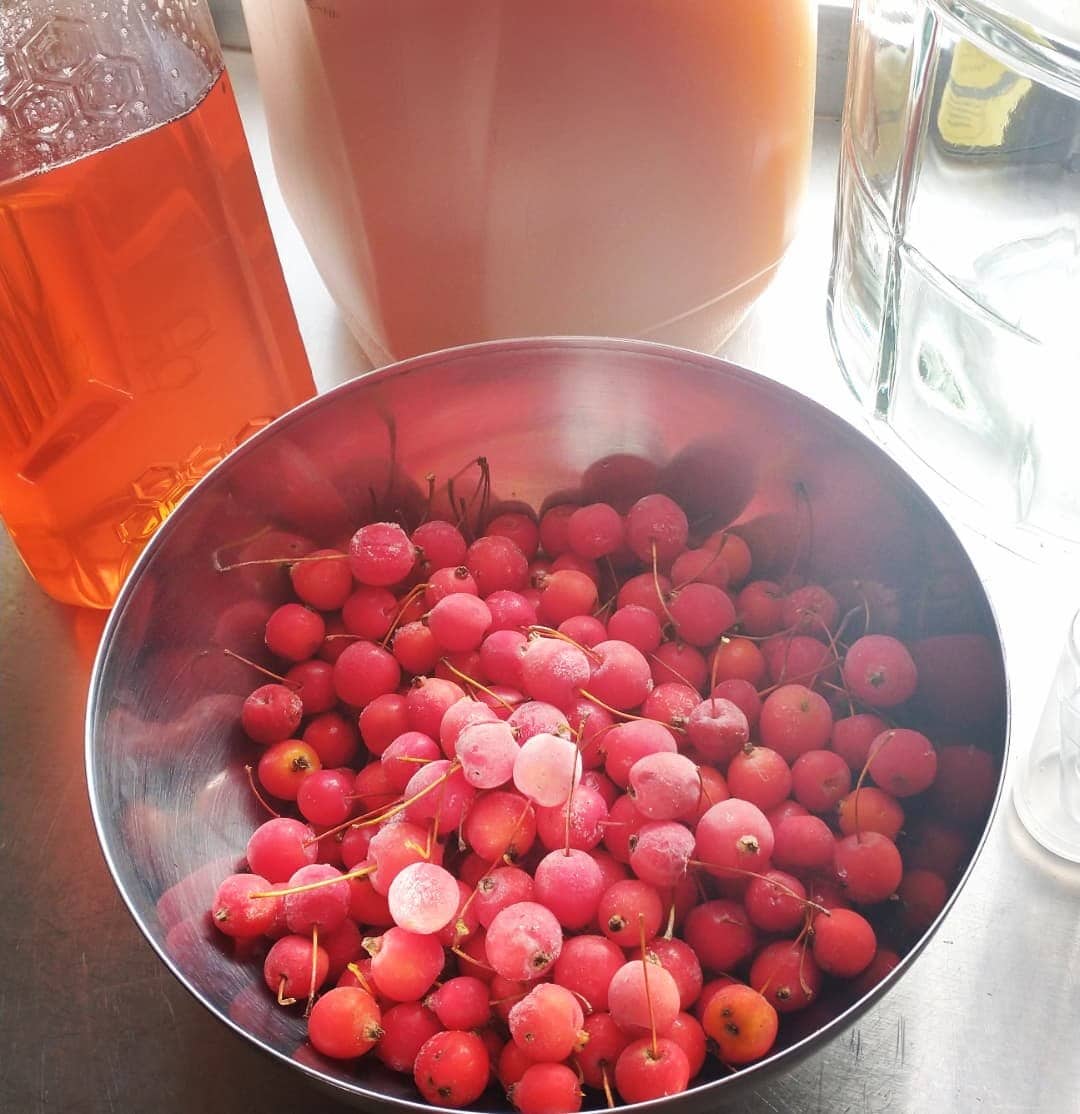
This crabapple cyser recipe makes a much more complex and interesting homebrewed cider, without needing a fruit press! We’re adding whole fresh or frozen crabapples gathered from the neighborhood to the basic ferment, and also some honey, making this a cyser. The crabapples add tannins, acidity, and a deeper traditional cider flavor.
Most of us don’t have our own orchard of heirloom cider apple varieties to press (and the equipment to do so)… adding common crabapples to a sweet fresh commercial cider is an easy way to make an incredible homemade hard cider.
If you aren’t pressing your own fruit, hard cider or cyser are some of the easiest ferments for beginners, or for quickly putting bottles in your cellar.

How Do You Make Hard Cider?
While cidermaking is an art unto itself, it can also be a very simple and approachable way to start making your own fermented beverages at home.
- Sterilize the juice (or not)
- Add pectic enzyme and a bit of tannin (or not)
- Pitch your yeast (or not, if you are doing a wild ferment and didn’t sterilize- it’s already in there)…
- Wait, taste and adjust the acidity to taste (or not)
- Add priming sugar (or not)
- And bottle or keg it.
Easy! As long as you have good sanitation and start with quality juice that doesn’t have preservatives, it’s practically foolproof. You can use good, fresh local apple cider in season when it’s available, or pasteurized shelf-stable cider if it’s not.
Whichever you use, check the label and make sure there are no added preservatives, especially potassium sorbate, which inhibits yeast. Cider with this added preservative will not ferment! Some sulphites are okay, as you’ll be adding these (in the form of a Campden tablet) anyway if you’re using a fresh cider (you might skip it if the cider has already been sulphited, especially if you will be sharing this with someone who may be sensitive to them).

What’s a cyser?
Cyser is a mead brewed with cider instead of water for the liquid component, or hard cider with added honey. It’s got a bit more oomph than a regular hard cider, and a more complex flavor than a plain mead. It’s an easy hard drink (I know, sounds like an oxymoron but it isn’t) that you can bottle still or sparkling.
We’re using CL-23, a higher alcohol tolerance wine yeast (up to 18%) that is a slower fermenter, but it should highlight the fruit flavors and give a little more complexity than a fast fermenting bone dry champagne yeast.
The crabapples will add acidity, a tannic backbone, and hopefully a bit of rosy color to our finished tipple. Now, enough talk, let’s get brewing!
Kitchen equipment needed to brew a 1 gallon batch of cyser
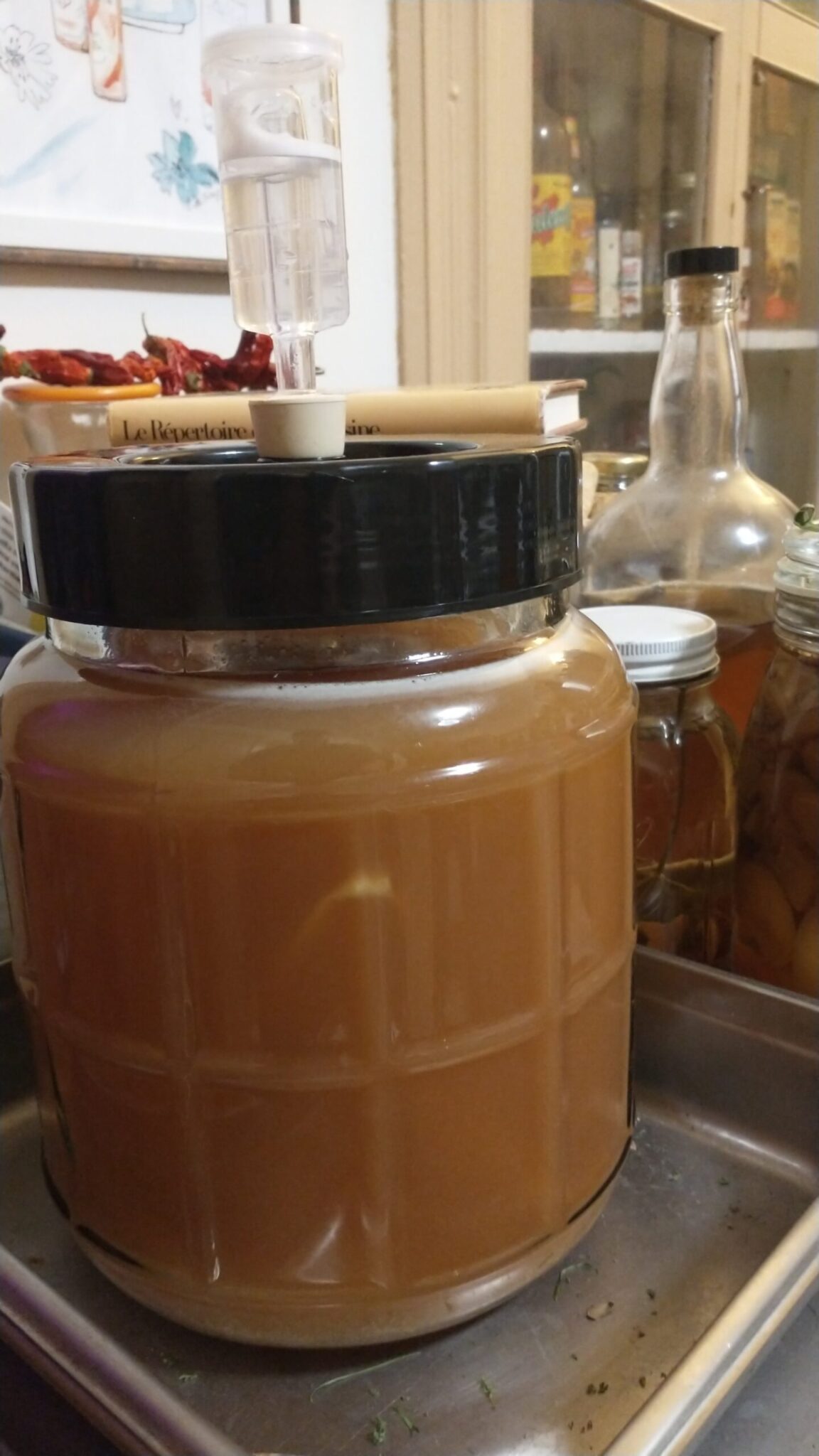
- 1 gallon jar, food grade bucket or wide mouth fermenter for primary fermentation
- 1 lid with airlock for primary fermentation container, or clean butter muslin & twine to cover tightly (to allow CO2 to escape while protecting the contents from dust, fruit flies, or other contaminants)
- 1 gallon jug or demijohn for secondary fermentation & clearing
- 1 lid or stopper with airlock for jug or demijohn
- 1 fine mesh drawstring nylon brewing bag (optional for this recipe, but makes racking & removing fruit sediment from the crabapples easier)
- 1 stainless or plastic long-handled spoon
- hydrometer & test jar or refractometer to measure specific gravity (density) and to monitor fermentation progress (OG & SG readings)
- siphon tubing & racking cane or autosiphon (cane & autosiphon are very helpful but not necessary for a one gallon batch)
- no-rinse brewery cleaner & sanitizer (I use PBW to clean brewing equipment, rinse well, and then Star-San or a homemade sulphite solution to sanitize, but you can use a no-rinse cleaner/sanitizer like One Step if you prefer).
- clean and sanitized beer bottles, a bottle capper, and new crown caps, or swing-top bottles.
How to Brew Crabapple Cyser
prep-work & sanitation:
- Crush the Camden tablet and add to the jug of cider. Shake well and leave for 24 hours.
- You can skip this step if you are using commercial cider that has been fully pasteurized instead of freshly pressed or lightly pasteurized cider.
- If the cider you are using is shelf-stable rather than being in the refrigerated section, you don’t need the Camden tablet… but I recommend using the fresher cider when it’s seasonally available for a better flavor!
- Freeze the crabapples… This is optional but highly recommended, as freezing will start to break down the cell walls and increase juice extraction.
- Sanitize a wide-mouth primary fermenter- either a large fermentation jar that is more than one gallon in volume, or a 2-3 gallon bucket.
brew your crabapple cyser:
- Heat 4 cups of water to a boil in a non-reactive pot, and add the frozen crabapples.
- Bring the pot just back to a simmer and then immediately remove from the heat and let cool.
- Add 1/2 tsp pectic enzyme to the pot, and 1/2 tsp to the jug of cider & mix well. Let sit one hour so the enzyme can do its work.
- Meanwhile, measure the honey into the primary fermenter.
- Hydrate the dry wine or cider yeast in 4 oz of water (boiled and then cooled- If you are using Go-ferm, add that to the water before the yeast), or activate the smack pac if you are using a liquid yeast packet.
- You can skip this step and do a dry yeast pitch if you prefer.
- Pour the crabapple mixture into a nylon or muslin bag in the fermenter. With clean hands, tie off the bag and squeeze the crabapples into a pulp to release their flavor and color. Mix well with a sanitized spoon to dissolve the honey.
- Add the cider and stir well. If you are using bentonite, add now, dissolved in a few oz of warm water.
primary fermentation:
- Check and record the specific gravity (SG). Pitch the dry or liquid yeast packet, and seal the fermenter with an airlock.
- Check the airlock to make sure that fermentation starts within 24 hours… if not, you may need to move your fermenter to a warmer location or re-pitch fresh yeast.
- After 7-14 days, remove the bag with the crabapples.
secondary fermentation:
- Let the cyser settle a day or two after removing the crabapples so that any sediment you stirred up when removing the fruit can drop out
- Rack the cyser into a sanitized 1 gallon carboy (jug) fitted with an airlock.
- Check and record the SG again.
bottle or keg your crabapple cyser:
- When cyser is clear and fermentation is complete, bottle.
- Fermentation is complete when the SG stops dropping and settles from 0.993 (bone-dry) to just at or over 1.000.
- Rack again before bottling if you like or especially if there is a lot of sediment in the carboy or you want a very clear cyser.
- Add priming sugar and use heavy bottles if sparkling cyser is desired- leave the bottles at fermentation temperature for 7-14 days before cellaring or chilling.
- Don’t overdo the priming sugar- be precise and use a priming sugar calculator online if you aren’t sure.
- You can drink your still cyser immediately, but it is better if you give it some time to age and let the cider mature and the tannins mellow, even if you don’t want a sparkling cider.
- Once your cyser is carbonated (if you added priming sugar), store it under cool cellar conditions if possible, and protect the bottles from light, heat, and temperature swings otherwise.

CrabbyApple Cyser
Ingredients
- 1 gallon apple cider Fresh is best, but you can use any that doesn't have preservatives, especially potassium sorbate, which will prevent your cider from fermenting.
- 1 lb crabapples picked over and rinsed, and preferably frozen before using to brew
- 1 lb light honey clover or wildflower
- 1 each campden tablet KMS
- 1 packet Wine or beer yeast I used CL-23
- 1 tsp Pectic enzyme divided
- Go-ferm or other yeast nutrient optional
- ½ tsp. Bentonite optional
Instructions
prep-work & sanitation:
- Crush the Camden tablet and add to the fresh cider. Shake well and leave for 24 hours (skip this step if you're using fully-pasteurized, shelf-stable cider without preservatives).
- Freeze the crabapples… This is optional but highly recommended, as freezing will start to break down the cell walls and increase juice extraction.
- Sanitize a wide-mouth primary fermenter- either a large fermentation jar that is more than one gallon, or a 2-3 gallon bucket.
brew your crabapple cyser:
- Heat 4 cups of water to a boil, and add the frozen crabapples. Bring back just to a simmer and then immediately remove from the heat and let cool. Do not boil the fruit.
- Add 1/2 tsp pectic enzyme to the pot, and 1/2 tsp to the jug of cider & mix well. Let sit one hour so the enzyme can do it’s work.
- Meanwhile, measure the honey into the clean and sanitized primary fermenter.
- Optionally, hydrate the dry wine or cider yeast in 4 oz of water (boiled and then cooled- If you are using Go-ferm, add that to the water before the yeast). You can also dry pitch. For liquid yeast packets, follow manufacturer suggestions.
- Pour the crabapple mixture into a nylon or muslin bag in the fermenter. With clean hands, tie off the bag and squeeze the crabapples into a pulp to release their flavor and color. Mix well with a sanitized spoon to dissolve the honey.
- Add the cider and stir well. If you are using bentonite, add it now, dissolved first in a few oz of warm water.
primary fermentation:
- Check and record the specific gravity (SG). Pitch the dry or liquid yeast packet, and seal the fermenter with an airlock.
- Check the airlock to make sure that fermentation starts within 24 hours… if not, you may need to move your fermenter to a warmer location or repitch fresh yeast.
- After 7-14 days, remove the bag with the crabapples.
secondary fermentation:
- Let the cyser settle a day or two after removing the crabapples so that any sediment you stirred up when removing the fruit can drop out
- Rack the cyser into a sanitized 1 gallon carboy (jug) fitted with an airlock.
- Check and record the SG again.
bottle or keg your crabapple cyser:
- When cyser is clear and fermentation is complete, bottle. Fermentation is complete when the SG stops dropping and settles from 0.993 (bone-dry) to just at or over 1.000.
- Rack again before bottling if you like or especially if there is a lot of sediment in the carboy, or if you want a very clear crabapple cider.
- For sparkling cyser: Add priming sugar before bottling and use heavy bottles if sparkling cyser is desired. Leave the bottles at fermentation temperature for 7-14 days before cellaring or chilling. Don't overdo the priming sugar- be precise and use a priming sugar calculator online if you aren't sure, or use priming drops (hard candy made from dextrose and calibrated for bottling).
- Fill sanitized bottles with your finished cyser and cover them with crown caps using a hand-held or bench-top capper, or close the swing-top bottles.
- You can drink your still cyser immediately, but it is better if you give it some time to age and let the cider mature and the tannins mellow, even if you don't want a sparkling cider.
- Once your cyser is carbonated (if you added priming sugar), store it under cool cellar conditions if possible, and protect the bottles from light, heat, and temperature swings otherwise.
Liked this crabapple cyser? Try more of our homebrewing recipes!
- How to Make Pear Wine
- Hedgerow Hawthorn Dessert Wine
- How to Make Guava Wine
- How to Make Wine from Dried Elderberries
- Black Night Wild Berry Melomel with Elderberries, Serviceberries, and Blackberries
- Go Tell Aunt Rhodamel (Rose Hip and Petal Mead)
- Yennefer’s Lilac Witcher Wine
- Homemade Dandelion Wine