COOK: Venison Leberknödel – How to Make German Liver Dumplings
- Why are liver dumplings so great?
- Bacon & Liver Dumpling Ingredients
- How to Make German Liver Dumplings
- Venison Leberknödel Dumplings
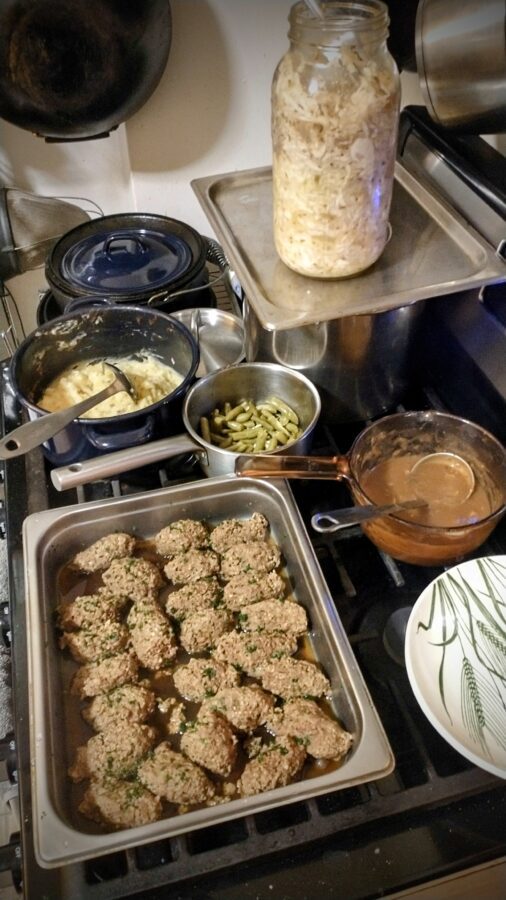
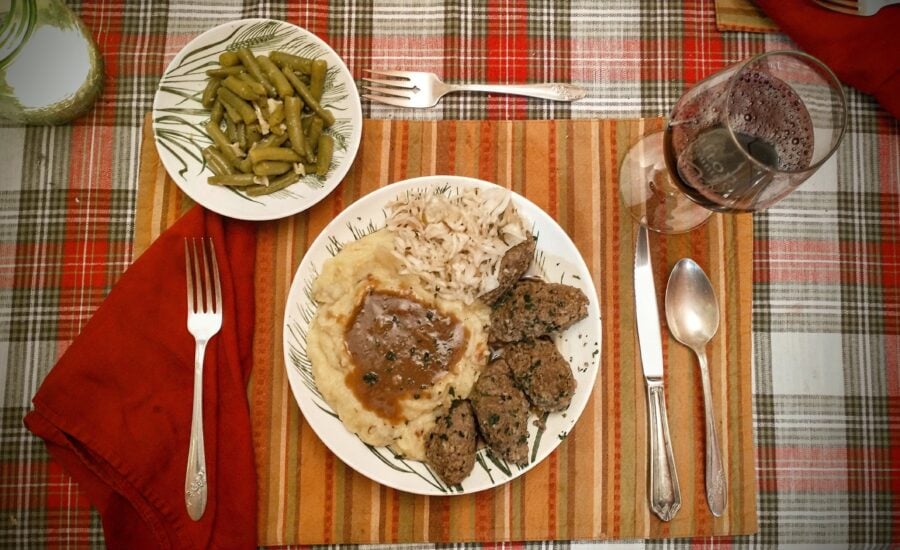
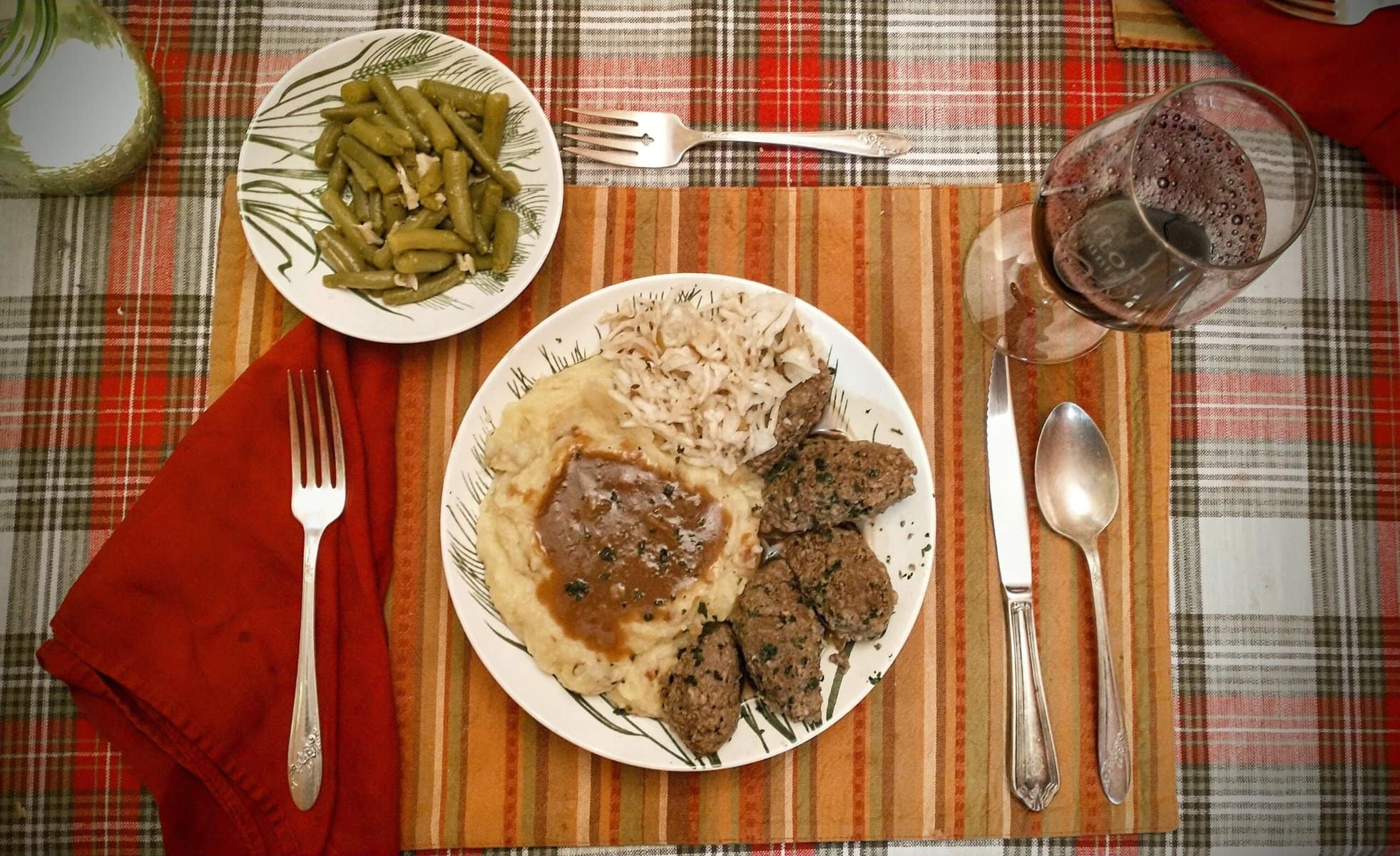
These homemade venison leberknödel, or German liver dumplings, served with mashed potatoes and mushroom gravy, homemade caraway sauerkraut with apples, green beans with bacon and garlic, and a glass of homemade (albeit from a kit) Shiraz made for a knockout winter dinner.
I was worried I wouldn’t like them, but these little liver dumplings were SO GOOD, y’all, and deeply nourishing. You should give this recipe a try!
Why are liver dumplings so great?
Liver can be very hit or miss for me depending on preparation, but no one else at deer camp likes it, so we get a lot of it, and also venison hearts (which are easy to love), from the fella’s family back home. We believe in nose-to-tail eating, and trying to make use of every part of an animal if possible. And organ meats are nutrient-dense and so very good for you!
Only one problem, which a lot of people share… I’ve tried liking pan-seared liver and onions, but even with mild and fresh calf liver, perfectly prepared by a French chef (in a culinary school class demo) I just can’t hang with it. But… add some pork fat, and make it into a creamy liver pâté, or liver sausages like mazzafegati or braunschweiger, and I love it!
But not everyone has the equipment or patience to make homemade sausage, and sometimes you want something quicker and easier. This is especially true when livers keep appearing in your freezer faster than you are eating them (which is what happened once my partner’s family started saving them for us instead of tossing them in the field for the birds and coyotes).
That’s where these liver dumplings come in clutch! All you need is a food processor, blender, or a meat grinder with a fine plate, and you can throw these together. If you don’t have access to venison livers, you can use beef, pork, or poultry livers to make your leberknödel.
This German liver dumpling recipe is an even milder preparation than liver sausage, mellowed by a long pre-soak for the liver, and tempered further with the sweet onions, the bread crumbs, and accented with smoky bacon flavor.
So, if you have a liver-hater in the house who is convinced offal has to be awful, give this traditional German liver dumpling recipe a try!
Bacon & Liver Dumpling Ingredients
Liver:
While you can make these German liver dumplings with milder pork or poultry livers, or calf liver, but it’s also a good recipe for taming the more aggressive flavor of beef or venison liver. Beef liver is traditional in these dumplings, as this cooking method is a good way to make the stronger livers from larger or older animals easier to enjoy.
If you want an even milder flavor, or are using liver from more mature animals, you may can cube and soak the livers in cold salted water or milk for a few hours or overnight before rinsing them and adding them to the dumpling mixture.
I always pre-soak my livers for a cleaner flavor, though if you’re using milder chicken or turkey livers, you could probably skip this step.
Bacon:
You can make liver dumplings without bacon, but the combination of smoky pork flavor and fatty richness makes these extra delicious!
Breadcrumbs:
You can use pre-made breadcrumbs, or make your own from stale or toasted bread.
Use white bread or sourdough for a tender or tangy dumpling, or wheat or rye bread for heartier, rustic dumplings with a chewy texture.
Onion:
You can use white, yellow, or sweet onion here. Mince the onion and saute it in butter, then let it cool before blending with the liver and breadcrumbs to make the dumpling panade.
Eggs:
These are a binder and emulsifier that helps hold the dumpling mixture together while they’re poached, and also make the dumplings springy and light.
Eggs add protein and richness as well as texture to your liver dumplings, which will fall apart without them.
Stock:
For best results, use a good quality homemade bone broth or roasted meat stock. You can use beef or venison stock for a hearty liver dumpling soup, or chicken or turkey stock for a lighter broth.
Match the meat stock to the type of liver, or change it up for effect (or to use what you have on hand). You could also use a good roasted vegetable broth or mushroom stock for a lighter lieberknodel suppe (liver dumpling soup).
Seasonings:
You can vary the seasonings to suit your tastes, but this recipe is a good starting point for a traditional German liver dumpling recipe.
The dumplings are flavored with fresh garlic, fresh or dried marjoram, ground allspice and nutmeg, and of course, plenty of freshly ground black or white pepper and salt to taste.
You can also add some chopped fresh parsley or even sauteed, chopped spinach (squeeze out any excess moisture) to add some greens to the dumplings. Parsley is traditional, and while you can make these without it, fresh parsley will add a bright flavor and a pop of color.
There’s a bit of butter in the recipe to saute the onions, but if you need to substitute, you can use olive oil, a neutrally flavored oil, bacon fat, or other animal fat like tallow or schmaltz.
You’ll also add a bit of baking powder for leavening, to make sure your poached dumplings are light and fluffy. Sift the baking powder to remove any lumps, and mix it thoroughly into the rested dumpling mixture just before shaping and poaching them.
How to Make German Liver Dumplings
Pre-soak the Liver
- If frozen, thaw the liver in the fridge or in cool running water.
- Clean and cut the liver into 2 inch pieces, cutting away and discarding any tough membrane, blood-shot or discolored sections. Rinse well.
- Cover the liver with cold water (I use a 4 quart plastic Cambro or Tupperware container with a lid) and soak at least overnight, but ideally 24 hours in advance.
- Change the water a few times, until it is relatively clear. You can add milk to the last soak, but this isn’t necessary.

Making the Panade & Liver Dumpling Base:
- In a medium saute pan, melt the butter and sweat the onions with a pinch of salt. When they have softened and are starting to color, add the garlic, herbs, and spices, and then the chopped bacon.
- Saute on low heat for another minute- just enough to soften the bacon (it will cook later when the dumplings are poached).
- Set the onion and bacon mixture aside to cool.
- Drain and rinse the liver, and transfer to a food processor. Pulse a few times, then add the cooled onion, herb, and bacon mixture, and one of the eggs. Pulse and then puree until smooth.
- In a mixing bowl large enough to hold all ingredients (except baking powder), mix the other egg and breadcrumbs, then add the liver puree mixture from the food processor.
- Cover and let rest (in the fridge or a cold place) at least 30 minutes. You can make and chill this mixture up to a day ahead of time, which will let the bread crumbs absorb even more liquid for firmer dumplings that are easier to shape.

Poaching the Liver Dumplings:
- Bring the stock (or salted water or broth) to a boil in a large pot.
- Sift the baking powder into the dumpling mixture, and fold in well to incorporate. Cook one small dumpling first in the poaching liquid to check seasoning and consistency- the mixture should hold together well.
- Adjust seasoning if necessary. If too moist, add more breadcrumbs, and if it is too dry, add more egg or a tablespoon or two of milk.
- Using a portion scoop, or two large spoons, form the mixture into meatballs or quenelles (a small football shape formed by rolling the mixture in two spoons).
- Drop the dumplings into the boiling stock and simmer for about 10 minutes.
- They will float to the surface- if they are sticking to the bottom, stir the liquid before dropping the dumplings in.
- You can serve the dumplings floating in their broth, or to make in advance, remove them to a tray, cool, and reheat them in another soup to serve later.
Recipe variation: We had the leftover venison liver dumplings last night, transformed into a zesty Asian-inflected dumpling and noodle soup. I didn’t take any pictures, but this was also an A+ dinner that I would hastily scarf again!
We added soy sauce, ginger, and star anise to the poaching broth when we reheated the dumplings, plus buckwheat soba noodles, fresh shredded cabbage, some frozen chicken and cilantro wontons, and homemade Szechuan chili crisp.
Venison Leberknödel Dumplings
Equipment
- 1 large mixing bowl
- 1 large skillet or cast iron pan
- 1 large pot to poach dumplings
- 2 quenelle spoons or large table spoons (can use a cookie or portion scoop to make round dumplings)
Ingredients
- 16 oz venison liver (substitute pork, poultry, or beef liver) cleaned, cubed, and soaked
saute together and cool:
- 5 oz bacon chopped
- 1 tbsp butter
- ¾ cup onion minced
- 3 cloves garlic minced
- 1 tsp marjoram dry (can sub ½ tsp oregano)
- ½ tsp allspice ground
- ⅛ tsp nutmeg ground
add to pureed onion mixture and liver:
- 2 large eggs
- 1 ⅓ cup breadcrumbs dry
- 3 tbsp minced fresh parsley substitute 1 tbsp dried parsley, or chopped mild greens like spinach or chard
add to dumpling mixture just before shaping:
- 1 ¼ tsp baking powder sifted
poaching liquid:
- 2 quarts meat or vegetable stock or bone broth
Instructions
Pre-soak the Liver
- If frozen, thaw the liver in the fridge or in cool running water.
- Clean and cut the liver into 1-2" pieces, cutting away and discarding any tough membrane, blood-shot or discolored sections. Rinse well.
- Cover the liver with cold water (I use a 4 quart plastic Cambro or Tupperware container with a lid) and soak at least overnight, but ideally 24 hours in advance. Change the water a few times. You can add milk to the last soak, but this isn't necessary.
Making the Panade & Dumpling Base:
- In a medium saute pan, melt the butter and sweat the onions with a pinch of salt. When they have softened and are starting to color, add the garlic, herbs, and spices, and then the chopped raw bacon.
- Saute on low heat for another minute- just enough to soften the bacon (it will cook later when the dumplings are poached). You do not want it crispy, just starting to render the fat. Set mixture aside to cool.
- Drain and rinse the liver again, and transfer it to a food processor. Pulse a few times, then add the cooled onion, herb, and bacon mixture, and one of the eggs. Pulse and then puree until smooth.
- In a mixing bowl large enough to hold all ingredients (except baking powder), mix the other egg and breadcrumbs, then add the liver puree mixture from the food processor.
- Cover and let rest (in the fridge or a cold place) at least 30 minutes.
Shape & Poach the Liver Dumplings:
- Bring the stock (or salted water or broth) to a boil in a large pot.
- Sift the baking powder into the dumpling mixture, and fold in well to incorporate. Cook one small dumpling first in the poaching liquid to check seasoning and consistency- the mixture should hold together well.
- Adjust seasoning if necessary. If too moist, add more breadcrumbs, and if it is too dry, add more egg or a tablespoon or two of milk.
- Using a portion scoop, or two large spoons, form the mixture into meatballs or quenelles (small football shape formed by rolling the mixture in two spoons).
- Drop the dumplings into the boiling stock and simmer for about 10 minutes. They will float to the surface as they cook. If they are sinking immediately and sticking to the bottom, stir the liquid gently in a circle before dropping the dumplings in so that they float longer and they have a chance to set before sinking to the bottom of the pot.
- Gently fish out the cooked dumplings with a slotted spoon and keep them warm in a chafing dish or a warm oven while you continue to poach the rest of the dumplings.
- You can serve the dumplings immediately as a soup floating in their poaching broth, or make them in advance, remove them to a tray, cool, and then reheat them gently in hot soup to serve later.
Notes
Nutrition
Liked this? Try these related recipes!

- How to Make Homemade Venison Wiejeska (Fresh Kielbasa with marjoram)
- Venison Burgers with Bacon, White Cheddar, & Caramelized Sweet Onion
- Soft Rye Sandwich Rolls
- How to Make Homemade Sauerkraut
- How to Make Caraway-Apple Sauerkraut
- Homemade Spiced Apple Butter
- How To Can Swedish Meatballs
- Savory Crepes with Spinach, Artichoke Hearts & Jarlsberg
- Butternut Squash, Goat Cheese and Caramelized Onion Quiche
- Spekulatius (or Spekulaas) Shaped Spice Cookie
- Yule Moon Crescent Cookies