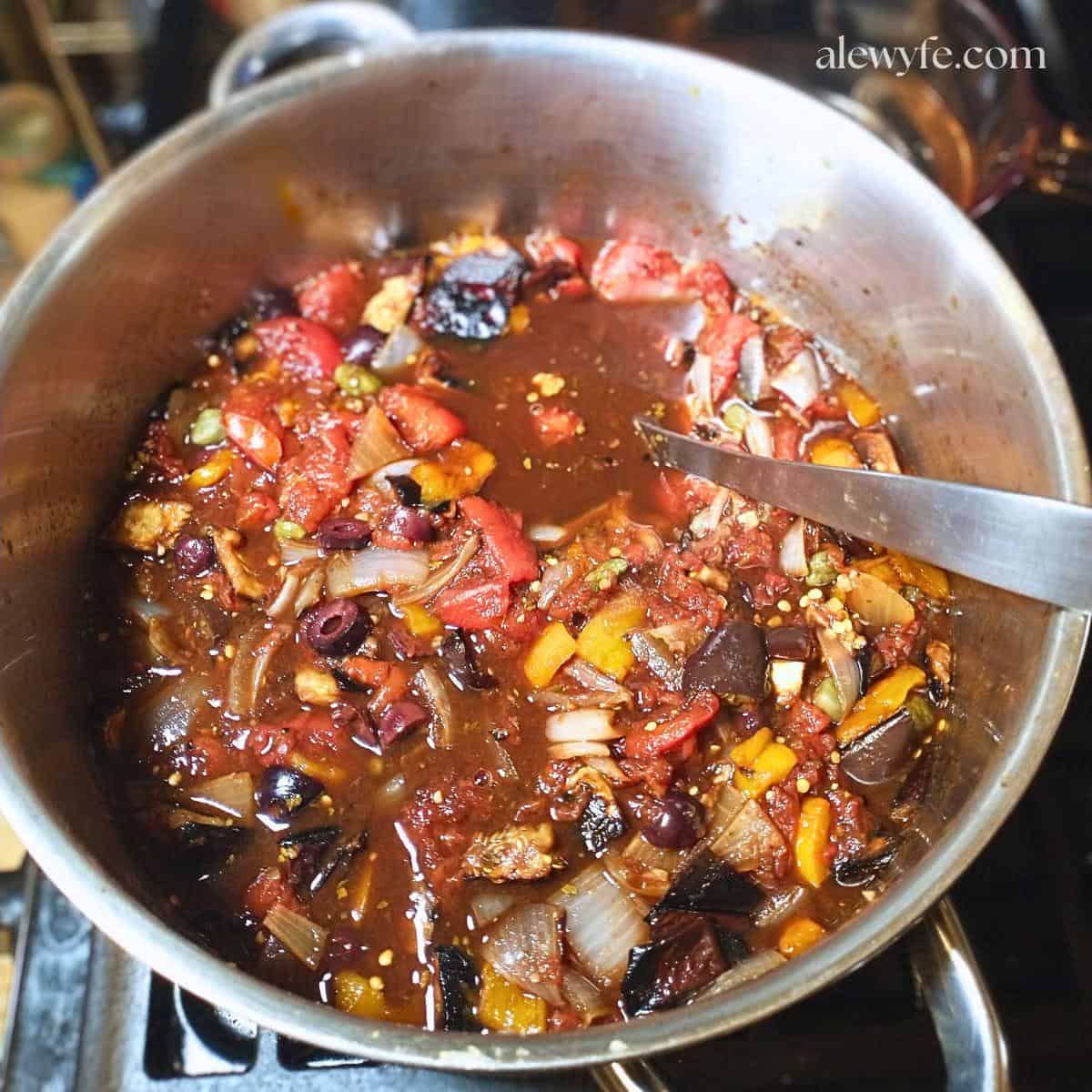
CANNING: Roasted Eggplant, Pepper, & Tomato Puttanesca Sauce
- Serving Suggestions for Roasted Vegetable Puttanesca
- Can I Change this Puttanesca Sauce Canning Recipe?
- Roasted Eggplant & Tomato Puttanesca Sauce Ingredients
- Kitchen Equipment Needed for this Recipe
- How to Can Roasted Eggplant Puttanesca Sauce
- Storing your Home Canned Puttanesca Sauce
- Roasted Eggplant, Pepper, & Tomato Puttanesca Sauce (Water-Bath Canning Recipe)
This roasted vegetable puttanesca sauce is a rare find… it’s a safe and tested water-bath canning recipe from Ball that will help you when your garden is overflowing with eggplant, sweet peppers, and tomatoes!
It’s bursting with the flavor of summer, preserved in your pantry for a rainy day. Pop open a jar and you’re instantly transported to the sunny Mediterranean, or echoes of August afternoons.
Serving Suggestions for Roasted Vegetable Puttanesca
This is a tangy brightly flavored sauce, accented with plenty of red wine, fruity balsamic vinegar, roasted tomatoes, peppers, and eggplant, and the briny tang of kalamata olives and capers. It’s fantastic right out of the jar… quickly reheated and tossed with freshly cooked spaghetti or linguini, or a short pasta like rigatoni or farfalle.
You can also use this as a simmer sauce for chicken or pork, or your favorite meat alternative for a heartier dish. Serve over pasta or polenta, or with roasted potatoes and plenty of garlic bread to mop up the sauce. It’s also great with grilled or broiled tuna steaks, or other robustly flavored fish (it will overpower more delicate fish). So good!
Can I Change this Puttanesca Sauce Canning Recipe?
Like all canning recipes, it’s super important to follow the original ratios. This roasted vegetable puttanesca sauce canning recipe combines tomatoes and other acidic ingredients with eggplant, peppers, and onions, which are low-acid foods, so you want to make sure you follow the recipe carefully.
This is especially important for water-bath canning recipes like this one that contain a mixture with low-acid foods.
If you want to improvise, freeze your sauce or use it right away. The exception here is the anchovy. It’s optional, so don’t let that scare you away if you really hate this flavor-booster (or aren’t sure). You can always add it later when you heat up your pasta sauce before serving… though it’s really not a puttanesca sauce without it!
Roasted Eggplant & Tomato Puttanesca Sauce Ingredients

Paste Tomatoes:
You’ll get the best results with paste-type sauce tomatoes like Roma. If you make your puttanesca sauce with slicing tomatoes, you’ll want to simmer and reduce the chopped tomato mixture before adding the other ingredients, or you will end up with thin, watery sauce. This is meant to be a chunky sauce, so start with large pieces of tomato or very large if you are not using the sturdier paste-type.
If you are buying tomatoes, I would definitely stick with Roma or something similar, to make sure that you end up with the proper density of sauce for the tested processing times. If you have a glut of garden tomatoes and want to sneak a few regular tomatoes in, it should be fine, but make sure you have some paste tomatoes for structure!
Because they’re oven roasted, you don’t have to blanch the tomatoes in boiling water to remove the peels, and the roasting really concentrates the flavor. I save the roasted tomato peels and add them into my freezer stash bag of trimmings for stock. If you make your own bone broth or veggie stock at home, don’t waste these, as the roasted tomato adds a lot of umami to your broth!
Eggplant:
You’ll want firm, fresh eggplants. Look for smaller eggplants that feel heavy for their size, and avoid any with bruises or that feel soft and spongy. Older or overly large eggplant are bitter and more seedy, so try to pick yours or pick out ones that are young and plump. Color doesn’t matter, but dark purple ones add a nice color contrast to the sauce.
You’ll need two pounds of diced eggplant for this recipe. Do not increase the amount of eggplant (or peppers & onions) in your sauce unless you are proportionally scaling up all of the other ingredients to match.
Sweet Bell Peppers:
The recipe specifies red bell peppers, but you can use red, yellow, or orange peppers, or a mix. Don’t substitute green bell peppers, as the flavor is very different.
The peppers are cut in half, the stems and seeds are removed, and they are roasted before being diced and added to the sauce.
Onions:
You can use white, yellow, or even red onions here. For a very mild, sweet sauce, you can use sweet onions, though the onion flavor is already mellowed by roasting, so you’ll get a better flavor with a more zesty onion.
This recipe has an interesting technique, where the onions are cut into wedges with the peels left on until after they’re roasted. This helps prevent the outer parts of the onion from drying out or burning while they’re in the oven.
To prepare the onions, wash them or remove the very outer part of the peel or any that is loose or dirty. Carefully trim off just the tip of the root end, leaving most of the woody part at the base attached so that your wedges will stay together. Cut the onions into wedges from the top down through the base of the onion.
After roasting, you’ll remove the tough peel and woody bits at the base, but you can save these for your stock bag too if they’re not burnt.
Dry Red Wine:
This isn’t an optional ingredient in this recipe! It’s definitely there for flavor, so choose a good quality dry red wine that you would enjoy drinking (though not a top-quality or very expensive bottle). But, more importantly, wine is fairly acidic, and it’s part of the calculation to make sure the recipe is safe for water-bath canning.
I used some homemade Tempranillo in this batch, but a Chianti (or other Sangiovese blend), a bold Shiraz, Cabernet Sauvignon, or a robust blended red is also a great choice.
Boxed wine is totally fine to cook with (and many are great to drink now), though you do generally want to avoid the very bottom shelf stuff if you can (Franzia, I’m looking at you, um, sideways).
Do not use not sweet or flavored wines like Sangria or the horrid salted “cooking wine” you can find on the grocery store shelf with the vinegar (which it should have been).
Balsamic Vinegar:
Like the red wine, this ingredient is also absolutely mandatory to make this recipe safe to can. Do not omit or reduce this amount if you are canning your puttanesca sauce!
You’ll want to use regular balsamic vinegar. Look for a decent quality balsamic wine vinegar, not one that is just regular vinegar with sugar, flavoring, and caramel coloring- you’ll find this on the ingredient label. If it doesn’t say “wine vinegar” or “wine must” in the ingredients, don’t buy it.
The good stuff comes from Modena (the really good well-aged stuff comes with little dropper bottles for dribbling on strawberries and vanilla ice cream or roasted meats and vegetables, and is sometimes hundreds of dollars… but that’s not what we’re talking about here).
Don’t use “balsamic glaze” or another syrupy flavored product, sauce, or reduction, and you don’t need to use the really high end expensive stuff, which would be wasted here. Just make sure it’s real wine vinegar with at least 5% acidity.
NOTE: There was an early misprint of this recipe from Ball that didn’t have the balsamic vinegar added (or the quantity was wrong)… this is the correct republished version from the 2016 or later edition of The All-New Ball Book of Canning and Preserving.
Kalamata Olives:
These deep purple olives are packed with robust flavor. Do yourself a favor and buy them pitted, though you’ll want to check over them as you chop your olives to make sure there are no remaining bits of olive pit.
You can save even more time and buy them sliced, though I like to buy the whole ones in bulk and chop them when needed for a recipe. They’re usually less expensive this way, and they last for a long time if you keep them in the fridge and always use a clean spoon in the jar (midnight olive snack fiends, I’m looking at you. In the mirror. It’s me. But the rest of y’all know who you are).
Capers:
Man, I love capers. They’re a pickled bud of a Mediterranean shrub, and have this wonderful briny salty tang that adds a pop of flavor to whatever recipe you add them to.
They come in lots of sizes and types. I use the relatively inexpensive large brined capers in recipes like this. Save the delicate little nonpareil capers for garnishing, though you can use those here if you prefer or if it’s what you can find locally. If you use the dry variety that are packed in salt instead of brine, give them a rinse to remove excess salt (or you might need to reduce the salt to taste in the recipe).
The original Ball recipe calls for a 3.5 oz jar of capers, drained. I buy my capers in 16 oz jars (but only because our store doesn’t sell larger jars… did I mention we like capers?). I measured out a few tablespoons instead, which is the only change I have made to the recipe (other than clarifying the directions).
Capers are salty little tart vinegar bombs, so I’m not too concerned about precision here for food safety reasons. If you’re a stickler for the details, or don’t keep capers on hand, buy the little jar and drain it if you prefer, as per the original instructions.
Garlic:
Use fresh garlic here, it’s worth it! In a pinch, you could use the chopped jarred stuff, but you’ll get a better flavor from fresh garlic and it’s not that much more work here, especially for just six cloves.
Peel and chop it while your veggies are roasting and remember that you’re already saving yourself a ton of work by batch cooking these future meals for yourself.
Anchovy:
Don’t let the chopped anchovy filet or anchovy paste scare you off from this recipe! They are optional, but you should really try it before wrinkling your nose… They add umami and a depth of flavor that is really just delicious. And it’s not really a puttanesca sauce without it!
If you’re really on the fence (or want to have a more versatile sauce that you can still serve to strict vegetarians or people with fish allergies), you can leave it out when you’re canning and add it when you reheat the sauce.
Seasoning:
Kosher or sea salt, freshly ground black pepper, and dried oregano

Kitchen Equipment Needed for this Recipe
kitchen scale:
The quantities of tomatoes and eggplant are listed by weight in the original recipe, and it’s important to follow them to make it safe.
If you don’t have a scale (you should get one!) but are buying your vegetables at a grocery store, you can weigh and bag the quantities you’ll need for your recipe using their scale. Every produce section should have at least one balance scale so you can get the quantities right, since they’re weighed “as purchased” and not after prepping them.
sheet pans:
I used three standard half-sheet pans to roast the tomatoes and eggplant, and two quarter-sheet pans for the peppers and onions (one for each). If you don’t have that many pans, you can roast the tomatoes first, deglaze the pans with some wine or the roasted tomato juice, and use them to roast the other veggies second.
You can also use other baking dishes, just make sure your cookie sheets or pans have a shallow lip or rim to catch the juices from the roasting vegetables, and that they aren’t so deep or overcrowded that the veggies steam instead of roasting.
large sauce pan or stockpot:
You’ll need a 4 quart or larger pot or enameled dutch oven to simmer your puttanesca sauce mixture before canning. Make sure the pot is non-reactive stainless steel or enameled, since the salsa mixture is acidic.
Do not use an uncoated aluminum or cast-iron pot, as it will react with your sauce (this will darken your sauce and may add an off-flavor, and will discolor your aluminum pot or strip the seasoning from a cast iron pot.
water-bath canner or large stockpot:
You’ll need one large or two smaller stockpots or water-bath canning pots that can hold 6 pint jars (with at least an inch or two of water over the jars and room to boil vigorously). You can also can part of this batch, and use or refrigerate the rest of your sauce right away.
canning jars and lids:
You’ll need six pint mason jars and new canning lids with bands, or an equivalent combination of smaller jars. Do not water-bath can this sauce in jars larger than a pint (16 oz or half-liter jars). This sauce was not tested with quart jars and there is no safe canning time for this sauce for jars larger than a pint.
You can safely use a combination of pints and half-pint or smaller jars to can this sauce if you want single servings, or end up with a small amount of leftover sauce after filling your pint jars. The water-bath processing time is the same for pint or smaller jars (45 minutes, adjusted for altitude if needed).
How to Can Roasted Eggplant Puttanesca Sauce

roast vegetables:
- Preheat your oven to 400 F (200 C or gas mark 6).
- Coat your baking sheets lightly with pan spray or a very thin coating of olive oil (not a puddle of oil, just a light spray or just enough to keep your veggies from sticking too much).
- Wash the tomatoes, peppers, and onions, and pat dry.
- Slice the tomatoes in half lengthwise, and cut out the stem and any tough green or white core in a v-shape (a sharp paring or chef’s knife works well for this).
- Roast the tomatoes for about 45 minutes, or until the skins are starting to char and the tomatoes are beginning to soften. Set aside to cool.
- Prepare the other vegetables as described in the ingredients section above (1″ dice for eggplant, halved and seeded for peppers, and cut into wedges with the skins on for onions). Roast the peppers skin side down on the pans so that they’ll be easier to peel.
- If you have room in your oven to fit all the trays in, you can roast these at the same time as the tomatoes, or stagger them as you remove the trays of tomato. They will cook more quickly than the tomato. The eggplant may only need 20 minutes to roast, and the peppers and onions about half an hour.
- You may want to flip the onion wedges with a spatula half-way through (once they had started to brown) and definitely give the eggplant a stir a few times so it doesn’t burn.
- Remove the vegetables from the oven, turn off the heat, and let them cool on their pans.
prep jars and canner:
- While the veggies are cooling, prep your pint (or smaller) jars and preheat your canner.
- Wash the canning jars and lids with hot, soapy water and rinse well. Set the lids aside.
- Fill the canning pot with enough water to cover the jars, and begin to bring it up to a boil.
- Do not boil the lids (unless you are using reusable lids, then follow manufacturer instructions).
peel & chop vegetables:
- When the vegetables are cool enough to handle, carefully remove the charred tomato peel. The peels should separate from the tomato quite easily.
- Rough chop the roasted tomatoes, and transfer them and their juices to your large non-reactive pot and place on low heat while you peel and dice the rest of the roasted veggies.
- Remove any loose or charred pepper skin and roughly dice the peppers. Add these to the pot.
- Remove the tough outer layers of the onion and the woody root end. Dice the roasted onion and stir this into the sauce as well.
- Last (but not least, though it definitely shrinks when you cook it), add the roasted diced eggplant.
combine and simmer:
- Add the wine, vinegar, olives, capers, salt, pepper, garlic, and oregano and stir the mixture well to combine.
- Turn the heat up to medium and bring the pot up to a low boil.
- Let the roasted eggplant puttanesca sauce simmer uncovered for 15 minutes.
- Taste your sauce, and adjust the seasoning if necessary (with only safe canning ingredients… adding more salt, pepper, oregano, or a small amount of other dried herbs is ok… save other changes for when you reheat the sauce before serving).

jar the sauce:
- Using a canning funnel (if possible) fill the jars with the hot puttanesca sauce mixture, leaving ½” headspace. Work quickly and keep mixture hot while filling jars.
- Using a thin non-metallic spatula, thin wooden spoon, or jar tool, remove air bubbles from the jars and adjust headspace as needed.
- Wipe jar rims. I use a paper towel or clean lint-free towel dipped in hot water, followed with a clean towel dampened with distilled vinegar. Clean jar rims make good seals!
- Place your prepared lids on the jars and secure with rings (check rings for dents and discard any damaged rings).
water-bath process jars:
- Using jar tongs or a canning jar rack, transfer the hot jars into the boiling water canner and make sure there is at least an inch of water over the jars with room to boil. Top up from a hot kettle of water if needed.
- Process in your boiling water bath for 45 minutes (consult this chart to increase processing time as needed for elevations above 1000 ft). Make sure the water is boiling hard the whole time. Do not start the processing timer until the pot is boiling vigorously.
- When the time is up, turn off the burner under the pot, wait 5 minutes, and then carefully remove the jars with jar tongs (or remove the jar rack, if you used one).
- Place the jars on a towel-covered or wooden surface or wire rack and leave undisturbed until completely cool. If it’s cold or drafty, you may want to cover the jars with a towel so they cool evenly. Do not tighten the bands (unless you are using reusable lids: if so, follow manufacturer instructions).
Storing your Home Canned Puttanesca Sauce
- After jars have cooled completely (12-24 hours) remove the bands and check for seals. Make sure that the button on the lid is depressed and the jars have a good vacuum seal.
- Refrigerate any jars that did not seal and use promptly, or reheat and reprocess with new lids within 24 hours.
- Gently wash jars or wipe with a damp cloth, label, and store in a cool, dark pantry. For best quality, enjoy home-canned goods within 12-18 months.

Roasted Eggplant, Pepper, & Tomato Puttanesca Sauce (Water-Bath Canning Recipe)
Ingredients
- 6 lbs Roma or other paste-type tomatoes
- 2 lbs eggplant, diced into 1" cubes
- 3 large onions, unpeeled and cut into 4-6 wedges (remove tip of root end)
- 3 large red, orange, or yellow sweet bell peppers
- 2 cups dry red wine (16 oz)
- ½ cup balsamic vinegar (5% acidity or higher) (real wine vinegar, not balsamic glaze or sauce or flavored vinegar)
- 1 ½ cups kalamata olives, pitted and chopped or sliced
- 1 tbsp anchovy paste or chopped fillets in oil (optional but strongly recommended)
- 2 tsp salt (or to taste)
- 2 tsp dried oregano
- 1 tsp freshly ground black pepper (or to taste)
- 6 large garlic cloves, peeled and minced
- 5 tbsp capers (recipe as written says 3.5 oz jar, drained, see post for notes)
- nonstick cooking spray or olive oil (for sheet pans)
Instructions
roast vegetables:
- Preheat your oven to 400℉ (200℃ or gas mark 6).
- Coat your baking sheets lightly with pan spray or a very thin coating of olive oil (not a puddle of oil, just a light spray or just enough to keep your veggies from sticking too much).
- Wash the tomatoes, peppers, and onions, and pat dry.
- Slice the tomatoes in half lengthwise, and cut out the stem and any tough green or white core in a v-shape (a sharp paring or chef's knife works well for this). Place on oiled baking sheets, avoiding crowding the pan.
- Roast the tomatoes for about 45 minutes, or until the skins are starting to char and the tomatoes are beginning to soften. Set aside to cool.
- Prepare the other vegetables as described in the ingredients section above (1″ dice for eggplant, halved and seeded for peppers, and cut into wedges with the skins on for onions).
- If you have room in your oven to fit all the trays in, you can roast these at the same time as the tomatoes, or stagger and rotate them in as you remove the trays of tomato. They will cook more quickly than the tomatos. The eggplant may only need 20 minutes to roast, and the peppers and onions about half an hour.
- Remove the vegetables from the oven, turn off the heat, and let them cool on their pans.
prep jars and canner:
- While the veggies are cooling, prep your pint (or smaller) jars and preheat your canner.
- Wash the canning jars and lids with hot, soapy water and rinse well. Set the lids aside.
- Fill the canning pot with enough water to cover the jars, and begin to bring it up to a boil.
- Do not boil the lids (unless you are using reusable lids, then follow manufacturer instructions).
peel & chop vegetables:
- When the vegetables are cool enough to handle, carefully remove the charred tomato peel. The peels should separate from the tomato quite easily.
- Rough chop the roasted tomatoes, and transfer them and their juices to your large non-reactive pot and place on low heat while you peel and dice the rest of the roasted veggies.
- Remove any loose or charred pepper skin and roughly dice the peppers. Add these to the pot, along with the roasted diced eggplant..
- Remove the tough outer layers of the onion and the woody root end. Dice the roasted onion and stir this into the sauce as well.
combine and simmer sauce:
- Add the wine, vinegar, chopped olives, capers, salt, pepper, garlic, and oregano and stir the mixture well to combine. Add the anchovies if you are using them.
- Turn the heat up to medium and bring the pot up to a low boil.
- Let the roasted eggplant puttanesca sauce simmer uncovered for 15 minutes.
- Taste your sauce, and adjust the seasoning if necessary (with only safe canning ingredients… adding more salt, pepper, oregano, or a small amount of other dried herbs is ok… save other changes for when you reheat the sauce before serving).
jar the sauce:
- Using a canning funnel (if possible) fill the jars with the hot puttanesca sauce mixture, leaving ½” headspace. Work quickly and keep mixture hot while filling jars.
- Using a thin non-metallic spatula, thin wooden spoon, or jar tool, remove air bubbles from the jars and adjust headspace as needed.
- Wipe jar rims. I use a paper towel or clean lint-free towel dipped in hot water, followed with a clean towel dampened with distilled vinegar. Clean jar rims make good seals!
- Place your prepared lids on the jars and secure with rings (check rings for dents and discard any damaged rings).
water-bath process jars:
- Using jar tongs or a canning jar rack, transfer the hot jars into the boiling water canner and make sure there is at least an inch of water over the jars with room to boil. Top up from a hot kettle of water if needed.
- Process in your boiling water bath for 45 minutes (increase as needed for elevations above 1000 ft). Make sure the water is boiling hard the whole time. Do not start the processing timer until the pot is boiling vigorously.
- When the time is up, turn off the burner under the pot, wait 5 minutes, and then carefully remove the jars with jar tongs (or remove the jar rack, if you used one).
- Place the jars on a towel-covered or wooden surface or wire rack and leave undisturbed until completely cool. If it’s cold or drafty, you may want to cover the jars with a towel so they cool evenly. Do not tighten the bands (unless you are using reusable lids: if so, follow manufacturer instructions).
- After jars have cooled completely (12-24 hours) remove the bands and check for seals. Make sure that the button on the lid is depressed and the jars have a good vacuum seal.
- Refrigerate any jars that did not seal and use promptly, or reheat and reprocess with new lids within 24 hours.
- Gently wash jars or wipe with a damp cloth, label, and store in a cool, dark pantry. For best quality, enjoy home-canned goods within 12-18 months.
Loved this? Try these related recipes!

- Canning Tomato Vodka Sauce Base
- Canning Roasted Tomato Salsa Ranchera
- How to Make Chicago-Style Giardiniera
- Homemade Spaghetti Sauce with Meat and Mushrooms (pressure-canning recipe)
- Easy Penne Pasta Puttanesca
- Spicy Tuna Pasta with Garlic, Lemon, Herbs, and Peas
- Arugula & Olive Creamy Pasta Salad
- Creamy Roasted Red Pepper Sauce with Rigatoni
- Italian Sausage, Mushroom, and Parmesan Ravioli with Spicy Tomato Ragu
- How to Make Fresh Pasta from Scratch