COOK: Chard & Basil Pesto with Walnuts & Cheese
- Chard & Basil Pesto Ingredients
- Kitchen Equipment Needed
- How to Make Chard & Basil Walnut Pesto
- Recipe & Serving Ideas
- Storage & Freezing Instructions
- Chard & Basil Pesto with Walnuts & Cheese
This bright green chard and basil pesto recipe is the perfect thing to make when your garden is overflowing with summer abundance. Use tender Swiss chard leaves or even spinach or arugula to extend the flavor of your bold and spicy fresh basil.
Substituting walnuts for the traditional pine nuts in this pesto adds a rich flavor and texture, plant-based protein, and healthy omega-3 fats without blowing up your grocery budget, and grated Parmesan cheese adds a salty tang. This is of course perfect on freshly cooked pasta, but you can use it just about anywhere you would use a classic Genovese pesto.
This makes a big batch of pesto, though you can certainly cut the recipe in half if you prefer. I like to make big batches whenever I want this pesto during the growing season, and stashing a few small containers in the freezer each time to brighten up winter meals.
It’s the same amount of effort (and dishes) to do a big batch, and it’s a great way to preserve your garden greens for the cold months. It’s also a good way to disguise the veggies for less-adventurous eaters or people with food texture issues… for instance, my partner doesn’t enjoy cooked chard normally, but loves chard blended up in this pesto!

Chard & Basil Pesto Ingredients
Swiss Chard (or spinach):
Use baby or full-sized Swiss chard leaves, with the stems trimmed. You can also use baby spinach or full-sized spinach (trim large or tough stems) for a milder, sweet pesto. For spicy, robust-flavored pesto, you can substitute arugula for some or even all of the greens.
Basil:
You can make this pesto without fresh basil, but the flavor is best and most vibrant if you use plenty of fresh basil. You can use Genovese basil, regular Italian basil, large lettuce leaf basil, or the small leaved spicy globe basil (which grows well in containers). I also have used dark opal or purple basil.
Don’t use tulsi tea basil, Thai, or cinnamon basil, unless you want that sweet cinnamon flavor in your pesto (and if you do, label it well in the freezer so you know to use it in curries, rice, or spicy soups, and not for Italian pasta or pizza night).
Walnuts:
Pine nuts are most traditional in pesto, but walnuts have a similar creamy, nutty texture when blended into the pesto, and have a mild agreeable flavor that won’t overpower your herbs and greens. They’re also a lot more affordable than pine nuts, making this a frugal homemade pesto option that is budget-friendly!
Olive Oil:
Use a good quality bright green extra virgin olive oil in the chard & basil pesto.
Cheese:
I use grated Parmesan cheese, but you can substitute Romano, or a blend. The cheese adds a salty tang and body to the pesto. Some people prefer to freeze pesto without cheese and add it later before serving, but I have tried both and like the convenience of having the pesto ready-to-use in the freezer.
Seasoning:
Most of the flavor here comes from the greens, herbs, EVOO and cheese, but a good pinch of salt will add flavor and help keep the bright green color.
Fresh garlic cloves add zest and a bit of heat. You can also add a bit of freshly grated black pepper or a hint of nutmeg, or dried red pepper flakes to vary the flavor of your chard pesto.

Kitchen Equipment Needed
food processor, blender, or immersion blender:
This recipe makes a big batch, and I like to use my food processor for easier blending. You can also use a regular blender or immersion blender (in a wide-mouth quart jar) for a full or half-batch, though you may have to process everything in stages or pre-chop the greens before blending.
I suppose you could also use a molejete or other large mortar & pestle (start with the garlic and nuts, then add the chopped greens & drizzle in the oil if you choose this option)… This is the traditional way to make pesto, but it is very labor-intensive and messy!
How to Make Chard & Basil Walnut Pesto
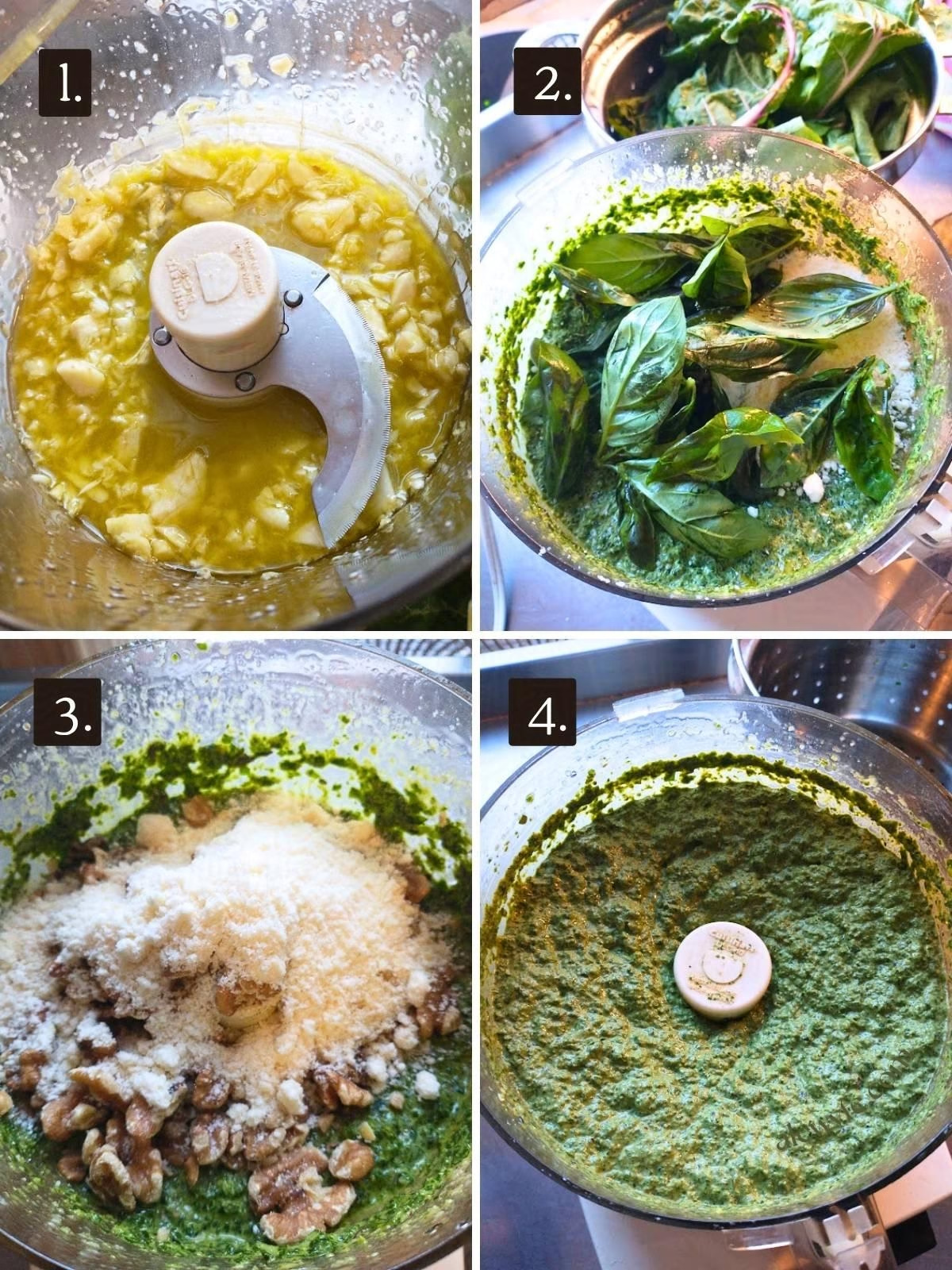
Prep ingredients:
- Wash and shake, spin, or pat dry the greens and fresh basil.
- Trim the large stems from the Swiss chard (save for pickling or another recipe) and pluck the larger stems from the basil.
- Pack greens into a measuring cup to estimate quantities.
- Peel and crush or roughly chop the garlic.
Blend pesto:
- Place the crushed garlic, salt, and olive oil into a blender or food processor. You can also make this pesto with an immersion blender in a large jar (you may need to scale back quantities to blend in a jar).
- Blend until the garlic is pureed, and then add the chard and basil. You may have to do this in stages if you are using a blender or immersion blender. The greens will lose volume once they’re pureed.
- Pulse and blend until you make a smooth green paste. Add the walnuts and pulse again to blend until they are incorporated, then add the grated dry cheese.
- Blend all together until your pesto has the desired consistency. You can add a bit more olive oil if your pesto is too thick, or more greens, nuts, or cheese to thicken it up.
- Taste, and adjust seasoning if necessary.
Use or store pesto:
- Your pesto can be used right away or stored for later use.
Recipe & Serving Ideas
- Try your chard & basil walnut pesto:
- Perfection tossed with hot cooked pasta or gnocchi
- Pound out or cut a slit in boneless chicken breasts, spread with pesto, and roll or stuff with chard walnut pesto, then pan sear, grill, or bake
- Use the pesto as a spread on cold sandwiches and grilled panini
- Top focaccia dough and other flatbreads before baking
- Brush on the top of freshly griddled buttermilk na’an
- Make a swirl in the center of yeasted sandwich loaf breads (spread it on the dough while shaping, roll up to make a spiral, and continue shaping your loaf)
- Thin pesto with oil and lemon juice to make a pesto vinaigrette salad dressing
- Add to mayonnaise or sour cream to use as a creamy pesto dip, or thin with buttermilk or half and half to make a creamy pesto salad dressing
- Use your chard & walnut pesto as a sauce for homemade pesto pan pizza
- Or wherever else you would use regular basil pesto!

Storage & Freezing Instructions
- Refrigerate any leftover chard & walnut pesto for up to a week.
- The pesto will darken over time, especially if it is exposed to air. Use a properly sized container, or cover tightly with plastic wrap or a thin layer of olive oil to prevent oxidation.
- To keep longer, freeze all oil and herb condiments like this one (these can be a botulism risk for longer refrigerated storage).
- To freeze, pack into freezer safe containers or covered ice cube trays. Label and use within 9-12 months (6 months for best flavor).
- Many people prefer to freeze herb pesto without the cheese, and instead add this just before serving. I have done both and have not noticed much of a difference… it’s up to you which you prefer!

Chard & Basil Pesto with Walnuts & Cheese
Ingredients
Puree together:
- 5-7 cloves garlic (peeled & smashed or roughly chopped)
- ¾ cup extra virgin olive oil (you can add more for a thinner pesto, but do this after blending to be sure)
- 1 ½ tsp kosher salt (or to taste)
Add in:
- 4 cups fresh chard leaves (washed & packed… can substitute spinach or a mix of arugula and chard or spinach)
- 2 cups fresh basil leaves (washed, de-stemmed & packed)
Pulse until smooth:
- 2 cups walnuts
- ½ cup grated Parmesan or Romano cheese (you may want to omit this if you are freezing your pesto, to add just before serving)
Instructions
Prep ingredients:
- Wash and shake, spin, or pat dry the greens and fresh basil.
- Trim the large stems from the swiss chard (save for pickling or another recipe) and pluck the larger stems from the basil.
- Pack greens into a measuring cup to estimate quantities.
- Peel and crush or roughly chop the garlic.
Blend pesto:
- Place the crushed garlic, salt, and olive oil into a blender or food processor. You can also make this pesto with an immersion blender in a large jar (you may need to scale back quantities to blend in a jar).
- Blend until the garlic is pureed, and then add the chard and basil. You may have to do this in stages if you are using a blender or immersion blender. The greens will lose volume once they're pureed.
- Pulse and blend until you make a smooth green paste. Add the walnuts and pulse again to blend until they are incorporated, then add the grated dry cheese.
- Blend all together until your pesto has the desired consistency. You can add a bit more olive oil if your pesto is too thick, or more greens, nuts, or cheese to thicken it up.
- Taste, and adjust seasoning if necessary.
Use or store pesto:
- Your pesto can be used right away, tossed with hot cooked pasta, as a spread on sandwiches, thinned to make a dressing, or lots of other uses!
- Refrigerate any leftovers for up to a week. The pesto will darken over time, especially if it is exposed to air. Use a properly sized container, or cover tightly with plastic wrap or a thin layer of olive oil to prevent oxidation. To keep longer, freeze all oil and herb condiments like this one (these can be a botulism risk for longer refrigerated storage).
- To freeze, pack into freezer safe containers or covered ice cube trays. Label and use within 9-12 months (6 months for best flavor). Many people prefer to freeze herb pesto without the cheese, and instead add this just before serving. I have done both and have not noticed much of a difference… it's up to you which you prefer!
Notes
Nutrition
Liked this? Try these recipes!

- Chimichurri Sauce (Argentinian Parsley and Garlic Pesto)
- Spicy Green Coriander Chutney with Coconut
- Creamy Roasted Red Pepper Sauce with Rigatoni
- Canning Vodka Sauce Base
- Roasted Eggplant, Pepper, & Tomato Puttanesca Sauce
- Parmesan Artichoke Tortellini with Lambsquarter & Black Pepper Pasta
- Wheat Pappardelle Pasta with Pork, Mushroom, and Black Olive Ragu and Sauteed Swiss Chard
- Spicy Tuna Pasta with Garlic, Lemon, Herbs, and Peas
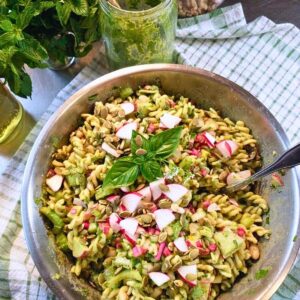
- Roasted Chickpea & Broccoli Pasta Salad