CANNING: Hearty Chicken & Mushroom Stew or Pot Pie Filling
- Serving Ideas for Hearty Chicken Stew
- Making Chicken Pot Pie Filling
- Hearty Chicken Stew Ingredients
- Kitchen Equipment Needed
- How to Make Hearty Chicken Stew or Pot Pie Filling
- How to Can the Chicken Stew (Pot Pie Filling)
- Pantry Storage Tips
- Hearty Chicken Stew or Pot Pie Filling
This hearty chicken stew canning recipe is packed with vegetables, mushrooms, and diced chicken in a rich, buttery broth flavored with white wine, garlic, and herbs.
You can heat and serve this right out of the jar as a gourmet chicken soup, or thicken the broth when you’re ready to serve it, and use this versatile canning recipe to make chicken pot pie filling or easy casseroles.
Scared of canning, don’t have pressure canner, or you just don’t have time? No worries! Just simmer the soup a bit longer in the pot, and fill your Souper Cubes or deli containers for easy freezer meals. You can freeze it as either as a rich chicken soup (that you can thicken into a pot pie filling), or turned into ready-to-bake chicken pot pies.
Perfect for simple fall or winter suppers that will warm you from the inside all the way to your toes!
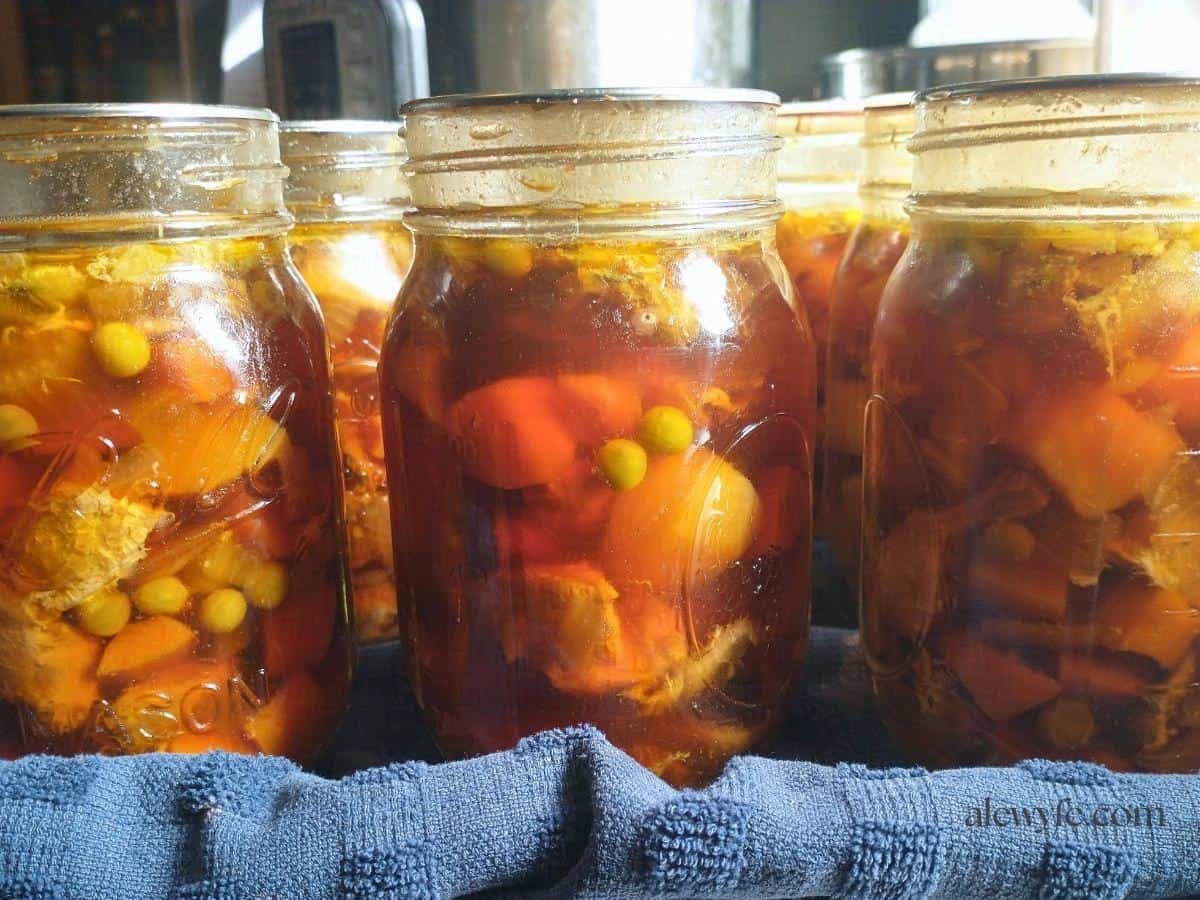
Serving Ideas for Hearty Chicken Stew
This recipe is canned in pint jars, so it’s a perfect portion to reheat when you want a quick supper for one or two people. Unfortunately there’s no tested processing time listed from Ball for quarts of this recipe, so you’ll need to open multiple jars if you’re making a large pot-pie or a lot of individual ones.
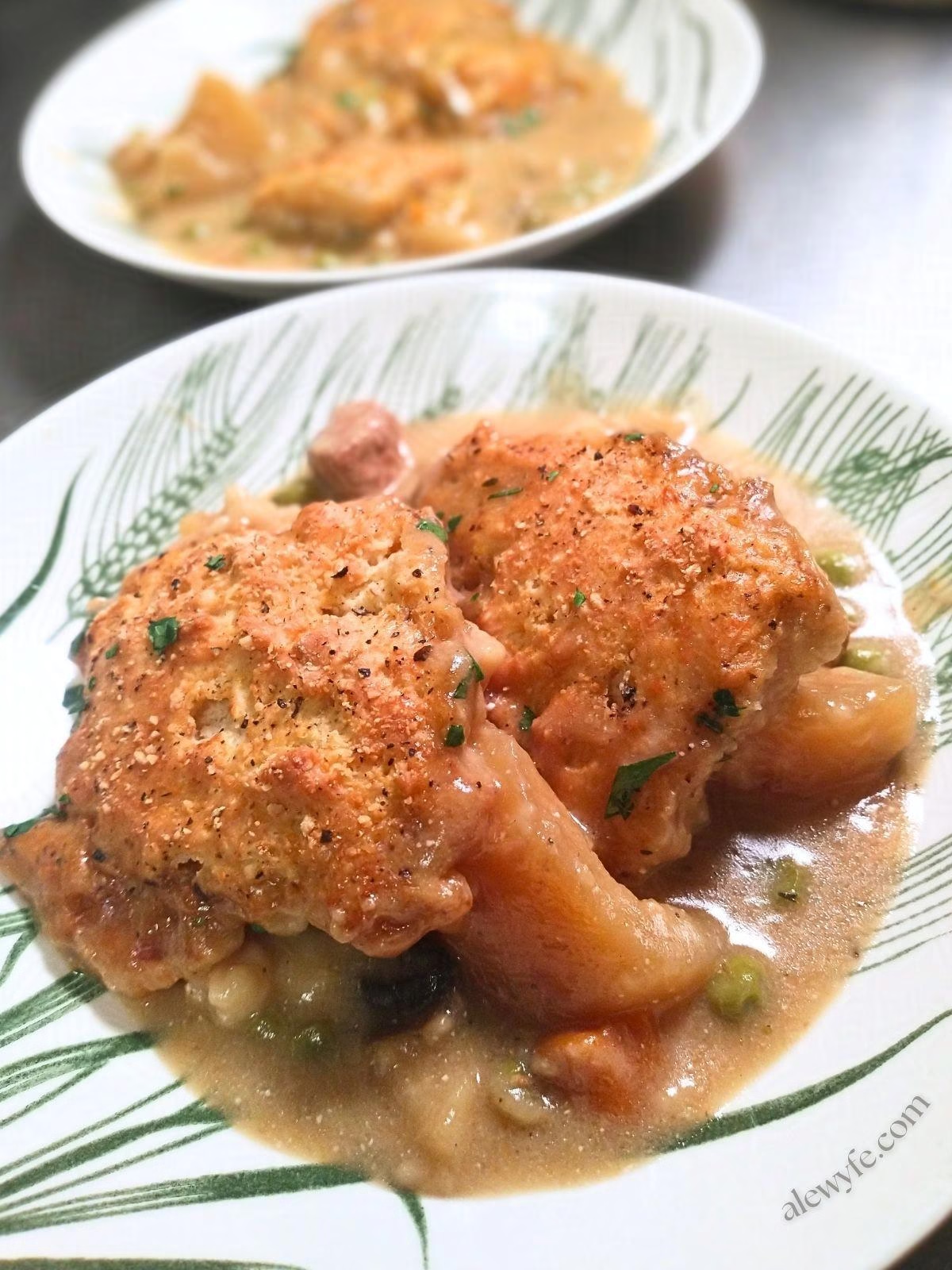
You can reheat the chicken stew by itself for a deluxe chicken soup that’s anything but basic, or stir in a splash of cream or evaporated milk for a rich and creamy chicken and mushroom stew.
Add a bit of par-boiled long grain rice or wild rice blend for an easy chicken and rice stew. It’s also nice with dried or fresh egg noodles, alphabet or other small pastina, or cooked barley added when you reheat the soup to serve it. Do not add any of these before canning!
Serve this hearty chicken stew with a pan of piping hot butter-swim biscuits or dinner rolls (like these soft rye rolls), half a toasted cheese sandwich, or garlic bread. Add a crisp green kale or baby greens salad, or some crunchy cabbage slaw for an easy meal!
Making Chicken Pot Pie Filling
You can whisk in some roux or cornstarch slurry with the broth and simmer to thicken it for a delicious chicken pot pie filling. Then fold in the rest of the contents from the jar, heat through, and it’s ready to use to make homemade pot pie.
For a large pot pie, you can make a thinner filling, especially if you’re using a biscuit crust instead of pastry. For individual pies or especially for hand pies, you’ll want to thicken the gravy quite a bit more by using more roux or cornstarch.
Use 2-3 oz of white or blonde roux (made with equal parts butter or oil and all purpose flour, whisked together over low heat for up to 10 minutes, stirring constantly, before adding the broth). I use the jar lid as a handy strainer to pour the broth into the roux while holding back the chicken and veggies until the sauce has thickened.
You can also use a tablespoon or two of cornstarch, arrowroot, or potato starch whisked into the cold broth before heating it to a simmer to thicken. Add additional starch slurry (made with cold chicken stock or water) if needed to reach your desired thickness.
Bake this thickened pot pie filling in flaky pastry crust or under a topping of buttermilk rolled or drop biscuits for a more substantial dish.
You can also use a simple hot water crust (like the crust in our venison pasty recipe) to make individual English-style royal pies or hot pocket turnovers. You can also make these in big batches with various fillings, wrap them in foil, and freeze them before or after baking for easy freezer meals!
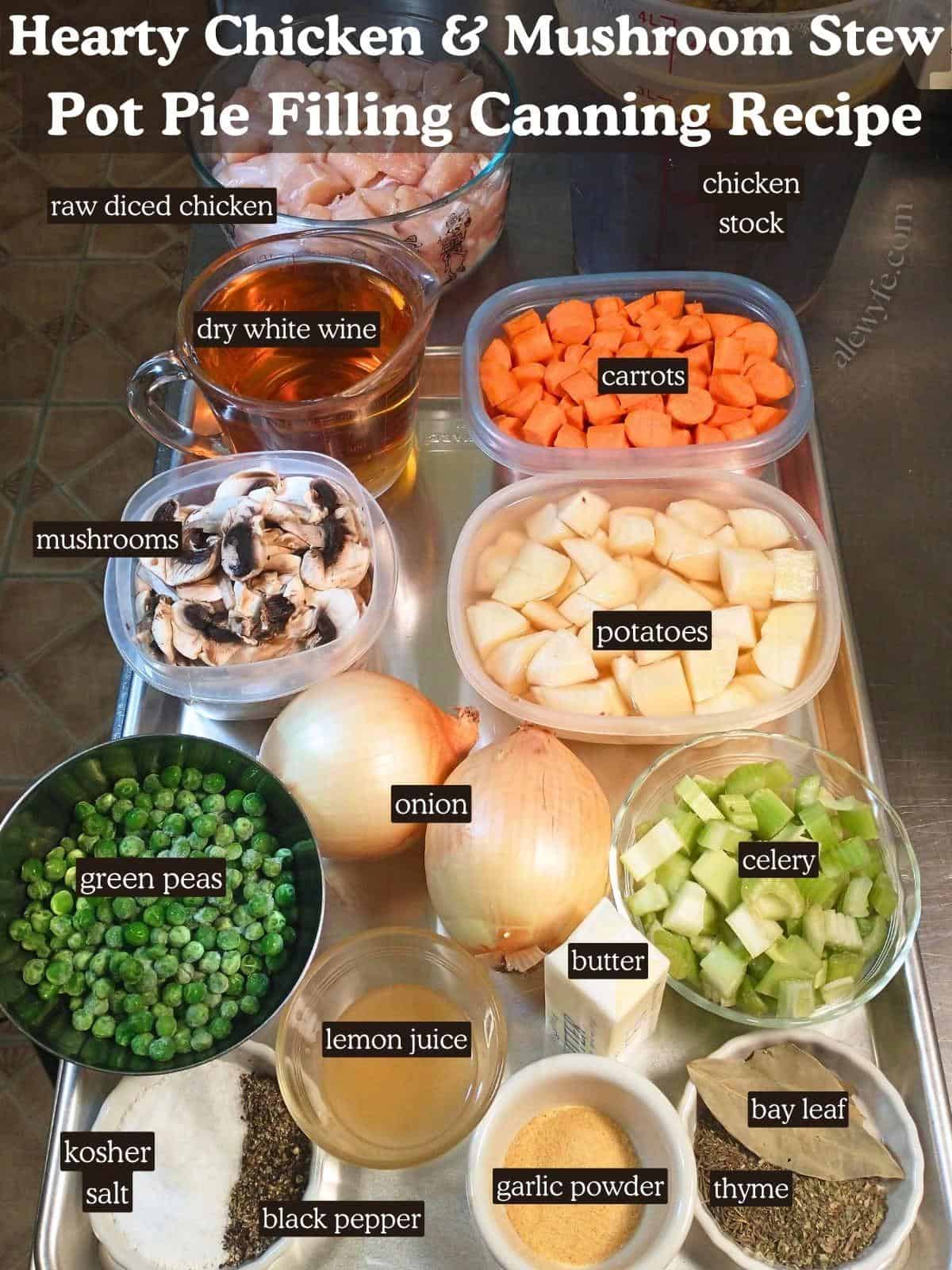
Hearty Chicken Stew Ingredients
Chicken:
You’ll need three cups of boneless, skinless raw chicken for this recipe. You can use breasts, thighs, or a combination, and either de-bone them yourself or buy boneless cuts. Dice the raw chicken into one inch (1″) pieces.
Vegetables:
This stew starts with onions and mushrooms, sauteed in just a bit of butter with herbs and garlic powder. Then, diced carrots, celery, and either Yukon Gold or red (or other waxy-type) potatoes are added. Frozen sweet peas (thawed) are added at the end with the chicken, as they’re more delicate and just need to be warmed through before jarring the stew.
Chicken stock:
You can use a good homemade chicken broth for your chicken stew, but store-bought will work if you don’t have any homemade stock on hand.
White wine (optional):
Use a dry white wine in this recipe… nothing fancy, but something good enough to drink. Try a Sauvignon Blanc, Pinot Grigio, or Chardonnay. This adds acidity and balance, and cuts through the rich umami flavors of the chicken and mushrooms.
Most if not all of the alcohol cooks off while it simmers and then during canning. However, if you prefer, you can replace with additional stock if you don’t cook with wine. Do not use “cooking wine” which is overly salty and of very poor quality.
Seasonings:
I’ve added some additional seasonings to the basic ones in the original Ball recipe, and adjusted some quantities. The garlic powder and bay leaves are optional, but recommended!
Kitchen Equipment Needed
cutting board and sharp knife:
You’ll want a good, sharp chef’s knife or utility knife to dice the chicken, onions, carrots, celery, and carrots, as well as a vegetable peeler for the carrots. This is easier if you have a large, sturdy chopping board (I prefer wood or bamboo).
Chef’s tip: If your cutting board slides around on your counter, put a clean kitchen towel underneath it. Dampen the towel slightly if it still slides and it will stay in place. This makes cutting and prep work a lot easier and safer!
large stockpot or dutch oven:
You’ll need a large, heavy bottomed stockpot large enough to hold all of the recipe ingredients together. Ideally, you want a pot with a thick bottom so that the vegetables don’t scorch on the bottom of the pot, but you can get away with a thin one if you watch the heat and stir regularly while you’re sauteing the mirepoix in butter.
pressure-canner:
You absolutely must use a pressure canner to safely can this chicken pot pie filling recipe.
You can’t safely can this in an Instant Pot or a water-bath. They do not reliably build up enough heat or pressure to safely can foods, especially low-acid foods like meat, mushrooms, and veggies that require consistent pressure and long processing times.
Botulism isn’t worth the risk… always pressure can low-acid foods like meats and vegetables in a suitable pressure canner.
I love my big All-American pressure canner, but any pressure canner that is large enough to hold at least four quart jars and that has a pressure weight and/or a tested pressure gauge will work (although you may need to adjust the batch size for your canner, or can the sauce in several batches).
pint mason jars & new lids:
You’ll need 6 pint mason jars and new canning lids with bands, or an equivalent combination of smaller jars.
Do not water-bath can this chicken stew/pot pie filling base in jars larger than a pint. There is no tested water-bath processing time listed for quart jars for this sauce.
jar funnel, tongs, and other canning accessories:
These tools are optional but make the job of filling your jars, and getting them into and out of the hot water bath a lot easier and safer!
You can read more about these and our recommendations in our guide to canning equipment if you don’t already have these or are new to canning.
How to Make Hearty Chicken Stew or Pot Pie Filling
prep ingredients:
- Peel and small dice your onions (about 2 medium) and measure out 1½ cups.
- Brush any debris from the mushrooms (quickly rinse them if they are very dirty, but do not soak). Slice them and measure out ½ cup. If the mushrooms are very large, you may want to cut them in half then slice cross-ways for smaller pieces, though they will cook down substantially.
- Wash and peel your carrots (about 3 medium or 2 large). Cut them into small dice or bias cuts, and measure out 1½ cups.
- Scrub the potatoes, peel and trim them, and then cut 1 cup of medium diced potato. Place these in a small container of water so that they do not oxidize and brown while you prepare the other ingredients, and to wash off excess starch.
- Wash your celery well to remove any grit, trim the ends, and cut ½ of small to medium diced celery pieces.
- Measure out your herbs and seasonings (or have them handy), the white wine, lemon juice, and the ½ cup of frozen peas. Set the peas on the counter to thaw while you prep the stew.
prep pressure canner and jars:
- Fill your pressure canner with several inches of water (check your manufacturer’s recommendations) and preheat to about 180F.
- Wash your canning jars, rings, and lids in hot soapy water. Place the jars into the canner to pre-heat, and set your rings and lids aside.
- Do not boil your lids if you are using standard modern canning lids (follow manufacturer instructions for reusable lids like Tattler or Weck lids).
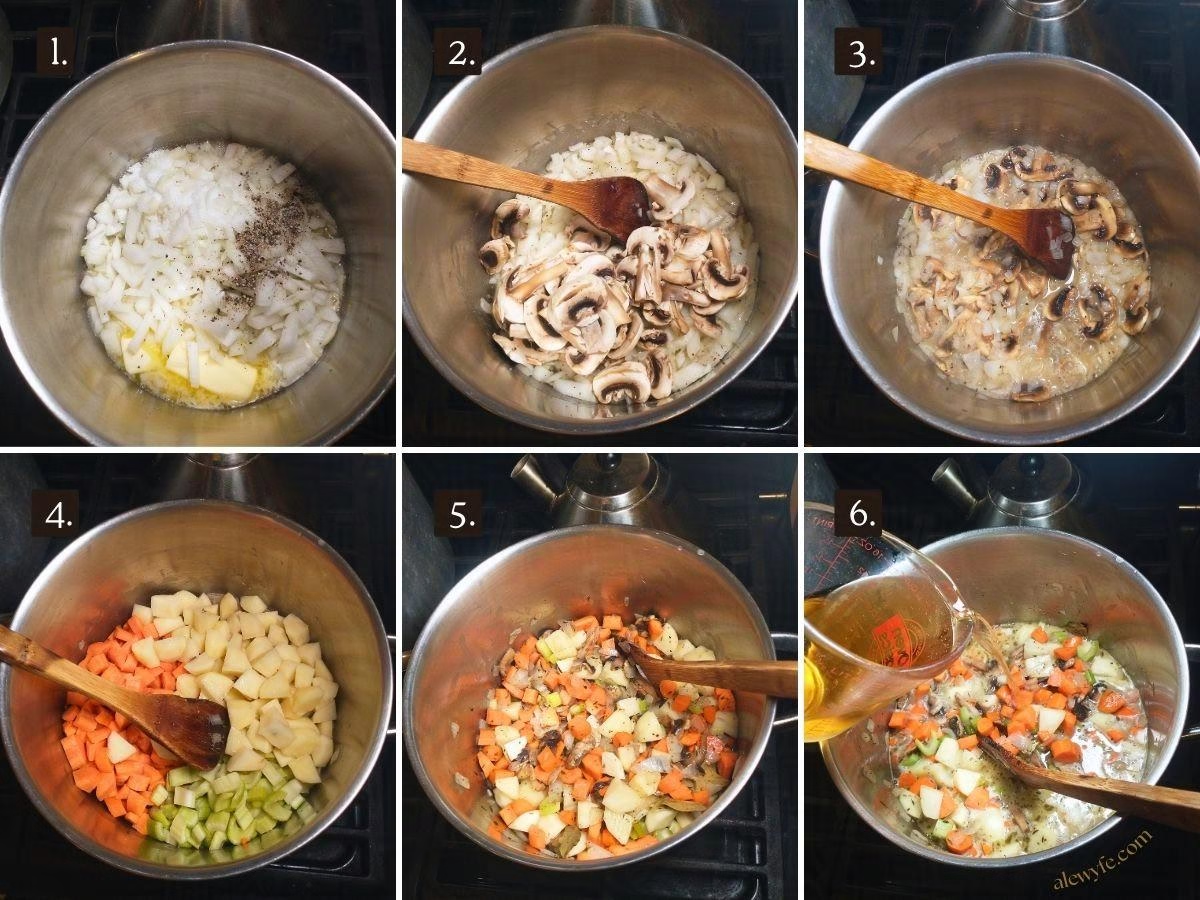
saute onions and mushrooms:
- In a large heavy-bottomed non-reactive pot (stainless steel saucepan or enameled dutch oven is ideal), heat the butter or oil over medium heat.
- Once the butter begins to melt and the pan is hot, add your diced onions and the salt.
- Stir and sweat the onions for about a minute, then add the mushrooms, black pepper, bay leaf, and (optional) garlic powder.
- Saute together for 2-3 minutes, until onions and mushrooms just begin to color. Stir regularly but do not break up the bay leaf (you will be removing this later)
add vegetables:
- Next, add the diced carrots, (drained) potato, and celery to the pot and stir again. Add the dried thyme (or other dried herbs to taste… do not use sage, which turns bitter when pressure-canned).
- Saute all together over medium heat, stirring frequently for 2 minutes.
de-glaze with wine & stock:
- Add the white wine and de-glaze the pan, scraping the bottom to dissolve any fond (browned bits on the pan that add flavor). If you are not using wine, skip to the next step.
- Turn the heat up to medium high, and add the chicken stock.
- Bring the stew mixture up to a low boil, stirring regularly, then reduce the heat back to medium.
- Cook for about 10 minutes, or just until the vegetables are starting to be tender. Do not overcook, as they’ll cook thoroughly in the canner.
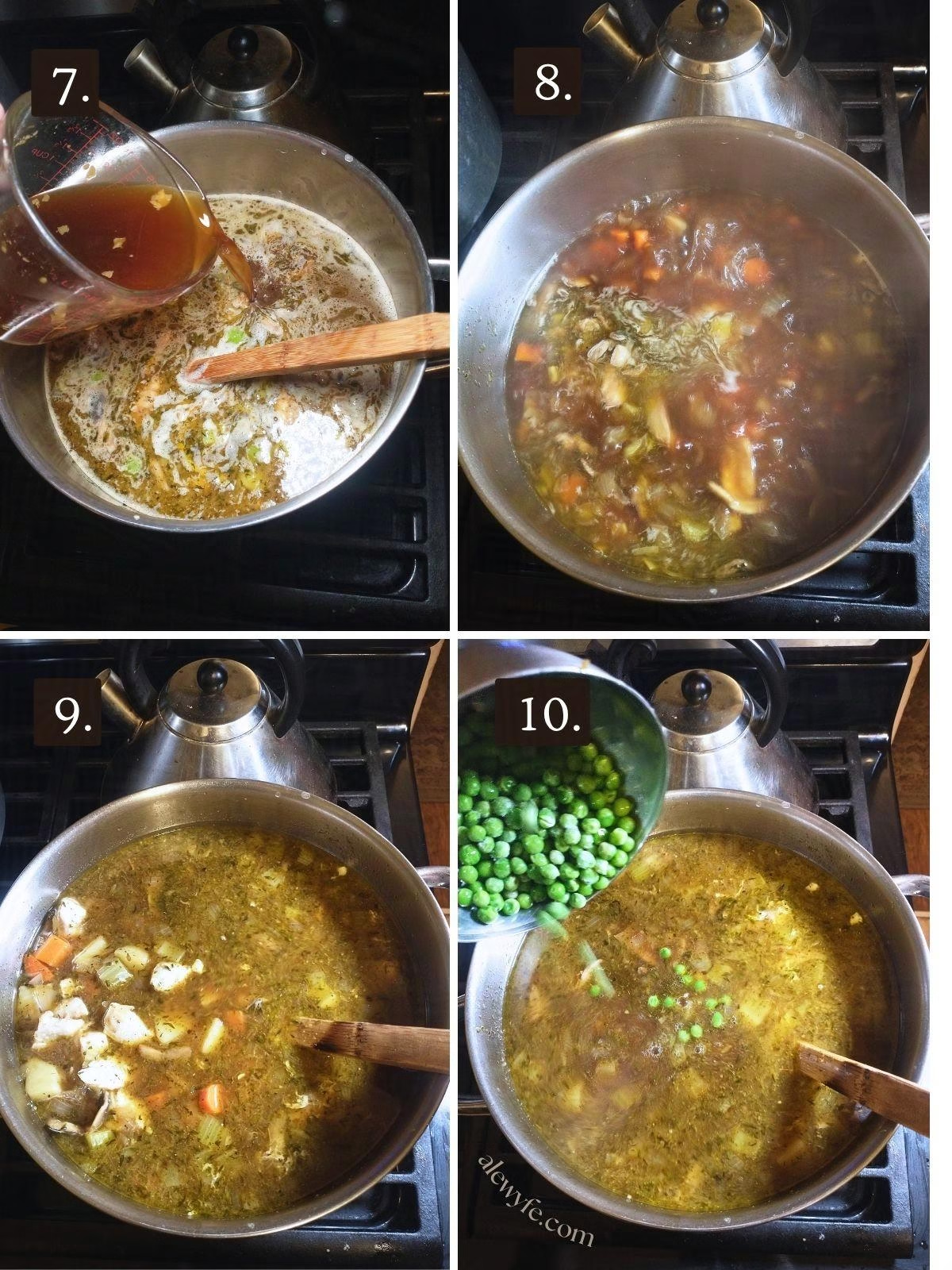
add chicken & peas:
- Add the lemon juice, taste, and adjust seasoning if necessary with more salt, pepper, or herbs. Remember that you can always add seasoning before you serve it, but you can’t take it out!
- Add the diced raw chicken and the thawed frozen peas, stir, and remove from the heat.
- Note: if you are not pressure canning this, you can continue to cook over medium heat until the chicken is just tender, then divide and use immediately to fill pot pies or portion and freeze the chicken stew filling.
- To prepare freezer-meal pot pies, thicken the broth with roux or a cornstarch slurry and simmer until thick and the chicken is cooked through, then fill your pie shells or baking dishes. Do NOT thicken the filling before canning.
How to Can the Chicken Stew (Pot Pie Filling)
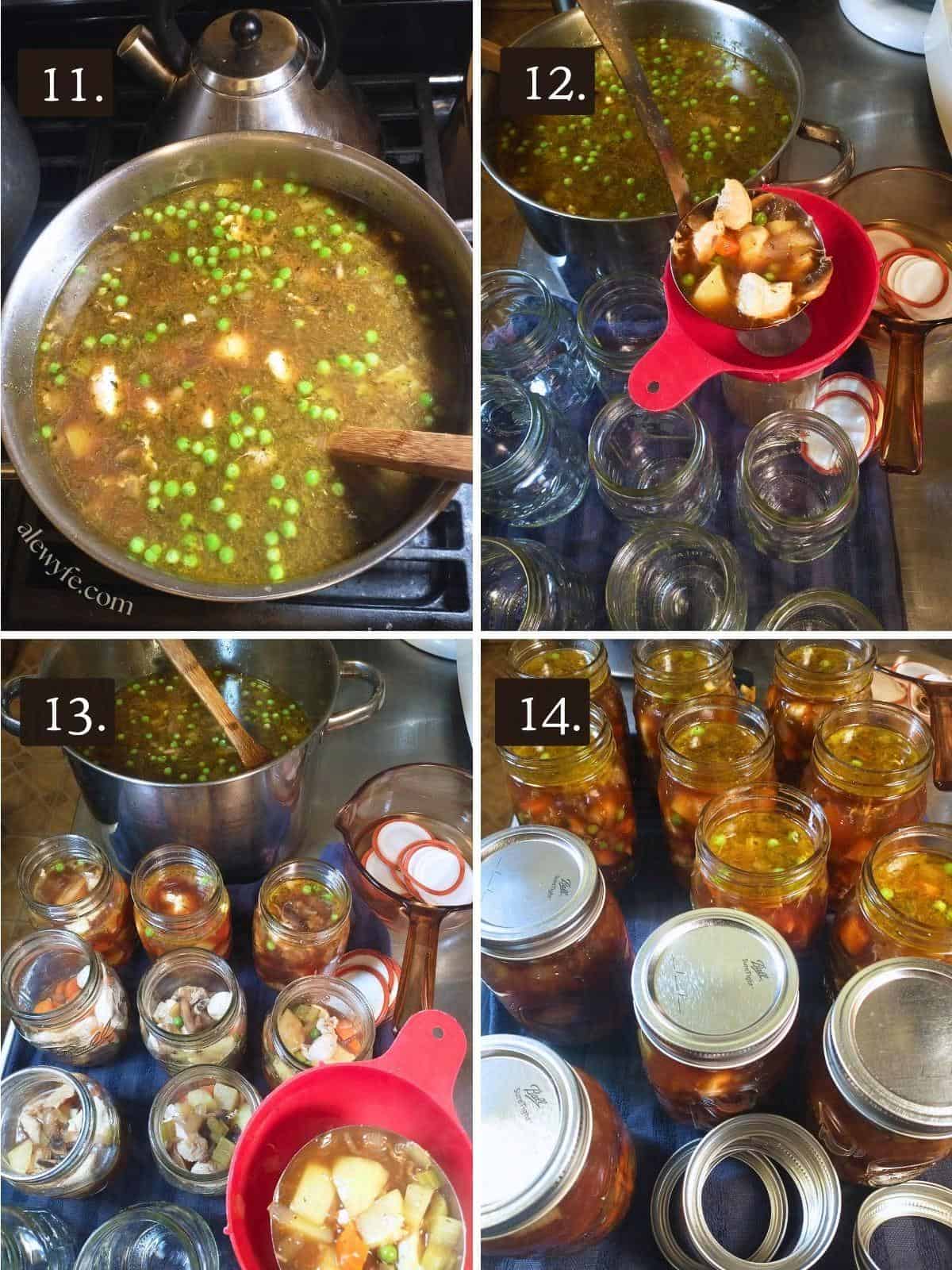
fill canning jars:
- Using canning jar tongs or a jar rack, carefully remove the pre-heated jars from your pressure canner.
- Place the jars on a kitchen towel or wire rack. Do not put hot jars directly on a cold countertop, or they may crack or shatter.
- Using a canning funnel and ladle, fill the pint jars with the hearty chicken stew mixture. Remove the bay leaf (or leaves) before filling the jars (or fish it out when you find it). Do NOT thicken the filling before canning.
- Divide the stew mixture evenly among the jars. Leave a 1″ headspace at the tops of the jars. De-bubble the jars, using a de-bubbling tool or chopstick, and top up if needed.
- If you have extra filling, you can use smaller jars than pints but do not can quarts of this stew. You can also top up the jars with additional hot chicken stock or vegetable broth if you don’t have quite enough filling for the proper headspace.
- Wipe the jar rims with a clean cloth or paper towel (dip the cloth in hot water or vinegar to cut any fat or residue for better seals).
- Top the jars with canning lids and rings, and tighten the rings down fingertip tight (quite snug but not overly tight).
pressure-can chicken pot pie filling (hearty chicken stew):
- Carefully place the filled jars into the preheated canner.
- Check that the canner vent isn’t clogged and close & seal the lid. Bring the canner up to pressure over medium heat with the vent open, and once the canner is venting a steady stream of steam, set a timer for 10 minutes.
- When the canner has vented for 10 minutes, regulate the heat if necessary and drop the weight over the vent (or close the petcock if you have an older unweighted dial-gauge canner).
- Can only pint or smaller jars of hearty chicken stew for 1 hr 15 minutes at 11 PSI dial gauge/10 PSI weighted gauge up to 1000 ft (adjust to 15 at higher altitudes with a weighted canner, or see chart below for dial gauge adjustments).
- There are no listed/tested processing times for quarts of this recipe. Do not guess!
| Altitude Feet | Weighted Gauge | Dial Gauge |
|---|---|---|
| 0- 1,000 | 10 | 11 |
| 1,001- 2,000 | 15 | 11 |
| 2,001- 4,000 | 15 | 12 |
| 4,001- 6,000 | 15 | 13 |
| 6,001-8,000 | 15 | 14 |
| 8,001-10,000 | 15 | 15 |
- Start your processing timer only once the appropriate PSI has been reached, or when the weight is jiggling to indicate that the proper pressure has been reached. Watch or listen carefully, adjust heat as needed, and reset the timer to zero and restart processing time if you lose pressure below the correct processing pressure at any point.
- After the processing time is complete, turn the heat off. Let the pressure canner has cool and slowly return to neutral pressure (the dial will drop to zero, and no steam escapes from the weight or petcock if jiggled). Wait another 5 minutes after the dial on your canner reads zero before opening. Follow your canner instructions for opening, being careful of any remaining steam (open away from your face).
- Gently remove the jars from the canner using jar tongs or the jar rack.
- Place the jars on a folded dish towel, cooling rack, or wooden surface. Protect hot jars from cold surfaces like granite, stainless, or concrete countertops until they have cooled.
- Let the hot jars cool in a draft-free place where they can rest overnight or for up to 24 hours.
Pantry Storage Tips
- Don’t touch the rings until the jars have completely cooled and the seals are set (disregard this for Tattler/Harvest Guard reusable lids only; for these, follow manufacturer instructions to carefully tighten rings immediately after removing from the canner).
- Remove the rings and check the seals on the jars after they have rested at least overnight or a minimum of 8 hours.
- Metal canning lids will ping and have a clearly depressed seal-button in the center of the jar, and reusable lids (Weck & Tattler jars) will have a strong vacuum seal holding the lids firmly in place without the clips or rings, and seal failure is very apparent.
- Promptly freeze or refrigerate any jars that did not seal and use within a few days. You can also reprocess these jars with new lids within 24 hours.
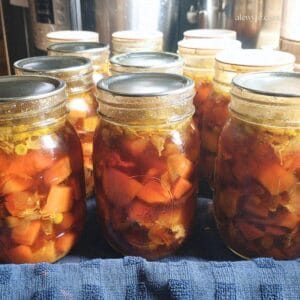
- Gently wash all sealed jars with soapy water, label clearly, and store in a cool, dark place. Do not stack jars or store them with the rings on.
- Protect jars from freezing or other extremes of temperature in storage.
- Safely discard the contents of any jars that lose their seals in storage or show signs of spoiling (off-flavors or aromas, hissing, bubbling, or spurting when opened, or any mold) and sterilize jars before reuse.

Hearty Chicken Stew or Pot Pie Filling
Equipment
- 1 Large heavy bottomed stockpot or dutch oven
- glass pint canning jars, rings, and new lids
- knife & cutting board
- jar lifters or tongs or jar rack with handles
Ingredients
saute together:
- 3 tbsp butter or vegetable oil
- 1½ cups diced yellow or white onion (about 2 medium onions)
- ½ cup sliced fresh button mushrooms (substitute sliced cremini mushrooms)
- 2 tsp kosher salt
- 1 tsp garlic powder optional
- ¾ tsp black pepper
- 1-2 large bay leaf
add next and saute 2 minutes
- 1½ cups carrot, peeled and diced (about 3 medium or 2 large carrots)
- 1 cup diced Yukon gold or red potatoes wash and peel potatoes before dicing
- ½ cup celery, chopped
- 1 tsp dried thyme
add to deglaze pan and simmer vegetables
- 1 cup dry white wine (replace with additional stock if you don't cook with wine. do not use "cooking wine" which is overly salty and poor quality)
- 5 cups chicken stock homemade or store-bought stock
add when vegetables are tender
- 3 cups boneless, skinless raw chicken breast or thighs cut in 1" dice
- ½ cup frozen baby peas, thawed
- 1 tbsp bottled lemon juice
Instructions
prep ingredients:
- Peel and small dice your onions (about 2 medium) and measure out 1½ cups.
- Brush any debris from the mushrooms (quickly rinse them if they are very dirty, but do not soak). Slice them and measure out ½ cup. If the mushrooms are very large, you may want to cut them in half then slice cross-ways for smaller pieces, though they will cook down substantially.
- Wash and peel your carrots (about 3 medium or 2 large). Cut them into small dice or bias cuts, and measure out 1½ cups.
- Scrub the potatoes, peel and trim them, and then cut 1 cup of medium diced potato. Place these in a small container of water so that they do not oxidize and brown, and to wash off excess starch.
- Wash your celery well to remove any grit, trim the ends, and cut ½ of small to medium diced celery pieces.
- Measure out your herbs and seasonings (or have them handy), the white wine, lemon juice, and the ½ cup of frozen peas. Set the peas on the counter to thaw while you prep the stew.
prep pressure canner and jars:
- Fill your pressure canner with several inches of water (check your manufacturer’s recommendations) and preheat to about 180F.
- Wash your canning jars, rings, and lids in hot soapy water. Place the jars into the canner to pre-heat, and set your rings and lids aside.
- Do not boil your lids if you are using standard modern canning lids (follow manufacturer instructions for reusable lids like Tattler or Weck lids).
saute onions and mushrooms:
- In a large heavy-bottomed non-reactive pot (stainless steel saucepan or enameled dutch oven is ideal), heat the butter or oil over medium heat.
- Once the butter begins to melt and the pan is hot, add your diced onions and the salt.
- Stir and sweat the onions for about a minute, then add the mushrooms, black pepper, bay leaf, and (optional) garlic powder.
- Saute together for 2-3 minutes, until onions and mushrooms just begin to color. Stir regularly but do not break up the bay leaf (you will be removing this later)
add vegetables:
- Next, add the diced carrots, (drained) potato, and celery to the pot and stir again. Add the dried thyme (or other herbs… do not use sage, which turns bitter when pressure-canned).
- Saute all together over medium heat, stirring frequently for 2 minutes.
deglaze with wine & stock:
- Add the white wine and deglaze the pan, scraping the bottom to dissolve any fond (browned bits on the pan that add flavor). If you are not using wine, skip to the next step.
- Turn the heat up to medium high, and add the chicken stock.
- Bring the stew mixture up to a low boil, stirring regularly, then reduce the heat back to medium.
- Cook for about 10 minutes, or just until the vegetables are starting to be tender. Do not overcook, as they’ll cook thoroughly in the canner.
add chicken & peas:
- Add the lemon juice, taste, and adjust seasoning if necessary with more salt, pepper, or herbs. Remember that you can always add seasoning before you serve it, but you can’t take it out!
- Add the diced raw chicken and the peas, stir, and remove from the heat.
fill canning jars:
- Using canning jar tongs or a jar rack, carefully remove the pre-heated jars from your pressure canner.
- Place the jars on a kitchen towel or wire rack. Do not put hot jars directly on a cold countertop, or they may crack or shatter.
- Using a canning funnel and ladle, fill the pint jars with the hearty chicken stew mixture. Remove the bay leaf (or leaves) before filling the jars (or fish it out when you find it).
- Divide the stew mixture evenly among the jars. Leave a 1″ headspace at the tops of the jars. De-bubble the jars, using a de-bubbling tool or chopstick, and top up if needed.
- If you have extra filling, you can use smaller jars than pints but do not can quarts of this stew. You can also top up the jars with additional hot chicken stock or vegetable broth if you don’t have quite enough filling.
- Wipe the jar rims with a clean cloth or paper towel (dip the cloth in hot water or vinegar to cut any fat or residue for better seals).
- Top the jars with canning lids and rings, and tighten the rings down fingertip tight (quite snug but not overly tight).
- pressure-can chicken stew:
Pressure can the chicken pot pie filling:
- Carefully place the filled jars into the preheated canner.
- Check that the canner vent isn’t clogged and close & seal the lid. Bring the canner up to pressure over medium heat with the vent open, and once the canner is venting a steady stream of steam, set a timer for 10 minutes.
- When the canner has vented for 10 minutes, regulate the heat if necessary and drop the weight over the vent (or close the petcock if you have an older unweighted dial-gauge canner).
- Can pint or smaller jars of hearty chicken stew for 1 hr 15 minutes at 11 PSI dial gauge/10 PSI weighted gauge up to 1000 ft (adjust to 15 at higher altitudes with a weighted canner). There are no listed/tested processing times for quarts of this recipe.
- Start your processing timer only once the appropriate PSI has been reached, or when the weight is jiggling to indicate that the proper pressure has been reached. Watch or listen carefully, adjust heat as needed, and reset the timer to zero and restart processing time if you lose pressure below the correct processing pressure at any point.
- After the processing time is complete, turn the heat off. Let the pressure canner has cool and slowly return to neutral pressure (the dial will drop to zero, and no steam escapes from the weight or petcock if jiggled). Wait another 5 minutes after the dial on your canner reads zero before opening. Follow your canner instructions for opening, being careful of any remaining steam (open away from your face).
- Gently remove the jars from the canner using jar tongs or the jar rack.
- Place the jars on a folded dish towel, cooling rack, or wooden surface. Protect hot jars from cold surfaces like granite, stainless, or concrete countertops until they have cooled.
- Let the hot jars cool in a draft-free place where they can rest overnight or for up to 24 hours.
Loved this? Try these recipes!

- Perfect All-Butter Flaky Pastry Crust
- Southern Cast-Iron Skillet Cornbread
- Butter-Swim Biscuit Mix for Fresh Biscuits in a Flash!
- Yooper(ish) Pasties with Venison & Roasted Root Vegetables and Spent Grain Butter Crust
- How to Can Meat, Chicken or Turkey Stock
- How to Can a Whole Turkey (or three)
- French Onion Soup (Pressure-Canning or Freezer Meal-Prep Recipe)
- Zuppa Toscana – Sausage, Potato, Kale & White Bean Tuscan Soup
- Chipotle Barbacoa Beef or Venison (Pressure-Canning Recipe)
- Five-Alarm Venison (or Beef) Chili
- Canning Cajun Red Beans and Sausage